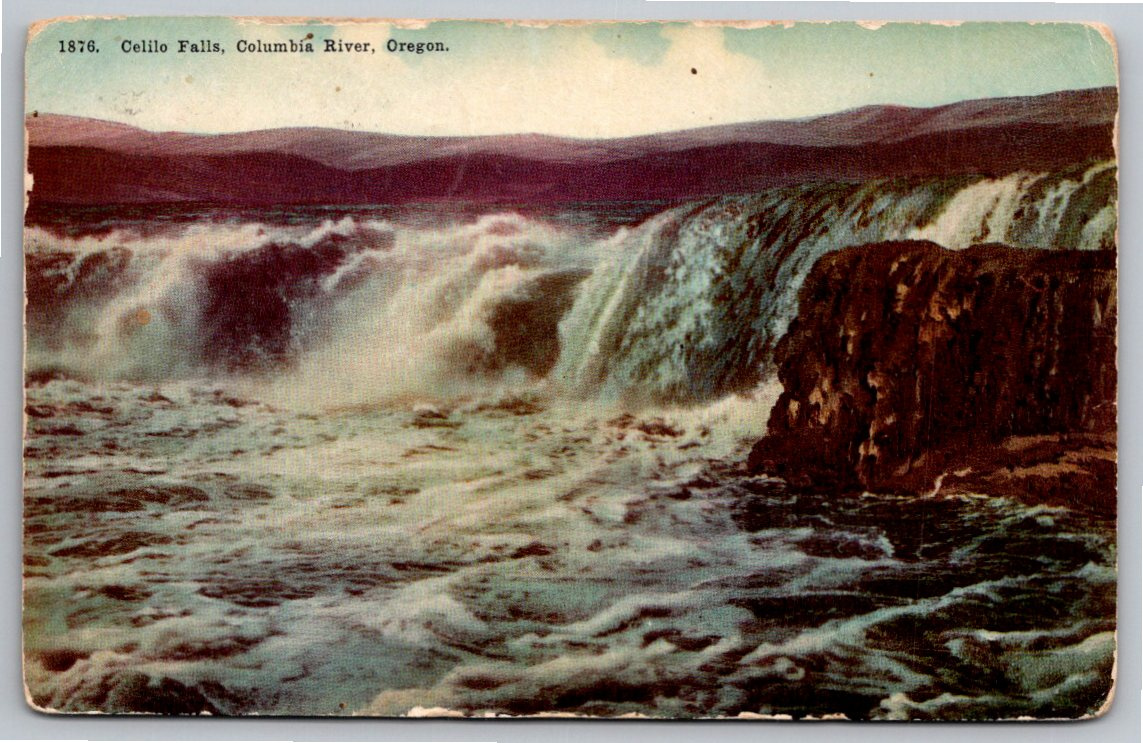
1912 Celilo Falls Columbia River Oregon Antique Divided Back
📸 Click any thumbnail to inspect Front, Back & Angles (2 Photos)
As an eBay Partner, we may earn a commission if you make a purchase.
Item Specifications
- Era: Divided Back (1907-1915)
- Postmark Date: 1912
- Location: Celilo Falls, Columbia River, Oregon
- Subject: Waterfalls & Cascades
- Postmark Location: Tillamook, Oregon
- Originality: Original Vintage
- Category: Postcards & Ephemera
- Format / Type: Vintage Postcards
Looking for Modern Alternatives?
Explore top-rated, modern Postcards & Ephemera and related historical accessories on Amazon.
Shop Postcards & Ephemera on Amazon →As an Amazon Associate, we earn from qualifying purchases.
Historical Context & Overview
The Lost Power of Celilo Falls: A Window into Oregon's Natural Heritage
Long before hydroelectric dams reshaped the topography of the Pacific Northwest, Celilo Falls stood as one of the most powerful, culturally vital natural landmarks on the North American continent. Known to Indigenous peoples as Wyam, meaning "echoing water" or "sound of water upon the rocks," this magnificent series of cascades and roaring waterfalls along the Columbia River churned for over 15,000 years. Today, this vintage 1912 postcard offers a rare visual record of the falls as they appeared at the turn of the twentieth century, decades before they were submerged beneath Lake Celilo.
The postcard depicts the turbulent, churning waters of the Columbia River cascading over basalt rock formations. Printed during the golden age of American postcards, the color tinting accentuates the contrast between the white foaming whitewater, the deep green currents, and the rugged, sun-drenched hills of the Columbia River Gorge in the background.
Cultural Significance and The Dalles Dam
For thousands of years, Celilo Falls served as the economic and cultural heart of the region. Indigenous tribes—including the Warm Springs, Yakama, Umatilla, and Nez Perce—gathered seasonally along the rocky outcroppings to fish for migrating Pacific salmon using dipnets and wooden scaffoldings. It was recognized as the oldest continuously inhabited village site in North America and a premier trading hub where goods were exchanged among nations from across the West.
This natural wonder came to a sudden end on March 10, 1957, when the closing of the spillway gates at The Dalles Dam flooded the falls within four hours. The roaring cascades were forever quieted under the newly created reservoir. Because the physical landscape no longer exists in this form, vintage photographic post cards like this one serve as essential primary sources for regional historians and native heritage enthusiasts.
Postal History and Ephemera Details
Divided Back Era Design
This original postcard is a textbook example of the American Divided Back Era (1907–1915). Prior to 1907, United States Postal Service regulations prohibited written messages on the back of postcards, reserving the space exclusively for the recipient's address. The introduction of the divided back allowed senders to write personal correspondence on the left side while leaving the right side for the address and stamp.
A Fragment of 1912 Daily Life
The reverse side of this postcard reveals a rich historical footprint. Postmarked in Tillamook, Oregon on August 9, 1912, the card features a crisp strike of a circular date stamp alongside a green one-cent U.S. postage stamp depicting George Washington. Written in fine cursive script, the message to Miss Mabel Noyes in Burr Oak, Kansas, captures personal news of family routines and farm chores—including details about milking cows—offering a candid glimpse into everyday life in rural Oregon during the pre-World War I era.
A Heritage Keepsake for Collectors
Whether you are a collector of Pacific Northwest ephemera, a postal historian studying early twentieth-century cancellations, or an admirer of historic river scenes, this 1912 postcard represents a meaningful link to a lost American landscape. Its surviving physical form preserves both the artistic charm of early lithographic printing and the indelible memory of the wild Columbia River.