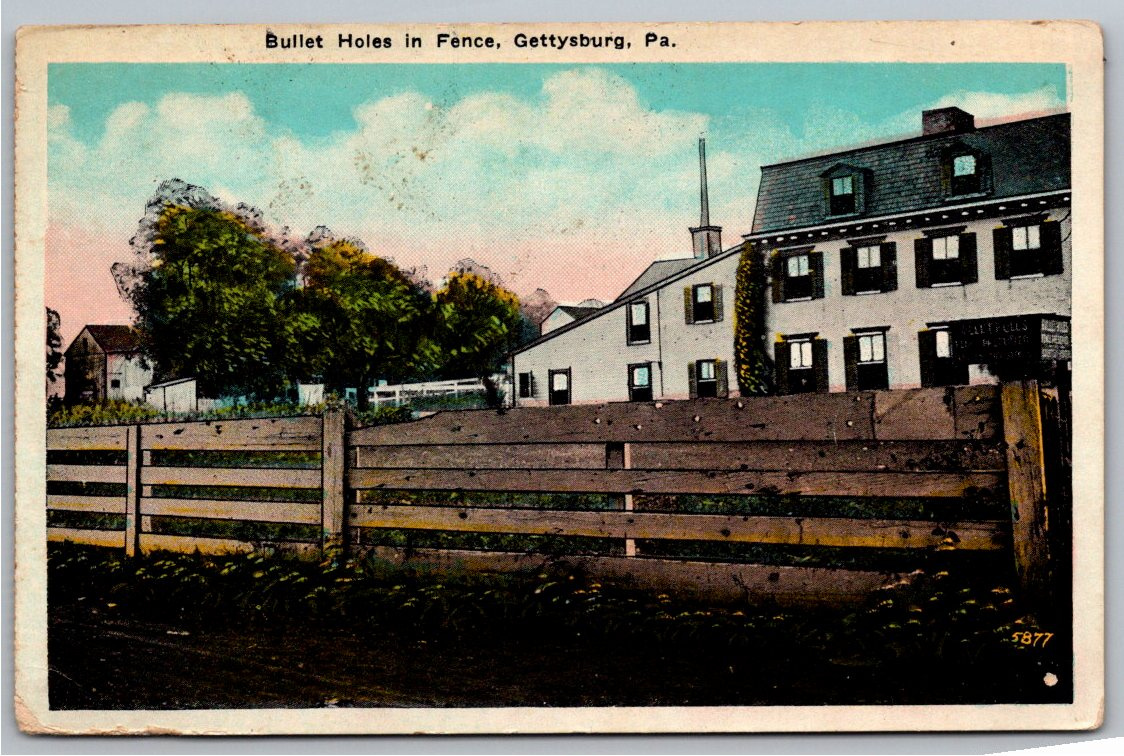
1920s Bullet Holes in Fence Gettysburg PA White Border Postcard
📸 Click any thumbnail to inspect Front, Back & Angles (2 Photos)
As an eBay Partner, we may earn a commission if you make a purchase.
Item Specifications
- Era: 1920s White Border
- Publisher: C. A. Blocher
- Location: Gettysburg, Pennsylvania
- Subject: Civil War Relic & Bullet-Riddled Fence
- Originality: Original Vintage Postcard
- Condition: Unposted / Unused
- Category: Postcards & Ephemera
- Format / Type: Vintage Postcards
Looking for Modern Alternatives?
Explore top-rated, modern Postcards & Ephemera and related historical accessories on Amazon.
Shop Postcards & Ephemera on Amazon →As an Amazon Associate, we earn from qualifying purchases.
Historical Context & Overview
During the early decades of the twentieth century, the town of Gettysburg, Pennsylvania, transformed into one of America’s most prominent historic pilgrimage sites. As veterans of the 1863 Battle of Gettysburg reached their twilight years, tourism flourished along the battlefields and residential streets where ferocious combat had once raged. Among the most evocative reminders of the conflict were the physical scars left on local structures—brick walls pitted by artillery, homes bearing minié ball marks, and wooden fences peppered with bullet holes.
Echoes of 1863: Scars of the Battle Preserved in Wood
This striking original White Border postcard, printed around the 1920s, depicts one of Gettysburg’s most famous tangible relics: a long wooden post-and-rail fence visibly scarred by rifle fire. Set against the backdrop of a historic multi-story home with dormers and dark shutters—a quintessential mid-19th-century Pennsylvania building—the image captures how seamlessly the trauma of battle became interwoven with everyday town life.
Fences played a significant role during the three-day battle at Gettysburg. Wooden barriers across the farmland and along town lanes frequently disrupted infantry charges, forcing soldiers to climb over them under heavy fire or dismantle them for makeshift barricades. In the aftermath, many bullet-riddled wooden fences were preserved by proud local landowners and early preservationists as living monuments to the extreme sacrifice witnessed on the ground.
The White Border Era and Local Publishing
Produced between 1915 and 1930, "White Border" postcards represent a distinct period in American philatelic history. Following the outbreak of World War I, American publishers lost access to fine German lithography and adapted by printing cards domestically. To conserve ink and accommodate mechanical cutting processes, printers left a plain white margin around the colorized photograph or artwork, creating the iconic framed aesthetic seen on this piece.
This particular card was published locally by C. A. Blocher of Gettysburg, PA. Local publishers like Blocher catered directly to the influx of automobile tourists visiting the national military park in the 1920s. Their views often documented specific architectural and structural curiosities that national publishers overlooked, making local Gettysburg imprints especially prized by regional historians today.
A Treasured Artifact for Civil War and Postcard Collectors
For collectors of Civil War memorabilia, Pennsylvania history, or early American postcard art, this piece offers a fascinating glimpse into early 20th-century battlefield heritage. Unused and well-preserved, it captures a fleeting moment in time when original wartime timber still stood along Gettysburg's thoroughfares, offering visitors an intimate connection to the defining conflict of American history.