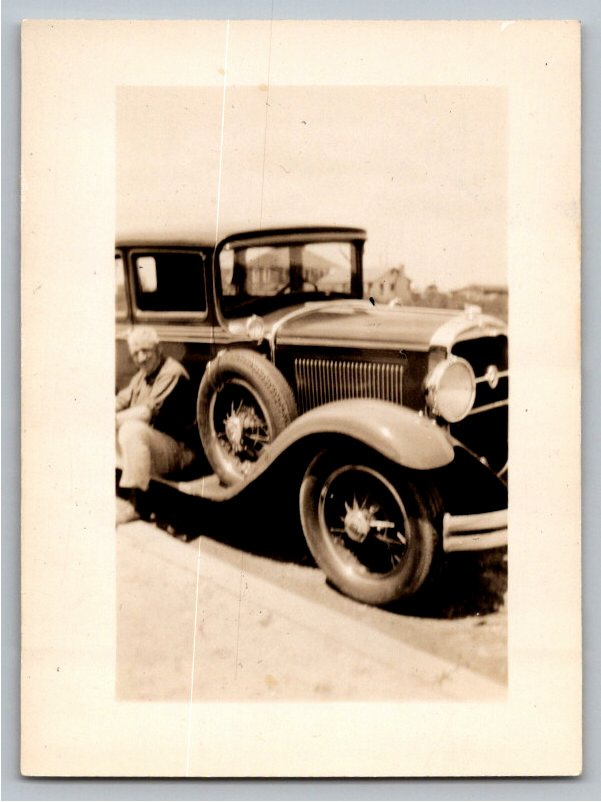
1928-1929 Studebaker Sedan Vintage Photo: Man on Running Board
📸 Click any thumbnail to inspect Front, Back & Angles (2 Photos)
As an eBay Partner, we may earn a commission if you make a purchase.
Item Specifications
- Era: 1920s (c. 1928-1929)
- Subject: Studebaker Sedan Automobile
- Paper Stock: Velox
- Image Type: Black & White Snapshot
- Features: Side-Mount Spare Tire, Wire Wheels
- Condition: Original Vintage
- Category: Vintage Photography
- Format / Type: Snapshots
Looking for Modern Alternatives?
Explore top-rated, modern Vintage Photography and related historical accessories on Amazon.
Shop Vintage Photography on Amazon →As an Amazon Associate, we earn from qualifying purchases.
Historical Context & Overview
A Candid Snapshot from the Twilight of the Roaring Twenties
Captured during the late 1920s, this original black-and-white vernacular photograph offers an evocative look into American automotive pride during the interwar era. The image features a gentleman seated casually on the running board of a magnificent late-1920s Studebaker sedan, perfectly encapsulating the personal bond between early motorists and their prized vehicles.
During the late 1920s, personal photography was undergoing a quiet revolution. With accessible hand cameras and commercial photo finishing becoming widespread, everyday Americans began documenting their daily lives with unprecedented intimacy. Among the most cherished subjects was the family motorcar—a tangible symbol of prosperity, mobility, and modern engineering.
Studebaker Design and Automotive Elegance (1928–1929)
The vehicle showcased in this image displays the distinct design cues that defined Studebaker’s lineup during the 1928 and 1929 model years. Known for models such as the Dictator, Commander, and flagship President, Studebaker was at the height of its prestige, engineering vehicles that combined robust performance with sophisticated styling.
Key architectural details visible on this sedan highlight the era's transitioning styling trends:
- Side-Mounted Spare Tire: A classic feature of late-1920s high-trim automobiles, moving the spare from the rear fuel-tank area to the front fender line to emphasize long, elegant body lines.
- Wire-Spoke Wheels: Wire wheels were increasingly replacing heavy wooden artillery wheels during this period, offering both reduced unsprung weight and a sporting appearance.
- Sculpted Fenders and Shell: The sweeping front fenders and crowned radiator enclosure reflect the aerodynamic art deco influences beginning to enter American coachwork design.
The Social Ritual of the Running Board
Beyond its automotive significance, the photograph captures a wonderful social nuance of the 1920s and 1930s. The running board was more than just a step to enter the cabin; it served as a informal porch, a bench for rest during road trips, and a favorite framing device for roadside snapshot portraits.
The subject’s relaxed posture against the heavy metal fender highlights the grounded, everyday humanity that makes vernacular photography so compelling to modern collectors and historians. Rather than a polished showroom advertisement, this photo presents real-world automotive ownership in its natural habitat.
Material Authenticity and Collector Appeal
Velox Paper Backing and Archival Quality
The back of the photograph features the faint watermarked imprint of Velox, a landmark photographic paper developed by Leo Baekeland and produced by Eastman Kodak. Velox paper was famous for allowing amateur photos to be printed under artificial gaslight without requiring sunlight, standardizing the commercial snapshot industry throughout the early 20th century.
Accompanied by vintage graphite annotations and a classic numerical developer stamp on the reverse, this photograph remains a genuine period artifact. It serves as an exceptional piece of historical ephemera for Studebaker enthusiasts, vintage motoring historians, and collectors of early American vernacular photography.