Vintage 1939 South Dakota Farm Snapshot: Rural Barnyard Life
📸 Click any thumbnail to inspect Front, Back & Angles (2 Photos)
As an eBay Partner, we may earn a commission if you make a purchase.
Item Specifications
- Date: 1939
- Location: South Dakota, USA
- Subject: Rural Homestead & Poultry Farm
- Era: Great Depression Era (1930s)
- Subject Matter: Farm Chickens & Barnyard Outbuildings
- Finish: Matte
- Category: Vintage Photography
- Format / Type: Snapshots
Looking for Modern Alternatives?
Explore top-rated, modern Vintage Photography and related historical accessories on Amazon.
Shop Vintage Photography on Amazon →As an Amazon Associate, we earn from qualifying purchases.
Historical Context & Overview
A Window into Rural South Dakota During the Late 1930s
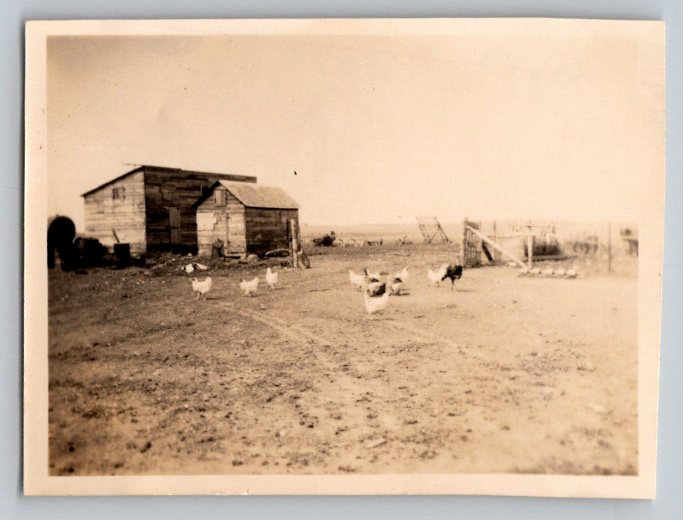
Captured in the twilight year of the Great Depression, this original 1939 black-and-white snapshot offers an authentic, unvarnished glimpse into agrarian life on the Northern Great Plains. Inscribed on the reverse simply as "S.D '39," the photograph captures a humble South Dakota farmstead where weathered wooden outbuildings stand quietly against a vast, open prairie landscape. In the foreground, a flock of chickens scatters across the dry, sun-baked earth, documenting the quiet daily rhythms of rural American life during a historic turning point.
Poultry and Resilience on the Great Plains
By 1939, South Dakota was gradually emerging from the double impact of severe Dust Bowl droughts and widespread economic collapse. For Midwestern farming families, maintaining small-scale poultry flocks was far more than a routine chore; it was an essential strategy for domestic survival. Income earned from selling surplus eggs and dressed chickens—often referred to as "egg money"—frequently covered basic household supplies, groceries, and property taxes when grain or cattle markets faltered. The free-ranging flock seen wandering this dirt yard represents the self-sufficient ethos that sustained Great Plains homesteads through lean years.
vernacular Architecture and Landscape
The timber structures shown in the image reflect the functional vernacular architecture typical of 1930s prairie farms. Simple board-and-batten wooden sheds, constructed without decorative pretense, served as coops, workshops, or feed storage. Built to withstand blistering summer heat and harsh winter blizzards, these practical outbuildings were the backbone of working smallholdings. Beyond the fence line, the low, flat horizon highlights the open geography and isolation characteristic of South Dakota’s rural landscape prior to WWII modernization.
The Value of Authentic Vernacular Snapshots
Unlike formal studio portraits or high-profile government documentary projects like those of the Farm Security Administration, candid amateur snapshots reveal history from an intimate, unscripted perspective. Handheld cameras allowed everyday people to record their immediate surroundings exactly as they were. Today, survival pieces like this 1939 South Dakota photograph serve as valuable historical artifacts for collectors of rural Americana, agricultural historians, and enthusiasts of mid-century visual culture.