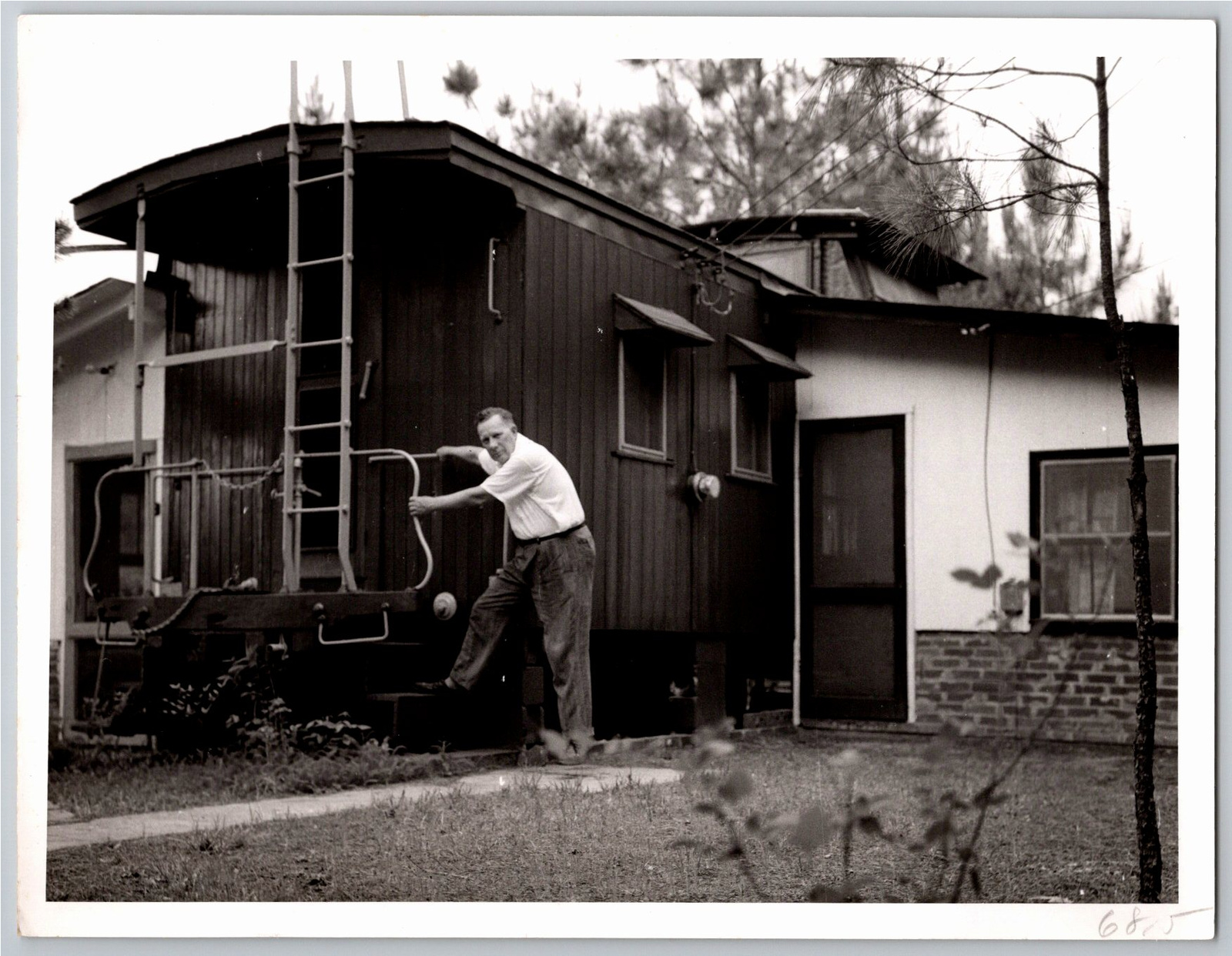
1960s Converted Railroad Caboose House Vintage Press Photo
📸 Click any thumbnail to inspect Front, Back & Angles (2 Photos)
As an eBay Partner, we may earn a commission if you make a purchase.
Item Specifications
- Type: Vintage Press Photograph
- Era: 1960s
- Subject: Converted Railroad Caboose Home
- Publication: The Record
- Date: March 15, 1965
- Medium: Black & White Print
- Category: Vintage Photography
- Format / Type: Vintage Photographs
Looking for Modern Alternatives?
Explore top-rated, modern Vintage Photography and related historical accessories on Amazon.
Shop Vintage Photography on Amazon →As an Amazon Associate, we earn from qualifying purchases.
Historical Context & Overview
In mid-twentieth-century America, as Class I railroads gradually phased out wooden and early steel cabooses in favor of modern rolling stock and automated telemetry, thousands of these iconic "way-cars" found surprising second lives. Rather than meeting the scrapper's torch, surplus cabooses were frequently purchased by rail enthusiasts, eccentric builders, and resourceful homeowners looking for unconventional living spaces. This original press photograph, dated March 15, 1965, documents a prime example of adaptive architectural reuse: a wooden cupola caboose seamlessly integrated into a custom residential dwelling.
Mid-Century Adaptive Reuse and Railroading History
The caboose was long considered the sanctuary and office of the train crew. Positioned at the tail end of freight trains, it housed the conductor and brakemen who monitored for hotboxes, dragging equipment, and shifting loads. By the 1960s, post-war economic shifts and technological advances led rail lines to retire aging wooden and early steel cabooses in large numbers. This surplus created a unique opportunity for individuals fascinated by train culture or drawn to rustic, prefabricated structures long before the modern "tiny house" movement took hold.
As captured in this press print, converting a caboose into a home required considerable craftsmanship. Owners typically stripped the utilitarian interior while preserving signature structural elements—such as the raised cupola for overhead viewing, end-platform ladders, and heavy timber framing. In this photograph, an addition framed with brick accents and screened entryways abuts the side of the caboose, blending traditional home construction with industrial heritage. A man stands proudly on the end platform, stepping up to the ladder that once gave trainmen access to the roof walk.
An Authentic Piece of Photojournalism History
Beyond its architectural appeal, this artifact represents a classic piece of mid-century press photography. The reverse side bears authentic archival markings from newspaper production, including the stamp of The Record, column sizing notations ("3-col"), editorial layout directions ("Lex Sec"), and the handwritten caption date of March 15, 1965, identifying the subject simply as the "Exterior of Caboose Home."
Original newspaper press photos served as the primary visual medium for public news before the digital age. Photographers captured candid stories of human interest across rural and suburban America, delivering working prints directly to darkrooms for publication. Today, survival of these large-format archive prints offers collectors a tangible glimpse into historical Americana, architectural innovation, and the golden era of print media.