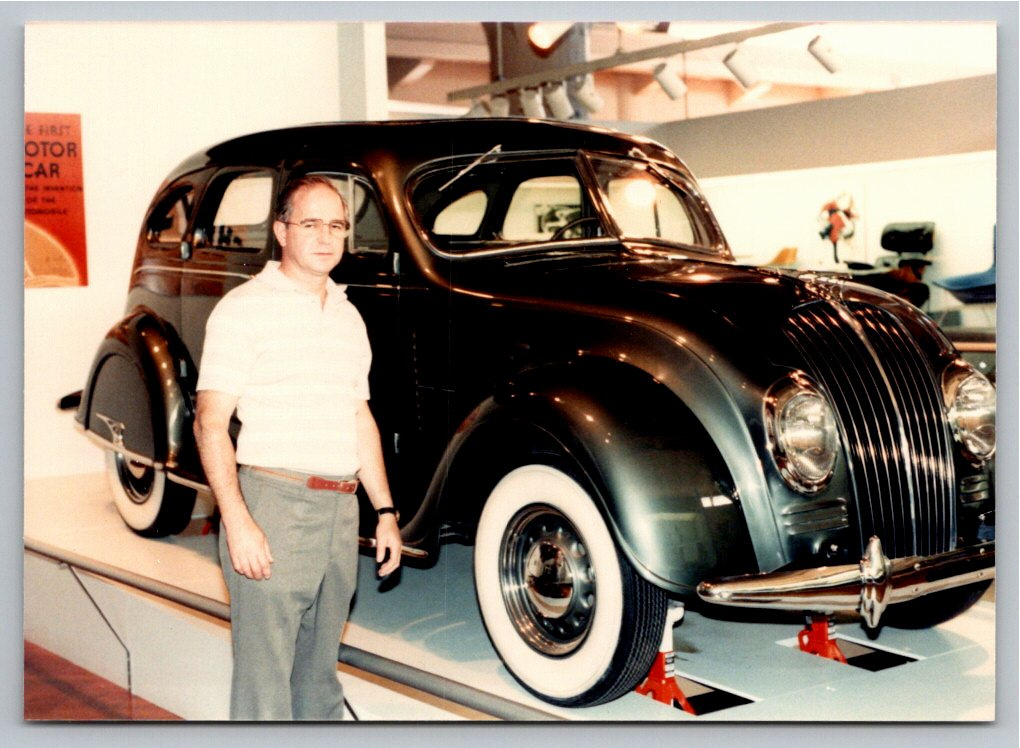
Vintage 1980s Color Photo 1934 Chrysler Airflow Museum Exhibit
📸 Click any thumbnail to inspect Front, Back & Angles (2 Photos)
As an eBay Partner, we may earn a commission if you make a purchase.
Item Specifications
- Era: 1980s
- Subject: 1934 Chrysler Airflow
- Theme: Automotive History & Museums
- Medium: Color Photographic Paper
- Condition: Vintage Original
- Originality: Original Vintage
- Category: Vintage Photography
- Format / Type: Snapshots
Looking for Modern Alternatives?
Explore top-rated, modern Vintage Photography and related historical accessories on Amazon.
Shop Vintage Photography on Amazon →As an Amazon Associate, we earn from qualifying purchases.
Historical Context & Overview
A Window into Automotive Innovation: The 1934 Chrysler Airflow
This original 1980s color photo snapshot provides an intimate view of one of the most groundbreaking automobiles in American history: the 1934 Chrysler Airflow. Captured inside a classic car museum exhibit during the late 20th century, the image depicts a visitor standing proudly alongside this iconic machine, offering a vivid sense of human scale and presence. Painted in a lustrous, deep dark hue accented by gleaming wide whitewall tires and sweeping vertical chrome grilles, the Airflow remains an undeniable masterwork of Art Deco industrial design and pioneering aerodynamic performance.
Pioneering Aerodynamics and Engineering Genius
When Chrysler introduced the Airflow at the height of the Great Depression in 1934, it radically disrupted traditional automotive manufacturing. Conceived by Chrysler engineer Carl Breer with assistance from aviation pioneer Orville Wright, who helped conduct early wind tunnel testing, the Airflow was among the first production vehicles engineered specifically to conquer aerodynamic drag. Prior to its debut, motorcars were assembled as rigid boxy passenger cabs mounted atop heavy ladder frames. Breer and his team inverted this traditional model, developing an integrated steel space-frame body structure—an early predecessor to modern unibody construction.
By moving the heavy inline engine forward over the front axle and shifting the passenger compartment between the wheelbases, Chrysler achieved near 50-50 weight distribution and a dramatically smoother ride quality. Visually, the 1934 Airflow was unmistakable. Its cascading waterfall front grille, flush-mounted headlamps, sweeping teardrop rear fender skirts, and continuous body contours reflected the height of the Streamline Moderne aesthetic. Though its radical appearance proved polarizing to conservative 1930s buyers, its forward-thinking engineering permanently re-defined how cars were built and styled worldwide.
Preserving Heritage Through 1980s Snapshot Photography
Beyond the historic significance of the vehicle itself, vernacular photographic artifacts from the 1980s hold a unique appeal for auto historians and ephemera collectors. Captured on traditional color photographic paper, the photo preserves the warm color tones, sharp grain, and authentic lighting characteristic of late-20th-century film snapshot technology.
The image captures a specific era in museum curation, complete with period exhibition signage visible in the background and the vehicle meticulously resting on jack stands atop an elevated display platform. For collectors of Chrysler history, vintage transportation ephemera, and early modern design, this candid photograph serves as a delightful time capsule bridging the innovative spirit of 1934 with the appreciation of vintage auto enthusiasts half a century later.
An Essential Piece for Automobilia and Photo Collectors
Original museum snapshots like this serve a dual purpose in vintage archives. They offer an unfiltered, authentic look at historic artifacts while simultaneously documenting the history of automotive preservation and museum displays. Whether displayed alongside automobile literature, framed in a garage gallery, or retained in an ephemera portfolio, this piece offers an enduring tribute to Chrysler's aerodynamic pioneer.