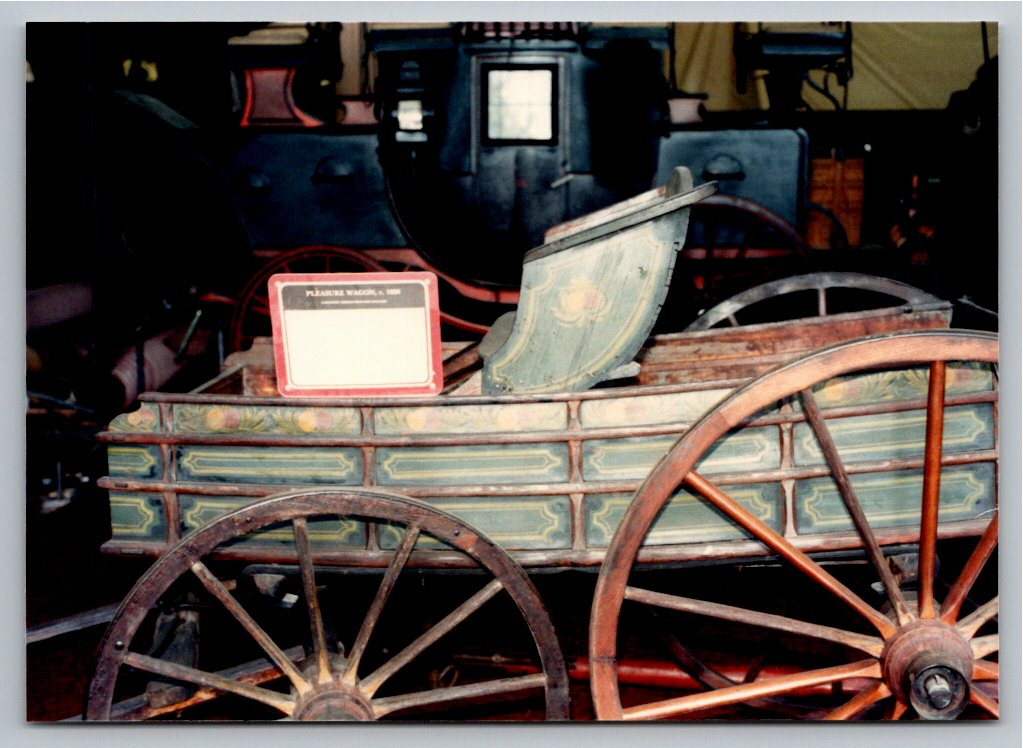
Vintage 1980s Photo of an Antique Horse-Drawn Pleasure Wagon
📸 Click any thumbnail to inspect Front, Back & Angles (2 Photos)
As an eBay Partner, we may earn a commission if you make a purchase.
Item Specifications
- Era: 1980s
- Subject: Horse-Drawn Pleasure Wagon
- Theme: Transportation & Carriage Museum
- Medium: Color Photographic Paper
- Originality: Original Vintage Print
- Condition: Pre-Owned Vintage
- Category: Vintage Photography
- Format / Type: Snapshots
Looking for Modern Alternatives?
Explore top-rated, modern Vintage Photography and related historical accessories on Amazon.
Shop Vintage Photography on Amazon →As an Amazon Associate, we earn from qualifying purchases.
Historical Context & Overview
Preserving 19th-Century Horse-Drawn Craftsmanship
During the late 18th and early 19th centuries, rural transit underwent a significant evolutionary shift. Prior to the widespread availability of specialized passenger carriages, agrarian families relied almost exclusively on heavy, utility-focused farm wagons for both agricultural labor and personal transport. However, as craftsmanship improved and personal wealth expanded across rural communities, the concept of the pleasure wagon emerged as an essential bridge between rugged working vehicles and formal, high-status carriages.
Captured in this original 1980s color photographic snapshot is a remarkably preserved antique horse-drawn pleasure wagon exhibited inside a carriage museum. Featuring decorative floral stenciling, hand-painted panel borders, and meticulously crafted wooden-spoked wheels, this piece reflects the delicate balance of utilitarian durability and artisanal aesthetic pride that defined early American carriage making.
The Genesis of the American Pleasure Wagon
Pleasure wagons gained immense popularity throughout the 1800s as versatile, light-duty horse-drawn vehicles. Designed primarily for family transport to church services, social gatherings, and town markets, these wagons featured lightened frame construction compared to heavy draft wagons. Removable or spring-mounted wooden bench seats allowed owners to quickly transition the vehicle from a Sunday passenger wagon to a light supply hauler, making them an economical choice for middle-class rural households.
The distinctive hand-painted ornamentation visible on the side panels was a hallmark of regional carriage builders. Wheelwrights and wainwrights frequently embellished these wagons with folk art flourishes, pinstriping, and vibrant paint colors such as forest green, deep crimson, and ochre yellow. These decorative elements served not only as visual accents but also provided protective layers over the seasoned hardwoods used in body construction.
Museum Conservation and 20th-Century Heritage Revival
By the mid-20th century, the advent of the automobile had long displaced horse-drawn transport from daily life, leading to the loss of countless historical wagons. In response, historical societies and specialized transportation museums began actively collecting, documenting, and restoring surviving carriages from the 19th century. During the 1970s and 1980s, public interest in early American material culture surged, inspiring visitors to document these historic collections using personal snapshot photography.
This 1980s color print offers a fascinating double-layered historical perspective. It documents a rare 19th-century vehicle while also serving as a tactile artifact of late-20th-century museum curation and photography. For collectors of equestrian history, antique transportation relics, and vintage snapshot photography, this photograph provides a captivating visual record of early carriage design and folk-art craftsmanship.