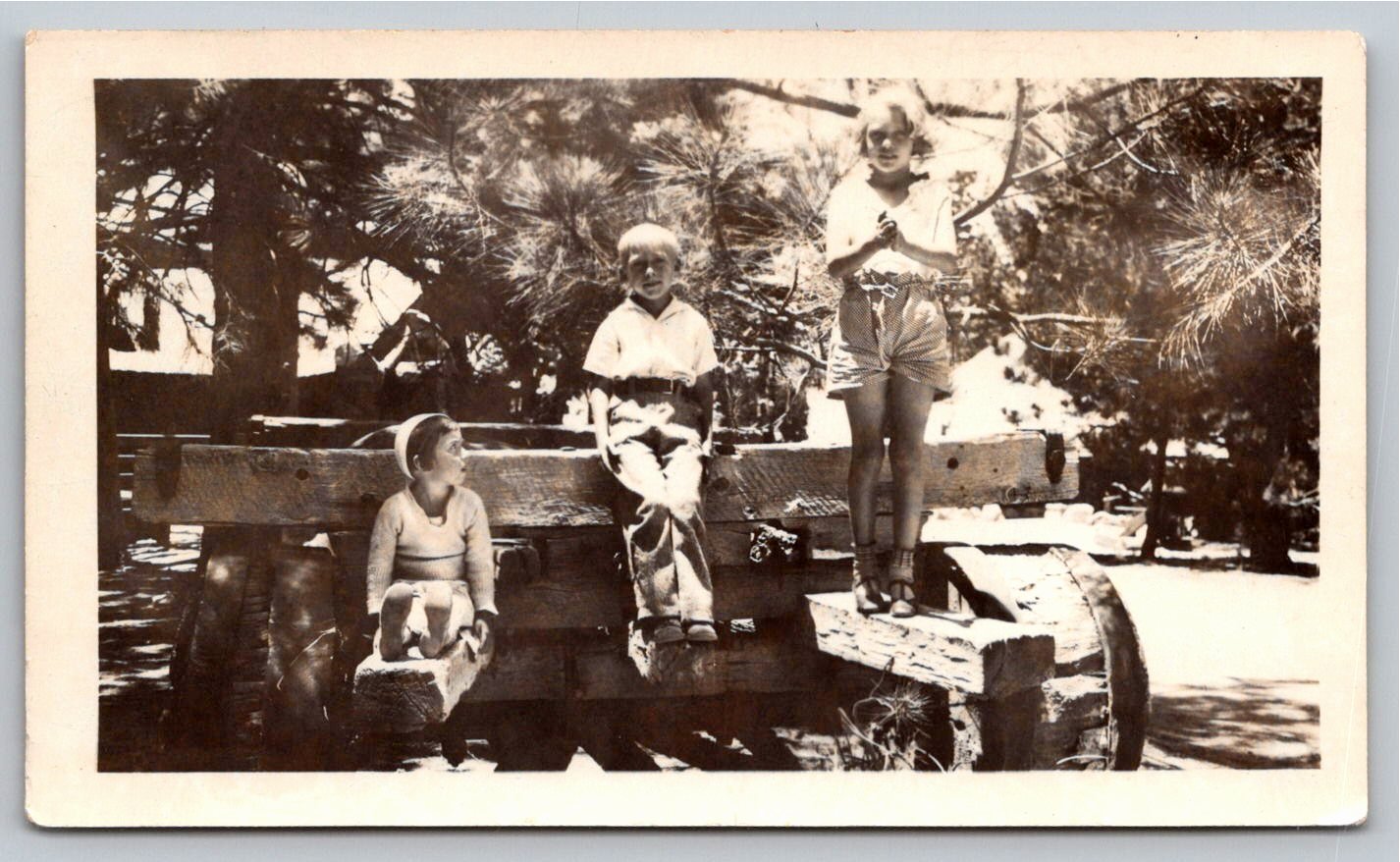
1930s Children on Rustic Pioneer Wagon Wheel Snapshot Photo
📸 Click any thumbnail to inspect Front, Back & Angles (2 Photos)
🔗 Embed / Cite This Archival Image (Free with Attribution)Get HTML Code
© USA RESELL. Bloggers, historians, and website owners may embed this image for free by copying the HTML code below (which includes the required credit link back to this page):
USA RESELL is a living historical archive. Because original artifacts are one-of-a-kind and source records change rapidly, use the button above to check live marketplace availability or locate surviving examples. As an eBay Partner, we may earn a commission on qualifying purchases.
Item Specifications
- City: Unspecified
- Country: United States
- Era: 1930-1939
- Subject: Children
- Theme: Americana Domestic and Family Life Agriculture
- Year of Production: 1935
- Category: Vintage Photography
- Format / Type: Snapshots
Historical Context & Overview
Depression-Era Childhood and Pioneer Relics
This striking original vintage snapshot from circa 1935 provides an evocative window into rural American childhood during the interwar era. Three young youths pose casually on the massive framework of a rustic pioneer wagon, their postures illustrating both youthful curiosity and unposed ease. To the left, a small toddler wearing a close-fitting sun bonnet sits nestled securely on an oversized wooden timber beam, gazing up at their siblings. In the center, a young boy dressed in a neatly pressed collared shirt and cuffed trousers balances upright, while an older girl on the right stands proudly in summer play shorts and strapped sandals, her hands joined lightly in front of her.
The outdoor backdrop is characterized by dense, fragrant evergreen pine branches that cast deep, dappled shadows across the rugged timber construction of the wagon. The wagon itself, complete with hand-hewn beams and a colossal iron-rimmed wooden wheel, serves as an impromptu playground. During the 1930s, relics of 19th-century westward expansion were frequently retained on family homesteads, regional parks, or historic waypoints, bridging the frontier past with the modern twentieth century.
Vernacular Family Photography in 1930s America
In the heart of the Great Depression, amateur snapshot photography flourished as handheld roll-film cameras allowed working- and middle-class households to document private family milestones. Rather than visiting formal portrait studios with stiff painted backdrops, parents brought their folding cameras on countryside weekend drives and visits to extended relatives. The composition captures a spontaneous moment of summer leisure, preserving authentic period attire ranging from utility shorts to children's leather footwear.
The reverse side of the photographic print remains entirely unprinted, characteristic of private home-album prints rather than commercially published souvenirs. Centered on the back is a simple, period graphite pencil notation reading "42," likely indicating a negative sequence number, print cataloging index, or family album reference assigned during processing. Such vernacular markings provide collectors with tangible evidence of an authentic domestic archiving process.
Material Characteristics, Condition, and Archival Significance
Printed on traditional matte photographic paper stock, the snapshot measures approximately 4.5 by 2.6 inches and retains its original uncropped white border. The print demonstrates remarkable optical clarity, displaying crisp focus on the children's faces, rich shadow separation among the pine needles, and well-balanced tonal values across the sunlit wooden timbers. The surface has survived without distracting scratches, tears, or creases.
Preserved in very good vintage condition, the piece shows only minimal, gentle handling wear along the perimeter edges and a natural warm paper patina consistent with nine decades of careful storage. For enthusiasts of vernacular photography, vintage Americana, and agricultural history, this original print offers a compelling historical artifact capturing the quiet warmth and resilience of 1930s American domestic life.