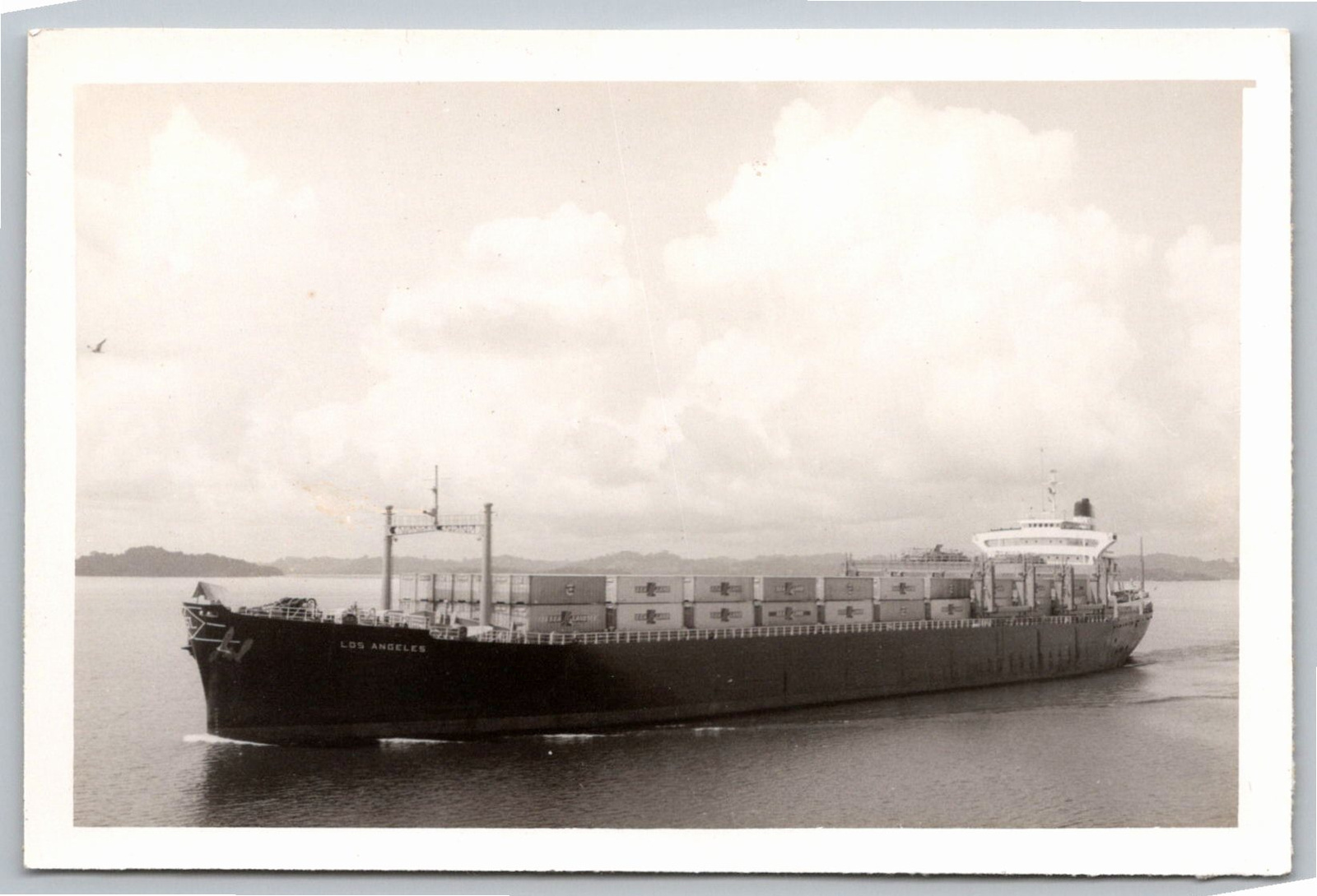
Vintage 1970s Sea-Land Los Angeles Cargo Ship Photograph
📸 Click any thumbnail to inspect Front, Back & Angles (2 Photos)
🔗 Embed / Cite This Archival Image (Free with Attribution)Get HTML Code
© USA RESELL. Bloggers, historians, and researchers may embed this image for free by keeping the credit link below intact:
As an eBay Partner, we may earn a commission if you make a purchase.
Item Specifications
- City: Los Angeles
- State: California
- Country: United States
- Era: 1970s
- Subject: Maritime Container Ship
- Original/Licensed Reprint: Original Vintage
- Category: Vintage Photography
- Format / Type: Vintage Photographs
Looking for Modern Alternatives?
Explore top-rated, modern Vintage Photography and related historical accessories on Amazon.
Shop Vintage Photography on Amazon →As an Amazon Associate, we earn from qualifying purchases.
Historical Context & Overview
The Dawn of Containerization: Sea-Land Service and Modern Trade
In the mid-20th century, a dramatic revolution swept through international commerce. Spearheaded by trucking entrepreneur Malcom McLean and Sea-Land Service, Incorporated, intermodal containerization fundamentally altered how goods were transported across the world’s oceans. Prior to this innovation, break-bulk cargo handling required labor-intensive loading and unloading of individual crates, barrels, and sacks. The introduction of standardized steel intermodal containers allowed cargo to transfer seamlessly between trucks, trains, and ocean vessels without ever opening the box. This original 1970s photograph offers a fascinating window into that golden age of maritime logistics, capturing the vessel Los Angeles as it navigates calm coastal waters under a dramatic cumulus sky.
Visual Documentation of the Vessel Los Angeles
The side-profile snapshot presents a remarkably detailed look at mid-century commercial naval engineering. Bearing clear hull markings at its bow, the ship Los Angeles is shown fully laden with rows of iconic Sea-Land intermodal freight units neatly stacked along the main deck forward of the rear superstructure. Notable structural features—including deck-mounted cargo handling gear, forward mast structures, and the elevated bridge control tower—highlight the transitional era of container vessel design. During this period, shipping lines were rapidly adapting converted tanker hulls and building specialized container hulls to maximize capacity and quicken port turnaround times.
Pacific Shipping and West Coast Trade Connections
The naming of the vessel Los Angeles underscores the crucial strategic role played by West Coast ports in the expansion of trans-Pacific and coastal trade routes. During the 1970s, the Port of Los Angeles and neighboring San Pedro Bay facilities were expanding rapidly to accommodate the growing volume of containerized goods arriving from East Asia and navigating international sea lanes. Visual records showing Sea-Land ships carrying full loads along regional shorelines reflect the immense economic growth of California's maritime infrastructure during the late 20th century.
Authentic Photographic Paper and Physical Characteristics
Measuring approximately 5.2 inches by 3.4 inches, this vintage black-and-white print was rendered using traditional gelatin-silver photographic chemistry. The monochrome tonal range displays nice contrast between the dark hull, the bright white superstructure, and the cloud formations drifting above the distant coastline. The reverse side remains completely plain and unprinted, distinguishing it as a genuine photographic snapshot rather than a commercial postcard production. Its sharp edges, flat paper planar density, and gentle age-appropriate patina make it a standout original artifact for maritime ephemera enthusiasts.
A Valuable Historical Artifact for Maritime Collectors
Original photographs documenting active commercial container fleets from the 1970s serve as invaluable historical references for naval architects, industrial historians, and maritime ephemera collectors. As early container ships like the Los Angeles were eventually retired, scrapped, or modified over subsequent decades, contemporary photographs taken during their operational prime preserve the visual heritage of global shipping's modern foundations.