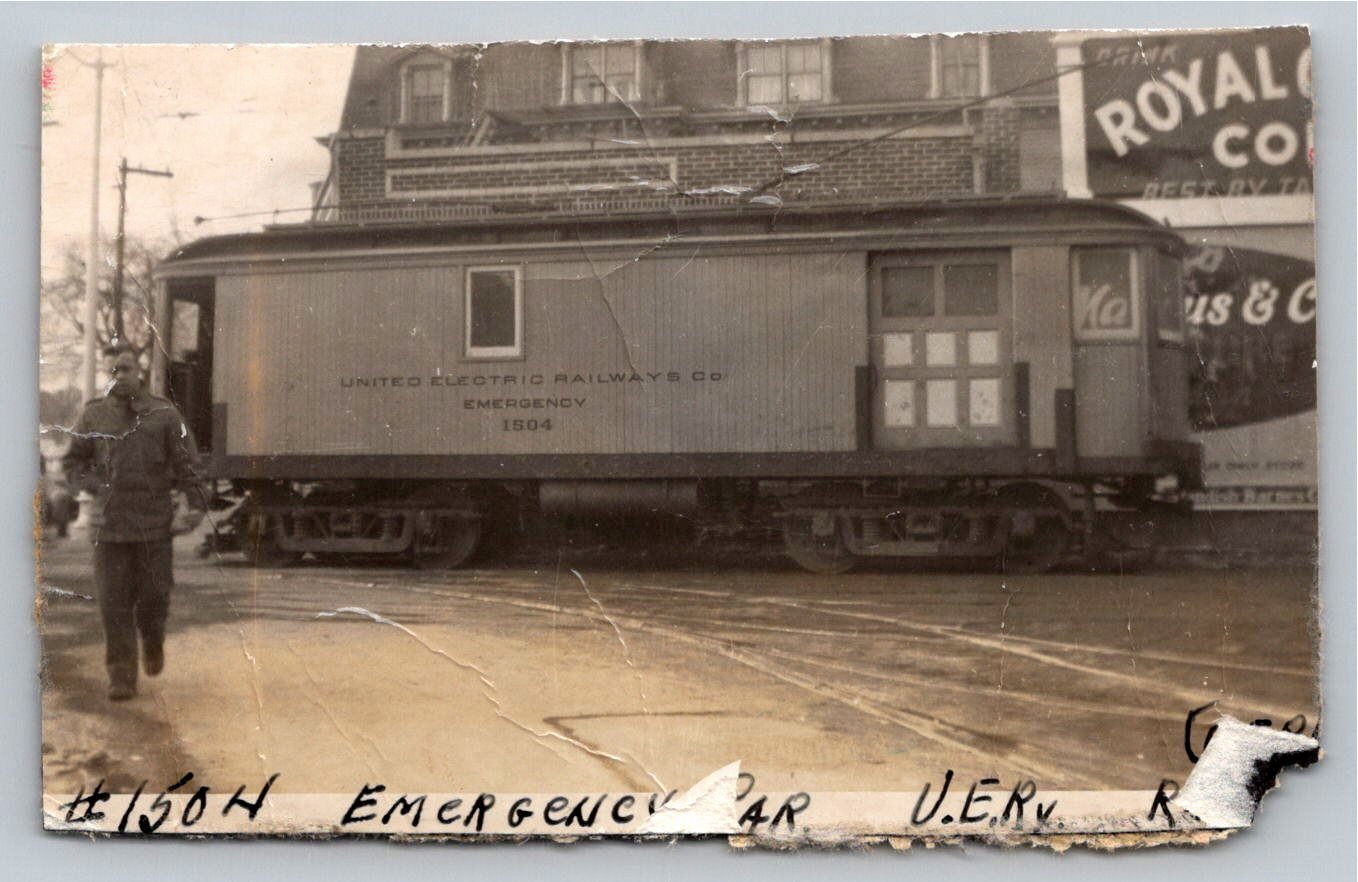
1940s United Electric Railways Providence RI Emergency Photo
📸 Click any thumbnail to inspect Front, Back & Angles (2 Photos)
🔗 Embed / Cite This Archival Image (Free with Attribution)Get HTML Code
© USA RESELL. Bloggers, historians, and website owners may embed this image for free by copying the HTML code below (which includes the required credit link back to this page):
USA RESELL is a living historical archive. Because original artifacts are one-of-a-kind and source records change rapidly, use the button above to check live marketplace availability or locate surviving examples. As an eBay Partner, we may earn a commission on qualifying purchases.
Item Specifications
- City: Providence
- State: Rhode Island
- Country: United States
- Era: Vintage (c. 1940s)
- Subject: Streetcar Emergency Work Car
- Theme: Transportation
- Category: Vintage Photography
- Format / Type: Vintage Photographs
Historical Context & Overview
This authentic 1940s vintage photograph captures a rare visual record of electric transit infrastructure in Southern New England: United Electric Railways Co. Emergency Car #1504 on the rails in Providence, Rhode Island. As electric streetcar systems expanded rapidly across urban America during the early 20th century, specialized work cars were vital to keeping lines operational through harsh weather, line breaks, and mechanical disruptions.
Design and History of UERy Emergency Car #1504
Emergency Car #1504 was originally constructed in 1904 for The Rhode Island Company before being absorbed into the fleet of the United Electric Railways Company (UERy). Unlike standard passenger trolleys, this heavy-duty wooden utility car was equipped with specialized side-access doors, heavy equipment bays, and rugged wheel trucks engineered to carry ballast, wire repair gear, and heavy maintenance machinery directly to trouble spots along the network.
The side paneling clearly displays the crisp period stencil lettering: "UNITED ELECTRIC RAILWAYS CO. EMERGENCY 1504". The surrounding environment provides rich historical context, including classic urban brick architecture, overhead wire lines, and a period Royal Crown Cola advertising billboard in the background.
Historical Legacy and Preservation
Following its decades of utility service in Rhode Island, Car #1504 achieved long-term historical significance when it was acquired and preserved by the Branford Electric Railway Association (BERA), operating today as the Shore Line Trolley Museum in East Haven, Connecticut. This photograph serves as an important primary visual record of the vehicle while still operating in its original working domain.
Condition & Physical Characteristics
Measuring approximately 4.2 by 2.6 inches, this black-and-white gelatin-silver print exhibits authentic period character. The front margin features period handwritten ink notations identifying the car and transit company, while light surface creasing and corner wear attest to its genuine age. The reverse side bears dark paper album mounting residue and detailed cursive notations recording its identity, location in Providence, and preservation status with BERA, making it a compelling piece for rail historians and New England collectors alike.
Rhode Island Transit Evolution and Industrial Ephemera
During the 1940s, urban street railway systems across New England underwent rapid modernization and gradual abandonment as transit authorities systematically replaced conventional rail lines with electric trackless trolleys and motor buses. In Providence, specialized utility vehicles like Emergency Car #1504 remained essential to daily operations longer than standard passenger cars, maintaining overhead catenary wires and clearing track obstructions until the final rail lines were decommissioned. Candid images capturing non-passenger work equipment in actual street service during this transitional era offer transit historians a vital look at the behind-the-scenes infrastructure that sustained municipal mobility throughout Rhode Island's urban center.
Collector Significance and Photographic Heritage
Mid-century gelatin-silver prints serve as crucial visual artifacts for transportation research, recording precise construction nuances, wheel truck arrangements, and mechanical fixtures of early 20th-century rolling stock that written corporate records often omit. For collectors of New England rail history, original snapshot photography featuring dedicated utility vehicles holds heightened appeal due to its relative scarcity compared to mass-produced promotional views or standard passenger line portraits. This photograph stands as a compelling piece of mid-century industrial heritage, bridging the gap between working municipal rail history and physical ephemera preservation.