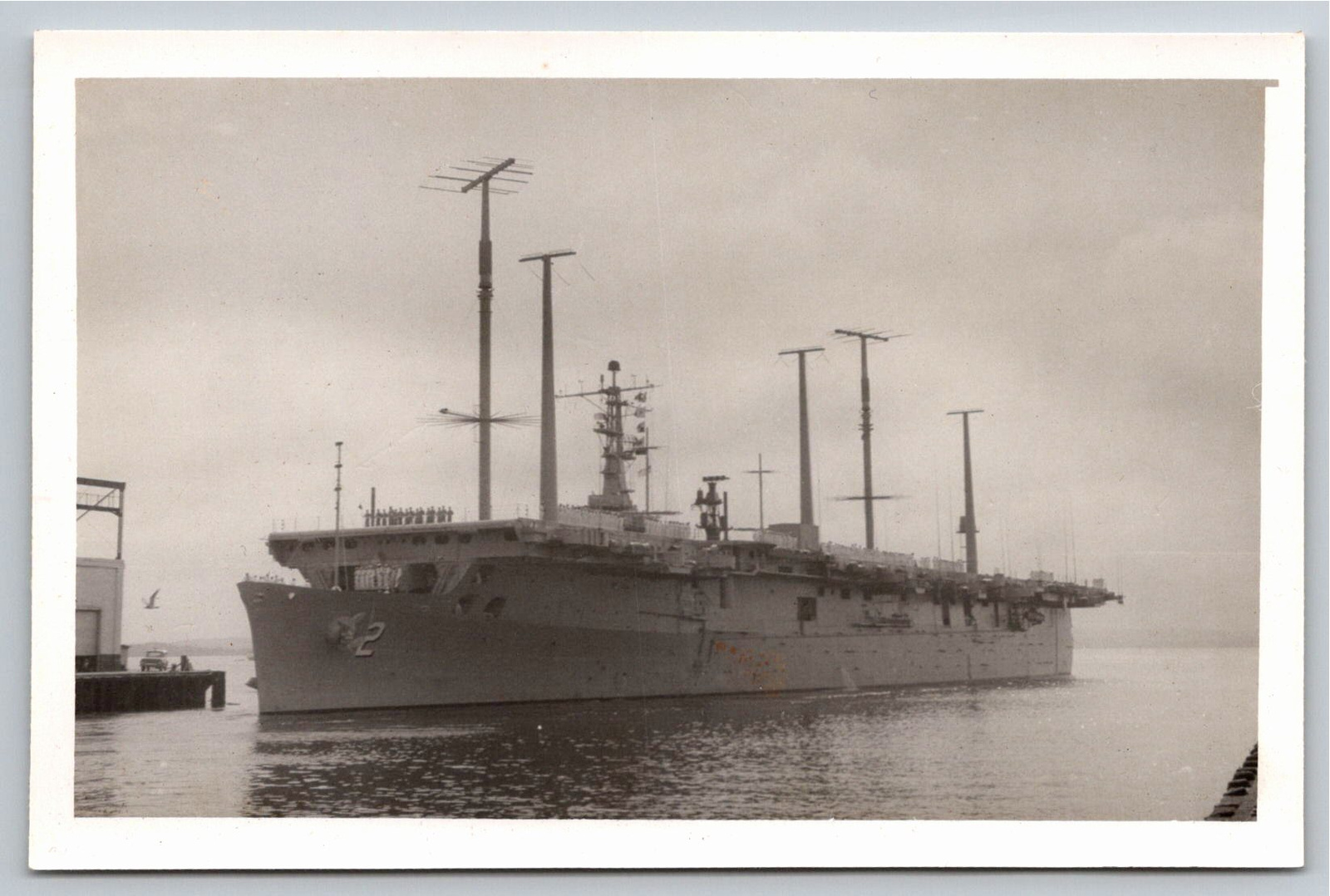
1960s USS Wright CC-2 Command Ship Original Vintage Photo
📸 Click any thumbnail to inspect Front, Back & Angles (2 Photos)
🔗 Embed / Cite This Archival Image (Free with Attribution)Get HTML Code
© USA RESELL. Bloggers, historians, and researchers may embed this image for free by keeping the credit link below intact:
As an eBay Partner, we may earn a commission if you make a purchase.
Item Specifications
- City: San Diego
- State: California
- Country: United States
- Era: 1960s
- Subject: USS Wright CC-2 Naval Command Ship
- Original/Licensed Reprint: Original Vintage
- Category: Vintage Photography
- Format / Type: Vintage Photographs
Looking for Modern Alternatives?
Explore top-rated, modern Vintage Photography and related historical accessories on Amazon.
Shop Vintage Photography on Amazon →As an Amazon Associate, we earn from qualifying purchases.
Historical Context & Overview
A Floating Command Center of the Cold War Era
During the height of nuclear tensions in the mid-20th century, the United States Navy undertook specialized warship re-engineers designed to ensure military continuity under extreme emergency conditions. Among the most ambitious conversions was the transformation of the USS Wright (originally built as a Saipan-class light aircraft carrier, CVL-49) into the ultimate floating communications fortress, designated CC-2. Recommissioned in the early 1960s, this command ship served as a cornerstone of the National Emergency Command Post Afloat (NECPA) program, designed to act as a mobile operational nerve center for top military leadership.
This authentic gelatin-silver snapshot captures the USS Wright CC-2 maneuvering near port, likely off the coast of California. The image dramatically reveals the ship's most distinctive physical attribute: an astonishing network of towering radio antenna masts erected directly along the former flight deck. These ultra-high-power transmitters and advanced telecommunication arrays were capable of relaying strategic command communications worldwide, allowing the vessel to serve as a floating command center away from land-based targets.
Engineering Marvel and Naval Intelligence History
Originally laid down during World War II, the hull of the USS Wright underwent an extensive conversion between 1962 and 1963. The flight deck was stripped of traditional flight operations gear to accommodate specialized electronic superstructures, massive antenna towers, and reinforced command spaces below deck. Painted prominently on the bow in this vintage view is the bold hull number "2", while naval crew members can be seen standing along the deck edge against a calm bay backdrop.
Operating throughout the turbulent 1960s, the ship routinely conducted trials and operational deployments before being placed in reserve in 1970. Vintage imagery of the USS Wright in her specialized command configuration is relatively scarce, as her onboard capabilities represented state-of-the-art naval communications technology during a critical period of Cold War intelligence.
Photographic Details and Collector Condition
Printed on traditional mid-century fiber photographic paper measuring approximately 5.2 by 3.4 inches, this photo displays classic darkroom craftsmanship. It exhibits crisp focus, well-balanced tonal contrast, and clean white borders surrounding the image frame. The reverse of the photograph is unprinted and free of postcard markings, confirming its origin as an authentic personal military snapshot print rather than a mass-produced commercial postcard.
Preserved in very good vintage condition, the photograph retains sharp structural clarity along the ship's hull and dense rigging. Light, natural handling wear near the outer margins reflects its authentic age without compromising the primary subject matter. Free from heavy creasing, pinholes, or tears, this piece represents a fine addition for warship historians, naval intelligence enthusiasts, and collectors of Cold War military photography.