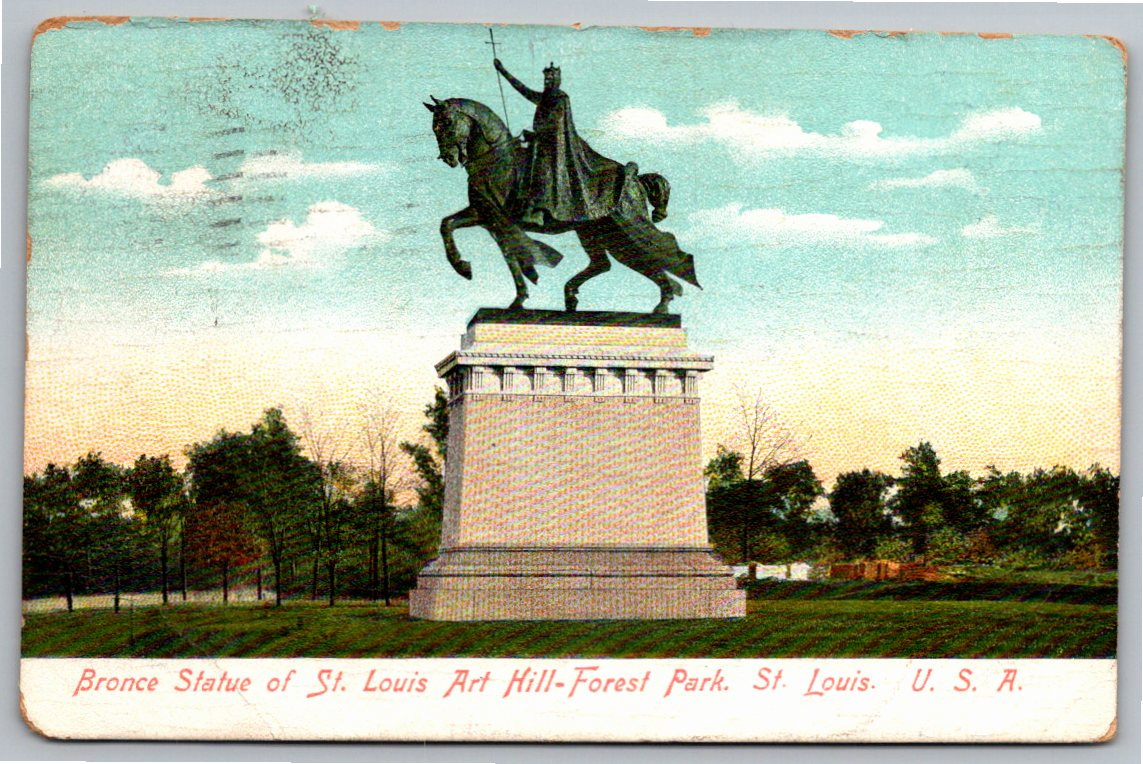
1908 Bronze Statue of St. Louis Art Hill Forest Park Postcard
📸 Click any thumbnail to inspect Front, Back & Angles (2 Photos)
As an eBay Partner, we may earn a commission if you make a purchase.
Item Specifications
- Era: Golden Age (1907-1915)
- Publisher: St. Louis Post Card Co.
- Printer: Made in Germany
- Location: St. Louis, Missouri
- Subject: Apotheosis of St. Louis
- Postmark Date: July 21, 1908
- Category: Postcards & Ephemera
- Format / Type: Vintage Postcards
Looking for Modern Alternatives?
Explore top-rated, modern Postcards & Ephemera and related historical accessories on Amazon.
Shop Postcards & Ephemera on Amazon →As an Amazon Associate, we earn from qualifying purchases.
Historical Context & Overview
The Icon of Forest Park: The Apotheosis of St. Louis
Standing grandly atop Art Hill overlooking Forest Park, the monumental bronze equestrian statue of King Louis IX of France—popularly known as the Apotheosis of St. Louis—remains one of the most recognizable symbols of the Gateway City. Designed by renowned American sculptor Charles Henry Niehaus, the heroic sculpture originally debuted as a temporary plaster model greeting millions of visitors at the main entrance of the 1904 Louisiana Purchase Exposition (St. Louis World's Fair).
Following the tremendous success of the World's Fair, the Louisiana Purchase Exposition Company commissioned a permanent bronze casting of Niehaus's design to gift to the city. Cast by the Newark District Telegraph Company, the magnificent statue was unveiled to the public in October 1906, standing proudly on a high granite pedestal designed by architect Emmanuel Louis Masqueray in front of the Saint Louis Art Museum. Depicting the 13th-century French monarch in medieval armor with his sword held inverted to resemble a cross, the monument quickly became an essential motif for local photographers and postcard publishers.
German Lithography and Early 20th-Century Souvenirs
This early example, published by the St. Louis Post Card Company, highlights the peak of the "Golden Age" of postcards (1898–1915). During this era, American postcard publishers routinely sent high-resolution photographs to specialized printing houses in Germany, which possessed the world's finest chromolithographic capabilities. German lithographers excelled at adding subtle, realistic colors to monochromatic images, resulting in the soft, painterly palette visible across the sky, foliage, and weathered bronze tones on this card.
The postcard features a divided back layout, which was authorized by the United States Post Office in early 1907. Prior to this change, message writing was restricted strictly to the front image area, leaving the back solely for the address. The green one-cent Benjamin Franklin stamp affixed to the reverse was canceled in St. Louis on July 21, 1908, offering definitive provenance from the statue's first years on Art Hill.
A Handwritten Window Into Daily Life in 1908
Beyond its architectural and artistic significance, this artifact holds personal historic appeal. Sent to an address in Gallatin, Missouri, the crisp penmanship on the reverse conveys a warm personal greeting sent home during a visit to St. Louis. Antique postcards serve as fascinating dual-purpose artifacts: they document the grand civic monuments of dynamic American cities while preserving intimate moments of daily communication from over a century ago.
For collectors of Missouri regional history, World's Fair memorabilia, or early American public sculpture, this 1908 postcard offers a pristine, tangible link to the golden era of St. Louis civic pride.