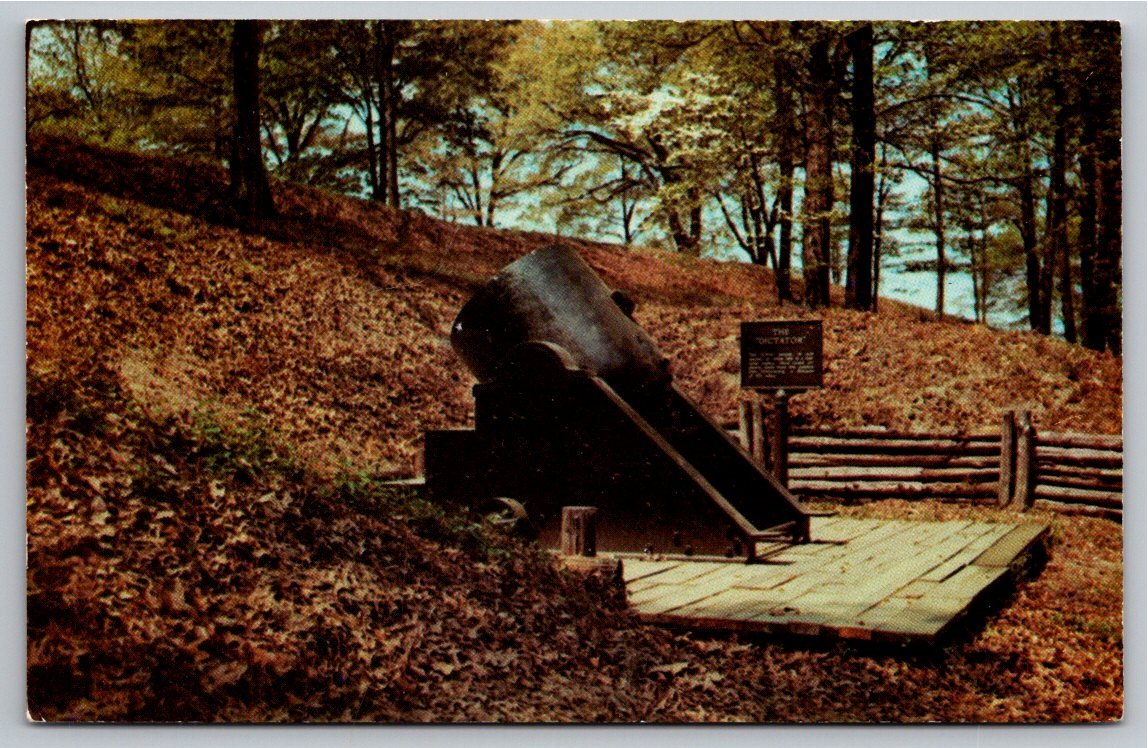
Vintage Petersburg National Military Park Dictator Mortar
📸 Click any thumbnail to inspect Front, Back & Angles (2 Photos)
As an eBay Partner, we may earn a commission if you make a purchase.
Item Specifications
- Era: Mid-Century Chrome
- Publisher: Dexter Press
- Location: Petersburg, Virginia
- Subject: The Dictator Mortar
- Originality: Original Vintage
- Photographer: Walter H. Miller
- Category: Postcards & Ephemera
- Format / Type: Vintage Postcards
Looking for Modern Alternatives?
Explore top-rated, modern Postcards & Ephemera and related historical accessories on Amazon.
Shop Postcards & Ephemera on Amazon →As an Amazon Associate, we earn from qualifying purchases.
Historical Context & Overview
During the protracted Siege of Petersburg (June 1864 – April 1865), Union and Confederate forces engaged in a grueling ten-month campaign of trench warfare that foreshadowed the tactics of the First World War. Among the most formidable artillery pieces fielded during this confrontation was "The Dictator," a massive 13-inch Model 1861 seacoast mortar. This vintage chrome postcard offers a vivid glimpse into mid-century historical commemoration at Petersburg National Military Park in Virginia, capturing a full-scale replica positioned within earthwork fortifications similar to those occupied during the siege.
The Mighty Siege Weapon: "The Dictator" in Civil War History
Formally designated as a 13-inch sea-coast mortar, "The Dictator" weighed over 17,000 pounds and was capable of launching 200-pound explosive iron shells over two and a half miles into the city of Petersburg and Confederate defensive positions. To manage its immense weight and mobility challenges, Union artillerymen mounted the cannon on a specially reinforced railroad flatcar operating along the Petersburg and City Point Railroad. From this mobile platform, Union forces fired 218 rounds during a nine-day period in July 1864, inflicting substantial damage and demoralizing enemy forces across the lines.
The sheer acoustic shock and destructive footprint of the mortar earned it its moniker from the soldiers who operated and witnessed it. Although the original heavy iron piece was removed following the campaign, its legacy became central to the storytelling at Petersburg National Military Park, established in 1926 to preserve the extensive battlefield terrain, earthworks, and battery sites surrounding the city.
Mid-Century Photography and Printing Craftsmanship
Produced during the golden age of color chrome postcards, this piece features direct color photography by noted Virginia photographer Walter H. Miller using Kodak's famed Ektachrome film transparency process. The vivid, earth-toned palette brings out the deep browns of the autumnal foliage and the dark cast-iron silhouette of the mortar resting on a timber firing platform inside earthen redoubts.
The postcard was manufactured by Dexter Press of Pearl River, New York, renowned for its "Dextone" color printing technology, and distributed locally by Miller's Camera Shop in Williamsburg, Virginia. Mid-century postcards of this quality served as key visual keepsakes for millions of American families embarking on road trips along National Park Service routes during the post-World War II travel boom.
Significance for Military History and Ephemera Collectors
For collectors of Civil War ephemera, National Park Service memorabilia, and mid-20th-century color photography, this card represents an intersection of military history and post-war American tourism heritage. It captures both the daunting engineering of 19th-century siege artillery and the dedicated preservation efforts of mid-century historians aiming to keep Civil War memory alive for modern audiences.