1909 City of Moline Mississippi River Steamboat Antique Postcard
📸 Click any thumbnail to inspect Front, Back & Angles (2 Photos)
As an eBay Partner, we may earn a commission if you make a purchase.
Item Specifications
- Era: Divided Back (1907–1915)
- Year: 1909
- Postmark Location: St. Louis, Missouri
- Subject: City of Moline Steamboat
- Waterway: Mississippi River
- Originality: Original Vintage
- Category: Postcards & Ephemera
- Format / Type: Vintage Postcards
Looking for Modern Alternatives?
Explore top-rated, modern Postcards & Ephemera and related historical accessories on Amazon.
Shop Postcards & Ephemera on Amazon →As an Amazon Associate, we earn from qualifying purchases.
Historical Context & Overview
The Majesty of Mississippi River Navigation
In the late 19th and early 20th centuries, the Mississippi River served as the beating heart of American inland transport and commerce. Long before interstate highways and freight railways dominated transportation routes, grand sternwheel and side-wheel steamboats plied the waters from Minneapolis down to New Orleans. Among these iconic vessels was the steamboat City of Moline, a prominent rivercraft associated with the industrious Quad Cities region of Illinois and Iowa.
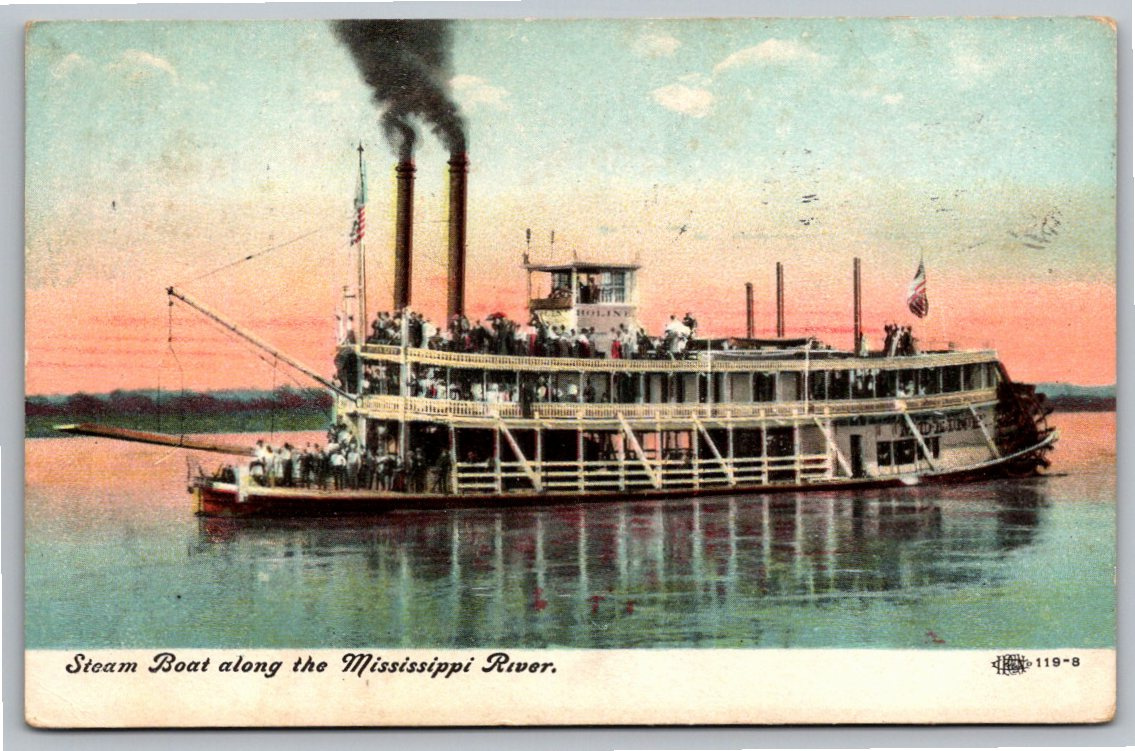
This original color postcard captures the City of Moline in all her glory during the height of the Golden Age of Riverboats. Printed during the early 1900s, the lithographic image highlights the architectural grandeur typical of Mississippi packet and excursion boats. Passengers line the multi-tiered open decks, taking in the panoramic river views while dark plumes of smoke pour from the vessel's twin smokestacks, symbolizing the industrial energy of the era.
Design and Historical Details
The front illustration presents a tinted photographic view showcasing the steamboat afloat on calm river waters, complete with its majestic stern paddle wheel and suspended gangplank at the bow. Below the scene, neat typography reads, "Steam Boat along the Mississippi River," accompanied by an early publisher serial number (119-8). The vivid color tinting captures a gentle twilight sky reflected across the water's surface, reflecting the romanticized view of river travel cherished by turn-of-the-century travelers.
Turn-of-the-century riverboats like the City of Moline played a dual role. While serving vital transportation functions—carrying mail, agricultural goods, and manufactured items between river towns—they were equally famous for hosting day excursions, social outings, and summer cruises along the Upper Mississippi. The crowded decks shown on this card emphasize the popularity of these floating excursions among local residents seeking recreation.
A Documented Slice of 1909 Postal History
The reverse side of this postcard offers an extraordinary historical document in its own right. Mailed on March 15, 1909, from the St. Louis, Missouri Annex Station, the card features a clean circular postmark alongside a classic 1-cent green Benjamin Franklin stamp (Issue of 1908–1909). The divided back layout, authorized by the U.S. Post Office in 1907, allowed senders to write personal correspondence on the left side while reserving the right side strictly for the recipient's address.
Addressed in elegant cursive script to a recipient in Gallatin, Missouri, the handwritten message contains a poignant note regarding family news, capturing a genuine fragment of daily life from over a century ago. For historians and deltiologists alike, postcard correspondence like this serves as a tangible connection to personal communications in pre-digital America.
A Prize for Maritime and Regional Historians
Whether you are a devoted collector of steamboat memorabilia, an enthusiast of Upper Mississippi River history, or a deltiologist specializing in Divided Back Era postcards, this 1909 artifact stands as an exemplary piece of American maritime heritage. Its surviving vibrant color, clear postmark, and authentic handwritten message make it a quintessential keepsake from the twilight years of the great steamboat era.