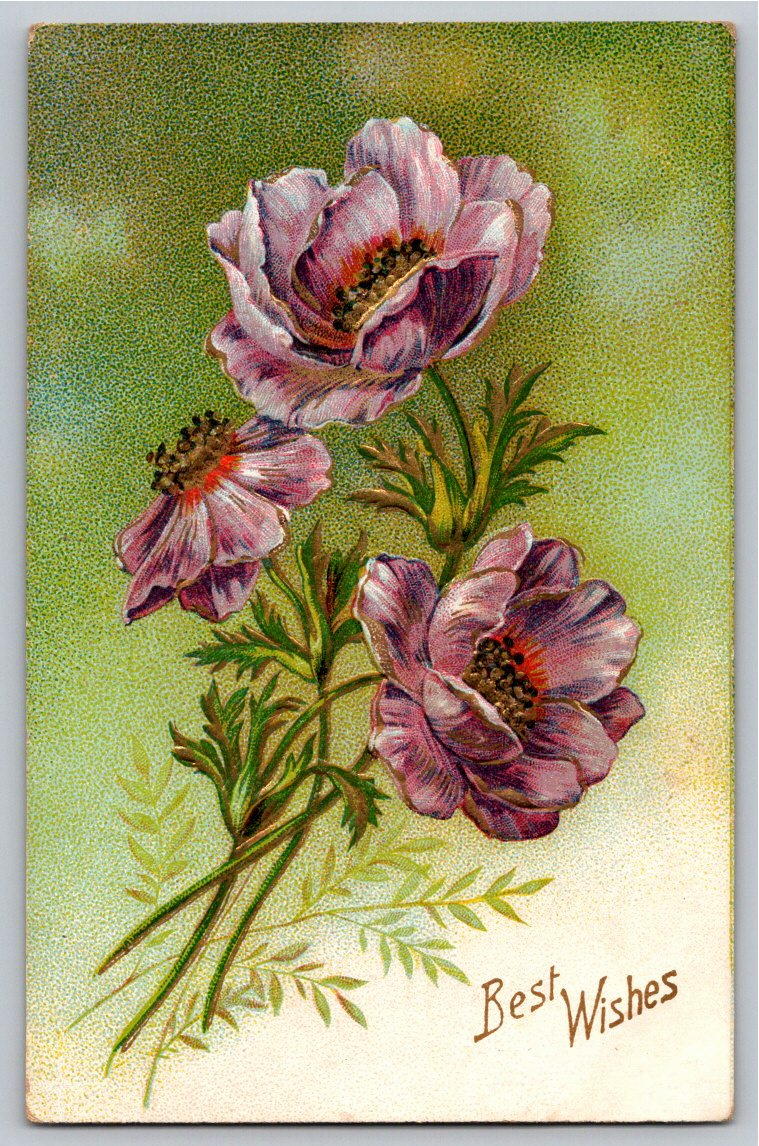
Vintage 1910s Embossed Purple Anemones Best Wishes German
📸 Click any thumbnail to inspect Front, Back & Angles (2 Photos)
As an eBay Partner, we may earn a commission if you make a purchase.
Item Specifications
- Era: 1910s Divided Back
- Origin: Germany
- Subject: Purple Anemones
- Theme: Floral Best Wishes
- Features: Embossed Relief & Metallic Accents
- Originality: Original Vintage
- Category: Postcards & Ephemera
- Format / Type: Vintage Postcards
Looking for Modern Alternatives?
Explore top-rated, modern Postcards & Ephemera and related historical accessories on Amazon.
Shop Postcards & Ephemera on Amazon →As an Amazon Associate, we earn from qualifying purchases.
Historical Context & Overview
During the Golden Age of Postcards—spanning roughly 1907 through the outbreak of the First World War—the art of social correspondence reached an unmatched level of tactile and visual elegance. German publishers stood at the pinnacle of this industry, pioneering high-end relief embossing, multi-color chromolithography, and intricate metallic finishing. This captivating early 1910s floral postcard, featuring a lush cluster of purple anemones inscribed with a classic "Best Wishes" sentiment, serves as a textbook example of Edwardian printmaking art.
German Chromolithography and Embossing Mastery
At the turn of the twentieth century, cities like Leipzig, Dresden, and Nuremberg were world capitals for graphic arts. German printers perfected multi-stone chromolithography, a labor-intensive process requiring separate lithographic stones for each hue. This card demonstrates that meticulous color separation, building soft gradient greens in the background to contrast against deep violet, magenta, and blush tones on the flower petals.
To heighten the visual impact, the card was passed through heavy steel dies to stamp out crisp raised embossing. Notice how the three anemone blooms pop dramatically from the cardstock. Fine bronze-gold metallic highlights accent the contours of the petals and stamen clusters, catching light when tilted and giving the artwork a shimmering, dimensional presence that flat modern offset printing simply cannot replicate.
Floriography: The Meaning of the Purple Anemone
In Edwardian society, the Victorian language of flowers—floriography—remained a beloved method of tacit communication. Every blossom carried specific sentiment and symbolic weight. Anemones, often called windflowers, historically symbolized anticipation, sincerity, and protection against ill fortune. When painted in rich shades of purple, they represented royalty, deep affection, and admiration.
Combined with the simple, elegant copperplate lettering reading "Best Wishes," this postcard was designed as a versatile greeting suitable for birthdays, anniversaries, or general expressions of goodwill. The design prioritized elegance over flash, making it a cherished keepsake that recipients frequently kept preserved in specialized leather-bound postcard albums.
A Window Into Edwardian Social Life
The reverse side of the card features the standard "Divided Back" format authorized by universal postal conventions around 1907, allowing the sender to write a personal message on the left while reserving the right side for the recipient's address. Marked cleanly on the side border with "Made in Germany," the card bears a handwritten birthday message in fountain pen ink from "Helen" addressed to "Miss Edith L. Peck."
Because it lacks a postmark and postage stamp, this piece was almost certainly enclosed within a gift box or hand-delivered in an envelope. This careful handling preserved the high-relief embossing from the crushing gear mechanisms of postal sorting machinery, allowing it to survive over a century in exceptional condition for modern postcard collectors and ephemera enthusiasts.