Historic Hotel Gayoso Memphis Tennessee 1913 Vintage Postcard
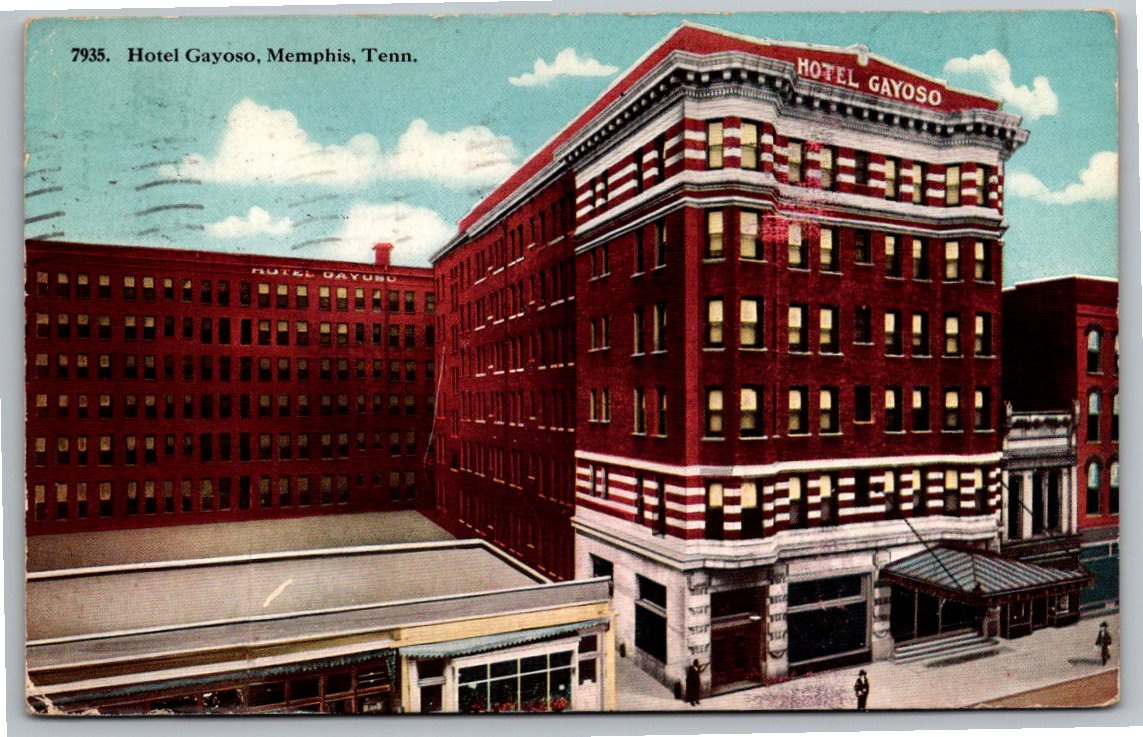
📸 Click any thumbnail to inspect Front, Back & Angles (2 Photos)
As an eBay Partner, we may earn a commission if you make a purchase.
Item Specifications
- Era: Divided Back (1907-1915)
- Year: 1913
- Location: Memphis, Tennessee
- Subject: Hotel Gayoso
- Postmark Date: January 21, 1913
- Originality: Original Vintage
- Category: Postcards & Ephemera
- Format / Type: Vintage Postcards
Looking for Modern Alternatives?
Explore top-rated, modern Postcards & Ephemera and related historical accessories on Amazon.
Shop Postcards & Ephemera on Amazon →As an Amazon Associate, we earn from qualifying purchases.
Historical Context & Overview
A Landmark of Southern Hospitality in Early 20th-Century Memphis
During the early 1900s, Memphis, Tennessee, served as a bustling river town and cotton capital of the American South. At the heart of its social and commercial life stood the historic Hotel Gayoso. This original 1913 color postcard offers a captivating glimpse into the grand architecture and vibrant urban atmosphere of Memphis during the height of the early modern travel era.
The Story and Legend of the Hotel Gayoso
The original Hotel Gayoso was erected in the 1840s and named in honor of Manuel Gayoso de Lemos, the 18th-century Spanish Governor of Louisiana who established Fort San Fernando de Las Barrancas at Memphis. The initial structure quickly earned a reputation as one of the finest luxury hotels along the Mississippi River, featuring opulent ballrooms, modern amenities, and a strategic location near the riverbanks. During the Civil War, the hotel achieved legendary status in local history when Confederate General Nathan Bedford Forrest led his cavalry directly into the hotel lobby in 1864 during a daring raid aimed at capturing Union officers staying on the premises.
Disaster struck in 1899 when a devastating fire completely destroyed the original wooden building. However, the resilient city of Memphis saw the hotel quickly rebuilt in 1902 as a magnificent multi-story brick structure designed with classical architectural aesthetics. It is this redesigned building—showcasing striking red brick offset by bold white decorative banding and an elegant entrance canopy—that is brilliantly depicted on the front of this 1913 postcard.
Visual Artistry and Postal Heritage
Published during the Divided Back postcard era (1907–1915), this piece captures the imposing presence of the hotel at Front Street and McCall Avenue. The bold red hues of the brick façade contrast sharply against the sky, highlighting the intricate architectural trim and the distinctive rooftop marquee spelling out "HOTEL GAYOSO."
A Personal Connection to 1913
The reverse side of the postcard retains its complete historical context, featuring a crisp postmark from Memphis, Tennessee, dated January 21, 1913. Affixed with a green one-cent George Washington stamp, the card carries a handwritten message from traveler J.D. Trotter to his father in Gallatin, Missouri, mentioning their journey southward into Mississippi. This intimate personal note bridges the gap between grand architectural history and the everyday lives of early 20th-century American travelers.
A Prized Artifact for Collectors of Southern History
For enthusiasts of Tennessee ephemera, Southern architectural history, or turn-of-the-century postal artifacts, this 1913 Hotel Gayoso postcard represents a tangible piece of Mid-South heritage. It stands as a vibrant record of one of Memphis's most enduring hospitality icons during a transformative era in American history.