1919 Gerolstein Germany Mineral Springs & Castle Vintage Postcard
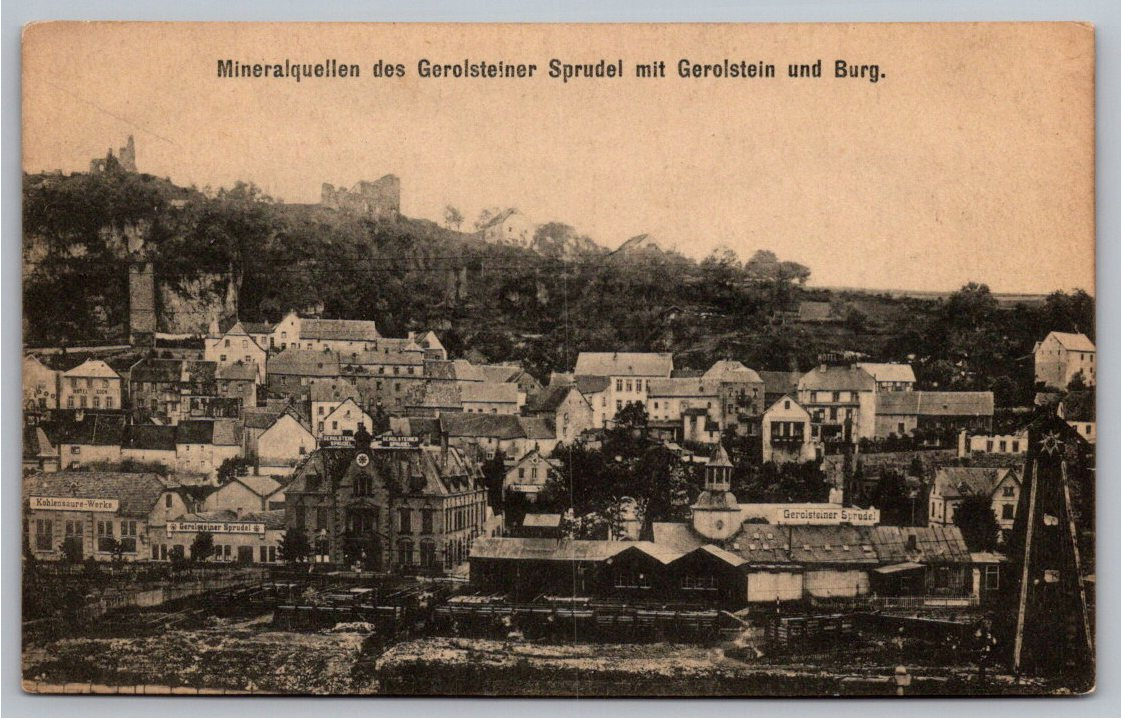
📸 Click any thumbnail to inspect Front, Back & Angles (2 Photos)
As an eBay Partner, we may earn a commission if you make a purchase.
Item Specifications
- Era: 1910s
- Date: 1919
- Publisher: Verlag J. Heyer
- Location: Gerolstein, Germany
- Subject: Gerolsteiner Sprudel Mineral Springs & Castle
- Condition: Unmailed with Handwritten Note
- Category: Postcards & Ephemera
- Format / Type: Vintage Postcards
Looking for Modern Alternatives?
Explore top-rated, modern Postcards & Ephemera and related historical accessories on Amazon.
Shop Postcards & Ephemera on Amazon →As an Amazon Associate, we earn from qualifying purchases.
Historical Context & Overview
A Snapshot of Eifel History: The Gerolsteiner Mineral Springs in 1919
Nestled in the volcanic heart of Germany’s Eifel region, the town of Gerolstein has long been celebrated for its extraordinary geological heritage and naturally carbonated mineral water. Published by local printer Verlag J. Heyer, this vintage postcard captures a sweeping panorama of Gerolstein, featuring the prominent bottling infrastructure of the Gerolsteiner Sprudel at the forefront and the historic ruins of Löwenburg Castle perched dramatically along the rocky cliffs above.
The image offers a fascinating visual record of early 20th-century industrial and topographical landscape in western Germany. At the base of the valley stand the iconic facilities of the mineral springs, established in 1888 by manager Wilhelm Castendyck. By the time this card was printed, Gerolsteiner Sprudel had transformed from a regional spa feature into an internationally recognized brand known for its naturally effervescent, mineral-rich water drawn deep from subterranean volcanic limestone strata.
Post-World War I Rhineland Occupation Context
Beyond its scenic representation of the Eifel countryside, this particular specimen carries profound historic resonance through its manuscript reverse. Hand-dated January 13, 1919—just two months following the Armistice of November 11, 1918—the postcard was penned during the initial phase of the Allied occupation of the Rhineland. Following the end of hostilities, thousands of American doughboys from the U.S. Third Army crossed into western Germany to establish garrison posts along the Rhine and Eifel sectors.
Addressing the card simply to "Folks at home," an American soldier reflected on his surreal surroundings in foreign territory: "Note the signs on buildings and other sign posts, signs like these look funny but the meaning is there." This casual observation captures the firsthand experience of American servicemen navigating German-speaking towns in the immediate wake of the Great War, attempting to decipher foreign signage while stationed in historic commercial hubs like Gerolstein.
Architectural Features and Deltiological Significance
The front image provides rich detail for local historians and architectural enthusiasts. High on the cliffside stand the remnants of Burg Gerolstein (Löwenburg), a 14th-century fortification built by the Counts of Blankenheim that endured centuries of siege and conflict. Below, timber-framed homes and commercial storefronts line the streets, displaying German signage that caught the soldier's curious eye.
For postcard collectors (deltiologists) and military historians alike, this artifact bridges multiple collecting interest areas: German topographical views, early mineral water advertising history, and American Expeditionary Forces (AEF) occupation social history. Preserved in remarkable condition, it stands as a tangible window into a pivotal moment when ancient German history met early 20th-century global events.