1910 Anvil Rock Postcard: Monument Park near Colorado Springs
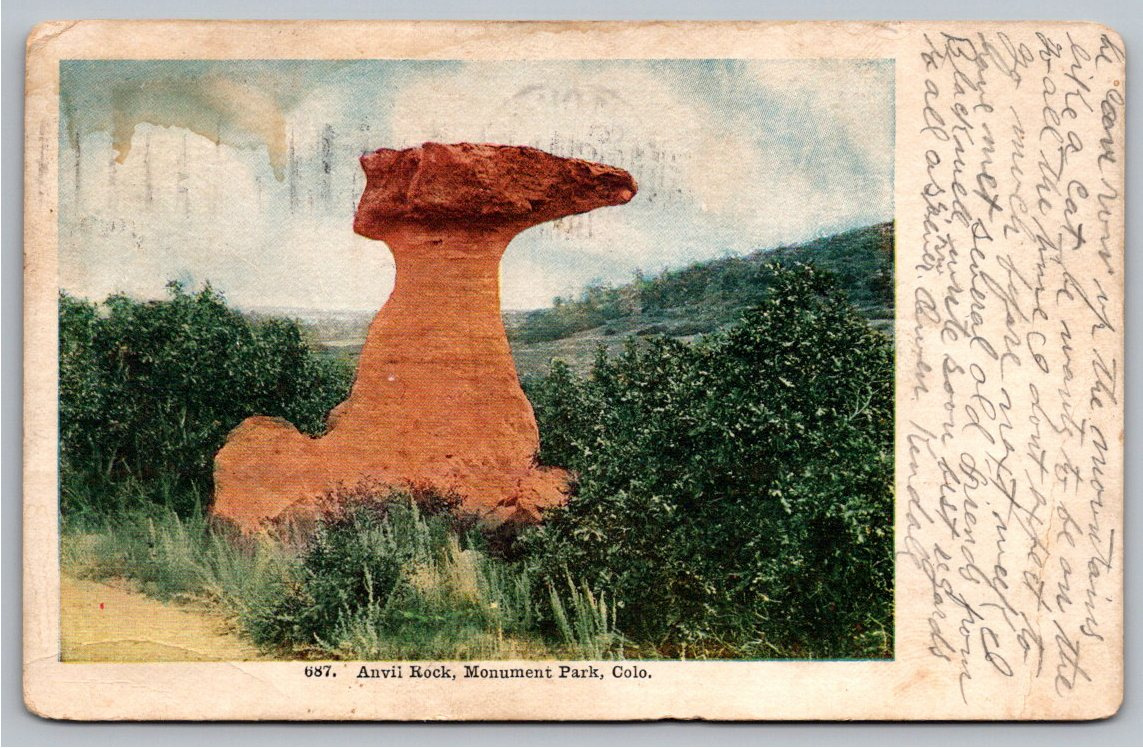
📸 Click any thumbnail to inspect Front, Back & Angles (2 Photos)
As an eBay Partner, we may earn a commission if you make a purchase.
Item Specifications
- Era: Divided Back (1907-1915)
- Publisher: Thayer Publishing Co., Denver
- Location: Monument Park, Colorado Springs, Colorado
- Subject: Anvil Rock Geological Formation
- Postmark Year: 1910
- Originality: Original Vintage Print
- Category: Postcards & Ephemera
- Format / Type: Vintage Postcards
Looking for Modern Alternatives?
Explore top-rated, modern Postcards & Ephemera and related historical accessories on Amazon.
Shop Postcards & Ephemera on Amazon →As an Amazon Associate, we earn from qualifying purchases.
Historical Context & Overview
Anvil Rock and the Geological Marvels of Monument Park
In the early 20th century, the Pikes Peak region of Colorado was widely celebrated as one of North America's premier tourist destinations. Visitors from across the continent traveled to Colorado Springs, Manitou Springs, and nearby natural sanctuaries to marvel at dramatic geological wonders carved by ancient waters and millennia of wind erosion. Among these spectacular scenic reserves was Monument Park, an extraordinary landscape famed for its towering sandstone hoodoos, delicate rock pillars, and whimsical natural sculptures. Chief among these geological curiosities was Anvil Rock, a balanced rock spire that bore an unmistakable resemblance to a blacksmith's heavy iron anvil.
A Captivating Snapshot from the Divided Back Era
This original vintage postcard, produced during the height of the American postcard boom, provides a window into early Western travel culture. Postmarked on July 15, 1910, the card originates from the Divided Back Era (1907–1915), a pivotal epoch when the United States Postal Service first permitted correspondents to write personal messages on the back of the card alongside the recipient's address. Prior to this ruling, messages were strictly confined to the borders of the photo, a tradition charmingly referenced here by the sender who added extra commentary along the right-hand front margin.
Mailed from Manitou, Colorado, to Blackwell, Oklahoma, bearing a green one-cent Benjamin Franklin stamp, the handwritten fountain-pen inscription records a personal journey through local canyons and mountain trails. Such authentic historical notes elevate an already attractive view card into a rich primary document of Edwardian-era tourism in the American West.
Thayer Publishing Company and Western Lithography
The reverse side features the emblem of the Thayer Publishing Company of Denver, Colorado, one of the premier post-card publishers operating in the region at the turn of the century. Thayer was widely respected for producing high-quality color lithographs that captured the dramatic topographies of the Rocky Mountains for vacationers seeking portable keepsakes. The vibrant image highlights the warm reddish-orange tones of the sandstone anvil against deep green oak brush and the soft, distant blue outlines of the surrounding foothills.
A Cherished Artifact for Regional History Collectors
Today, early color postcards depicting historic Colorado rock formations are highly sought after by deltiologists, regional historians, and Western art enthusiasts. Because natural weathering and human impact continually alter fragile sandstone formations over time, early twentieth-century views serve as essential historical visual records. This 1910 postcard of Anvil Rock remains a classic piece of Colorado Springs history and early American photo-lithography.