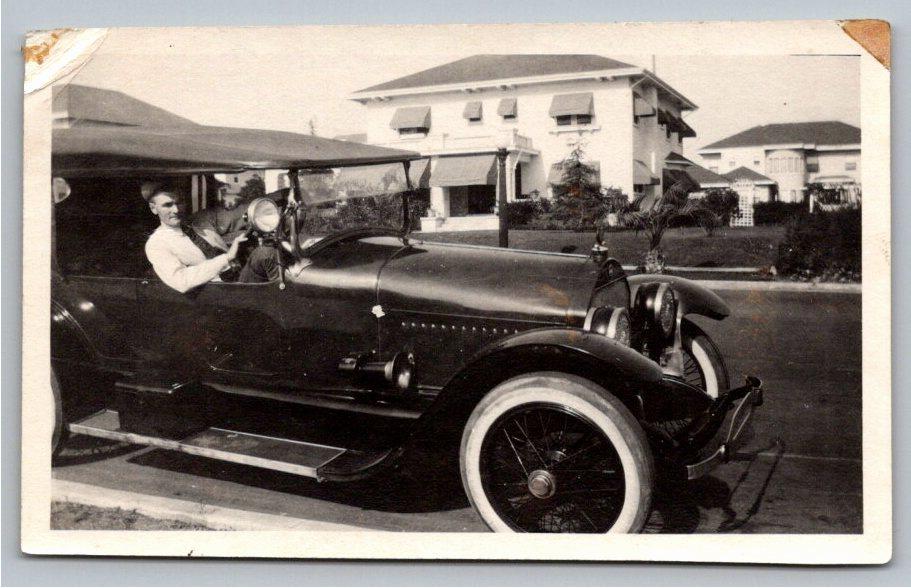
1920s Stutz Touring Car & Mansion Estate Vintage Photo Snapshot
📸 Click any thumbnail to inspect Front, Back & Angles (2 Photos)
As an eBay Partner, we may earn a commission if you make a purchase.
Item Specifications
- Era: 1920s
- Subject: Stutz Touring Car & Estate Mansion
- Medium: Black & White Photographic Paper
- Dimensions: Approx. 3.25 x 5.25
- Originality: Original Period Photograph
- Country of Origin: United States
- Category: Vintage Photography
- Format / Type: Snapshots
Looking for Modern Alternatives?
Explore top-rated, modern Vintage Photography and related historical accessories on Amazon.
Shop Vintage Photography on Amazon →As an Amazon Associate, we earn from qualifying purchases.
Historical Context & Overview
The Epitome of Jazz Age Opulence: The Stutz Motor Car
During the Roaring Twenties, few automobiles symbolized American speed, prestige, and engineering prowess quite like the Stutz. Founded by Harry C. Stutz in Indianapolis, the Stutz Motor Company earned an enduring place in automotive lore following its remarkable performance at the inaugural Indianapolis 500 in 1911. By the early 1920s, Stutz had successfully expanded beyond its legendary Bearcat speedsters to manufacture sophisticated, high-performance touring cars and luxury sedans tailored for America's upper crust.
This captivating black-and-white original snapshot captures the true spirit of early 20th-century high society. A stylishly attired gentleman in a coat, tie, and flat cap sits comfortably at the wheel of a formidable Stutz touring car. The vehicle demonstrates the finest automotive design cues of the era, boasting spoked wire wheels, wide whitewall tires, grand front headlamps, sweeping fenders, and an auxiliary cowl-mounted spotlight—essential luxury accessories for long-distance motoring on the newly developing highway systems of the decade.
Architectural Splendor and Vernacular Photography
Framed behind the gleaming luxury automobile stands a magnificent residential mansion, characteristic of the expansive Spanish Mediterranean or Craftsman-revival estates built in prosperous American suburbs during the post-WWI economic boom. With its dark fabric window awnings, pristine stucco facade, and manicured landscaping featuring young palm trees, the setting underscores the immense wealth required to purchase and maintain a high-end Stutz automobile during this period.
As an authentic piece of vernacular photo history, this candid snapshot provides an unscripted, genuine look into private life during the 1920s. Unlike standard factory marketing photography or promotional advertisements, candid photographs preserve the real-world convergence of personal fashion, architectural design, and elite transportation, offering a pristine glimpse into the lifestyle of wealthy motor enthusiasts of the era.
Historical Significance for Automobilia Collectors
For curators and collectors of early automotive history, original photographs documenting identified prestige marques like Stutz remain highly sought after. Handwritten period annotations on the reverse confirm the vehicle as a circa 1920 Stutz, making this piece a valuable historical reference for marque researchers studying original factory body lines, trim details, and period accessory placements.