1917 Packard Twin Six Antique Car Photo on Connecticut Ferry
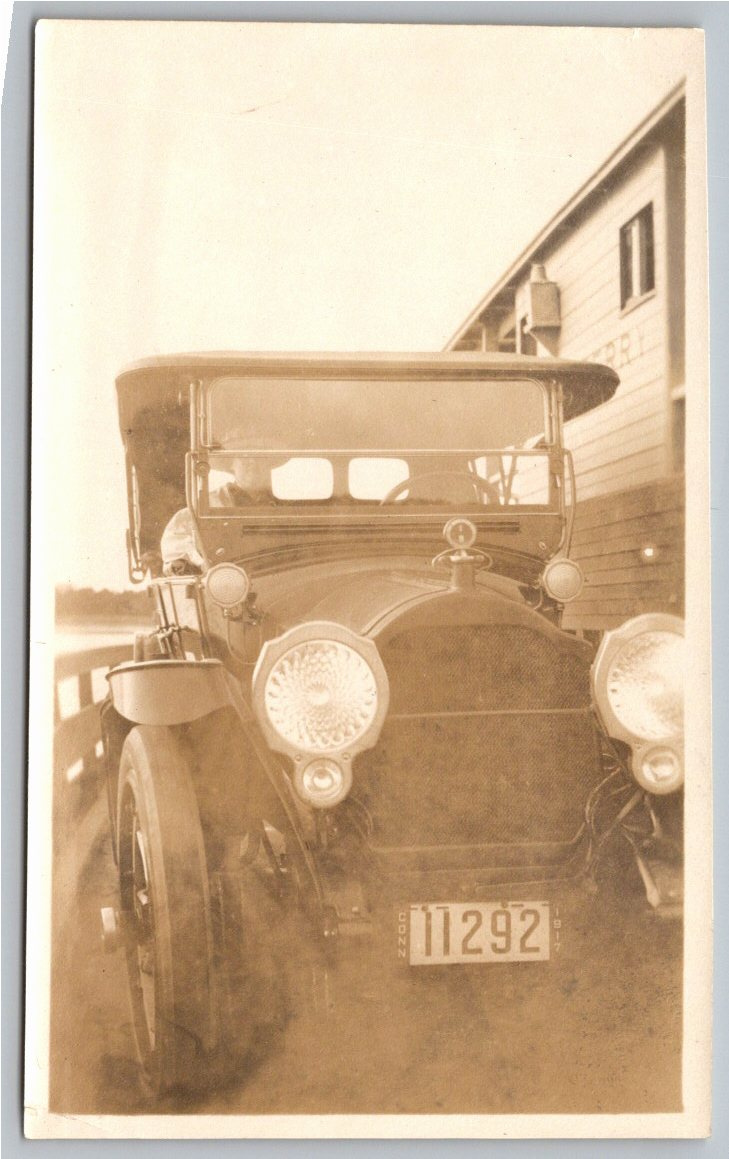
📸 Click any thumbnail to inspect Front, Back & Angles (2 Photos)
As an eBay Partner, we may earn a commission if you make a purchase.
Item Specifications
- Subject: 1917 Packard Twin Six Touring Car
- Location: Connecticut
- Era: 1910s (circa 1917)
- License Plate: 1917 Connecticut (#11292)
- Setting: Ferry Boat Deck
- Features: Packard Radiator & Boyce MotoMeter
- Category: Vintage Photography
- Format / Type: Snapshots
Looking for Modern Alternatives?
Explore top-rated, modern Vintage Photography and related historical accessories on Amazon.
Shop Vintage Photography on Amazon →As an Amazon Associate, we earn from qualifying purchases.
Historical Context & Overview
Captured aboard the wooden deck of a regional ferry, this remarkable original 1917 black-and-white snapshot offers an intimate glimpse into the high-society motoring culture of World War I-era New England. Staring down the camera lens is an iconic 1917 Packard Twin Six, identifiable by its unmistakable ox-yoke radiator silhouette, prominent Boyce MotoMeter radiator cap, and sweeping front fenders. Affixed to the front crossmember is a crisp 1917 Connecticut license plate bearing registration number 11292, placing this grand automobile directly on the coastal or riverine transport routes of southern New England.
Engineering Marvel: The Packard Twin Six
Introduced late in 1915 for the 1916 model year, the Packard Twin Six revolutionized the luxury automotive market as the world’s first mass-produced 12-cylinder passenger car. Engineered by Packard’s famed chief engineer Jesse Vincent, the 60-degree V12 engine delivered unparalleled smoothness, whisper-quiet operation, and effortless hill-climbing capability in an era when most automobiles relied on noisy, vibrating four-cylinder or six-cylinder powerplants.
The Twin Six immediately became the standard of excellence among American industrialists, politicians, and affluent travelers. Owning a Packard in 1917 was not merely a matter of transportation; it was a definitive statement of refined taste and substantial wealth. The imposing front-end stance featured in this photograph showcases the vehicle's massive headlamps and delicate cowl lamps, designed to illuminate early unpaved country roads after dark.
Early Motoring and River Ferries in 1917 Connecticut
During the late 1910s, long-distance automobile travel across Connecticut was an adventure that required careful navigation around major waterways such as the Connecticut and Thames Rivers, as well as the coastal inlets of Long Island Sound. Fixed bridges were far less common than they are today, making steam-powered and cable-driven ferries an indispensable link in the state's expanding road network.
This candid snapshot captures the Packard paused aboard a ferry vessel, parked adjacent to the ship's superstructure emblazoned with the word "FERRY." Through the divided windshield glass, the faint silhouette of a passenger wearing a period-appropriate brimmed hat is visible, adding a poignant human element to this historic moment frozen in time.
A Treasured Artifact for Automobilia Historians
Original silver-gelatin prints from the pioneering era of 12-cylinder motoring are increasingly rare, particularly those capturing specific regional details like early state-issued license plates and maritime ferry docks. The reverse of the photo retains historical provenance with handwritten period pencil notes identifying the chassis as a "Twin Six Packard C 1917." For collectors of early automotive history, Packard memorabilia, and vintage Connecticut photography, this piece serves as a pristine visual document of America's golden age of luxury transport.