Vintage 1970 London Zoo Brutalist Elephant & Rhino Pavilion Photo
📸 Click any thumbnail to inspect Front, Back & Angles (2 Photos)
As an eBay Partner, we may earn a commission if you make a purchase.
Item Specifications
- Year: 1970
- Date Inscribed: April 1970
- Location: London Zoo, Regents Park, London
- Architectural Style: Brutalism
- Architects: Casson, Conder & Partners
- Subject: Elephant & Rhinoceros Pavilion
- Category: Vintage Photography
- Format / Type: Snapshots
Looking for Modern Alternatives?
Explore top-rated, modern Vintage Photography and related historical accessories on Amazon.
Shop Vintage Photography on Amazon →As an Amazon Associate, we earn from qualifying purchases.
Historical Context & Overview
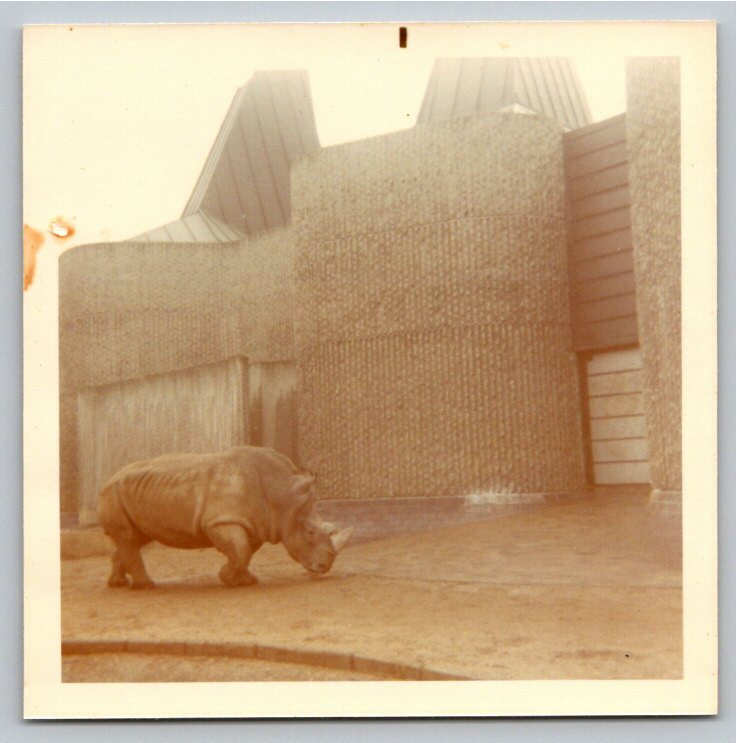
Captured in April 1970, this original vintage snapshot offers an extraordinary glimpse into one of the most celebrated and intriguing architectural achievements of post-war Britain: the Elephant and Rhinoceros Pavilion at the London Zoo in Regent’s Park. Front and center stands a white rhinoceros pacing along its outdoor enclosure, juxtaposed against the towering, heavily textured concrete walls of a building that redefined mid-century civic design. For enthusiasts of historic photography, modern architecture, and zoo heritage, this candid print captures a pivotal moment where urban Brutalism met nature.
The Architectural Legacy of Casson & Conder
Commissioned during a bold period of modernization at London Zoo, the pavilion was designed by the renowned firm Casson, Conder & Partners—headed by Sir Hugh Casson and Neville Conder. Completed in 1965, the structure represented a radical departure from traditional zoo architecture. Rather than building a decorative showcase, the architects created a formidable, organic concrete fortress designed to echo the immense physical presence of its inhabitants.
The building's signature feature was its deeply ribbed exterior walls, constructed from poured-in-place concrete that was meticulously bush-hammered to expose the aggregate beneath. This rough, heavily textured surface served two distinct purposes: it provided exceptional structural durability against the wear and tear of massive animals, and its weathered, rugged appearance artfully mimicked the thick, wrinkled hide of elephants and rhinos. Towering overhead, a cluster of dramatic, angular roof lanterns caught natural sunlight and channeled light directly into the interior pens, creating a monumental light-filled sanctuary.
A Candid Moment in Post-War Architectural History
While contemporary architectural journal photos often focused on static, empty buildings, personal street and leisure snapshots like this piece provide invaluable social context. Hand-inscribed on the reverse with "London Zoo April 1970," this photograph documents the pavilion during its peak years of operation. The image illustrates the true scale of the structure, showing how the massive rhinoceros grounds the sharp geometric angles and rough concrete grain of the surrounding enclosure.
Heritage and Preservation
In recognition of its extraordinary design and cultural importance, the Elephant and Rhinoceros Pavilion was awarded a Grade II* listed status in 1998, cementing its place among Britain's protected architectural landmarks. Although the zoo's large pachyderms were eventually relocated to expansive rural conservation parks, the pavilion remains an iconic symbol of 1960s avant-garde design. Original period snapshots capturing world-famous Brutalist structures in their original functional context are increasingly prized by curators, design historians, and vintage art collectors worldwide.