Vintage 1970 Photo: Roman Villa Archaeological Dig & Mosaic Floor
📸 Click any thumbnail to inspect Front, Back & Angles (2 Photos)
As an eBay Partner, we may earn a commission if you make a purchase.
Item Specifications
- Era: 1970s
- Date: April 3, 1970
- Subject: Roman Villa Archaeological Excavation
- Location: Wiltshire / Dorset Region, England
- Features: Geometrical Roman Mosaic Floor
- Originality: Original Vintage Photograph
- Category: Vintage Photography
- Format / Type: Vintage Photographs
Looking for Modern Alternatives?
Explore top-rated, modern Vintage Photography and related historical accessories on Amazon.
Shop Vintage Photography on Amazon →As an Amazon Associate, we earn from qualifying purchases.
Historical Context & Overview
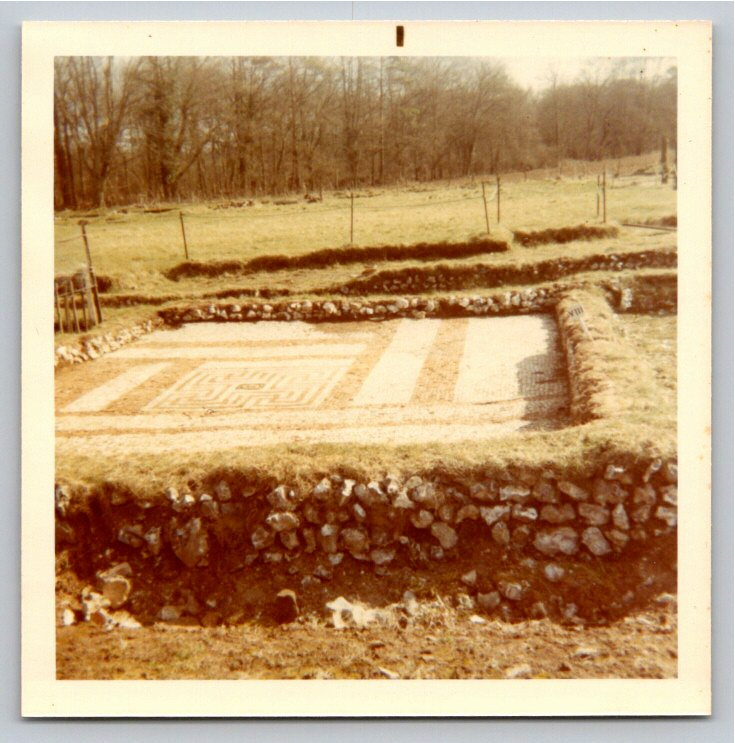
Captured on April 3, 1970, this vintage color photograph offers a captivating glimpse into the field of British archaeology during the late twentieth century. Depicting an active archaeological excavation of a Roman villa complex situated in the countryside between Bournemouth and the Salisbury Plain near Stonehenge, the photograph records a remarkably intact geometric tessellated mosaic floor surrounded by exposed flint and mortar foundation walls.
The Legacy of Roman Villas in Southern Britain
From the first century through the early fifth century AD, the countryside of southern Britannia was dotted with rural estates, or villae. These complexes served as wealthy agricultural hubs, country residences, and status symbols for Romanized British elites and imperial officials. The southern chalklands and river valleys of modern Dorset, Hampshire, and Wiltshire were particularly rich in villa estates, boasting sophisticated hypocaust underfloor heating systems, bathhouses, and intricate mosaic pavements.
The mosaic featured in this photograph showcases a classic maze or geometric labyrinth motif rendered in native stone tesserae. Such designs were popular throughout Roman Britain during the third and fourth centuries, created by traveling craftsmen known as mosaicists. These intricate tile floors decorated formal reception rooms (triclinia) and private quarters, demonstrating the sophistication of Romano-British craftsmanship and art prior to the decline of Roman administration in 410 AD.
Mid-Century Field Archaeology and Site Preservation
The late 1960s and 1970s marked a crucial period for British field archaeology. Increased land development and modern agricultural techniques led to numerous rescue excavations across the UK, bringing to light long-buried monuments of classical antiquity. Amateur archaeologists, university field schools, and civic heritage trusts worked alongside professional scholars to document and preserve exposed structural remains before backfilling or constructing protective site shelters.
This original snapshot captures the immediate post-excavation state of the room, showing the stone wall footings meticulously cleared of topsoil and the central panel of the mosaic exposed to the open air. The reverse side features contemporaneous handwritten provenance notes recording the location, estimated dating range of 50–500 AD, subject matter, and exact date of the photograph.
A Document of Archaeological and Vintage Interest
For collectors of historical photography, classical antiquities ephemera, and British heritage memorabilia, this photograph serves as both an aesthetic object and an authentic primary record. It bridges the world of ancient Roman Britain with the mid-century field practices of twentieth-century archaeology, preserving a frozen moment in the unearthing of England's deep historical landscape.