1910s Sorghum Mill Photo Childress Texas Stanford Studio
📸 Click any thumbnail to inspect Front, Back & Angles (2 Photos)
🔗 Embed / Cite This Archival Image (Free with Attribution)Get HTML Code
© USA RESELL. Bloggers, historians, and researchers may embed this image for free by keeping the credit link below intact:
USA RESELL is a living historical archive. Because original artifacts are one-of-a-kind and source records change rapidly, use the button above to check live marketplace availability or locate surviving examples. As an eBay Partner, we may earn a commission on qualifying purchases.
Item Specifications
- City: Childress
- State: Texas
- Country: United States
- Era: Early 20th Century
- Subject: Agriculture Sorghum Mill Horse-Powered Press
- Theme: Americana
- Category: Vintage Photography
- Format / Type: Vintage Photographs
Historical Context & Overview
A Window into Early West Texas Agriculture
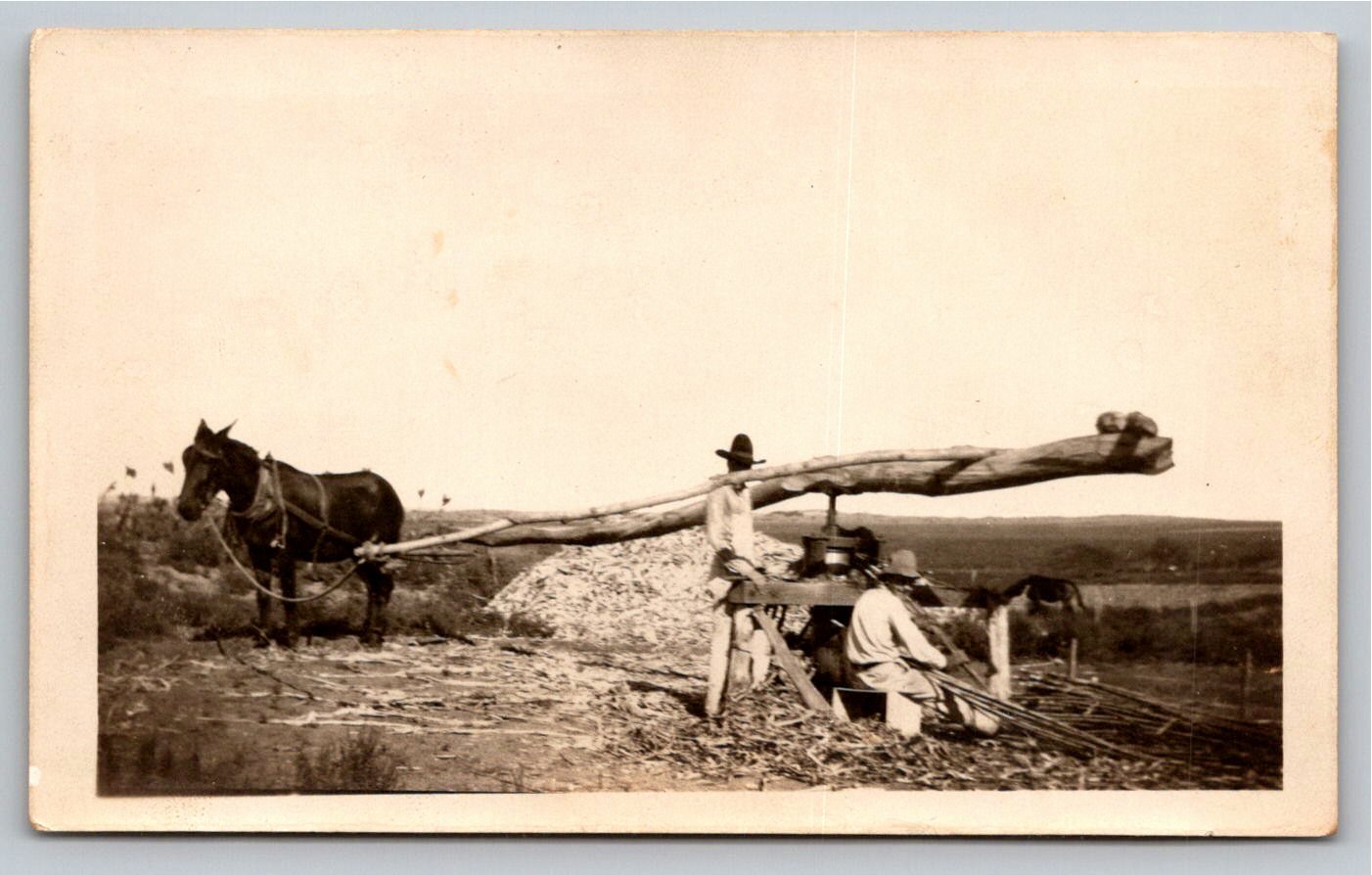
This authentic early 20th-century sepia photograph offers an extraordinary visual record of rural agricultural life in Childress County, Texas, during the 1910s. The image captures a horse-powered sorghum or sugar cane mill in full operation, documenting a traditional labor process that sustained homesteads and local communities across the Texas Panhandle prior to widespread mechanized tractor power.
In the photograph, a sturdy draft horse is harnessed to a long wooden sweep pole attached to the central roller press. As the horse walked in a continuous circular track around the assembly, the leverage turned heavy iron rollers that crushed raw cane stalks. Two farm workers are shown at the pressing station: one standing near the sweep beam and another seated, carefully feeding cut stalks into the crushing mechanism. Stacked cane residue and sweeping plains stretch out in the background, framing the stark, hard-working landscape of early West Texas.
The Craft of Sorghum Syrup Processing
Sorghum pressing was a vital autumn tradition across the American South and West. Small family farms relied on sweet sorghum syrup as a primary sweetener, particularly in regions where refined sugar was costly or difficult to transport. The extracted juice squeezed by the horse-powered rollers was gathered and transferred to shallow outdoor evaporating pans, where it was slow-cooked over wood fires until it thickened into rich, amber syrup. Photographs depicting this intricate process in real-time are exceptionally uncommon, making this piece a valuable historical artifact of Southern and Southwestern agricultural heritage.
Regional Photography by Stanford Studio
The reverse side of the print bears an original blue ink studio imprint that reads "FINISHED AT STANFORD STUDIO CHILDRESS, TEXAS". Established by pioneering photographer Thomas Jefferson Stanford, the studio served the Childress area during the early decades of the twentieth century. Commercial photographers of Stanford's era rarely spent time documenting outdoor industrial machinery and field labor, as most studio income derived from indoor family portraiture. Consequently, outdoor documentary views produced by local Texas studios hold high significance for regional historians and photographic archivists.
Collector Significance and Preservation
Printed on period paper stock with a soft matte surface, this original gelatin-silver photograph measures approximately 4.4 by 2.7 inches. The image demonstrates deep tonal separation, strong contrast, and fine detail, retaining clarity from the horse's harness down to the crushed vegetation around the mill base. Exhibiting minor corner softening and gentle natural toning consistent with over a century of age, the photograph remains structurally sound without severe tears or heavy creasing. It represents a compelling addition for collectors of vintage Texas memorabilia, Panhandle regional history, and early industrial agriculture photography.