1920s Egypt Desert Camel Rider & Guide Vintage Photo
📸 Click any thumbnail to inspect Front, Back & Angles (2 Photos)
🔗 Embed / Cite This Archival Image (Free with Attribution)Get HTML Code
© USA RESELL. Bloggers, historians, and website owners may embed this image for free by copying the HTML code below (which includes the required credit link back to this page):
USA RESELL is a living historical archive. Because original artifacts are one-of-a-kind and source records change rapidly, use the button above to check live marketplace availability or locate surviving examples. As an eBay Partner, we may earn a commission on qualifying purchases.
Item Specifications
- City: Unspecified
- Country: Egypt
- Country/Region of Manufacture: United States
- Era: Interwar (1918-1939)
- Subject: Camel Travel Desert Guide Tourism
- Theme: Travel Americana History Animals
- Category: Vintage Photography
- Format / Type: Vintage Photographs
Historical Context & Overview
Interwar Desert Exploration and Early Tourism
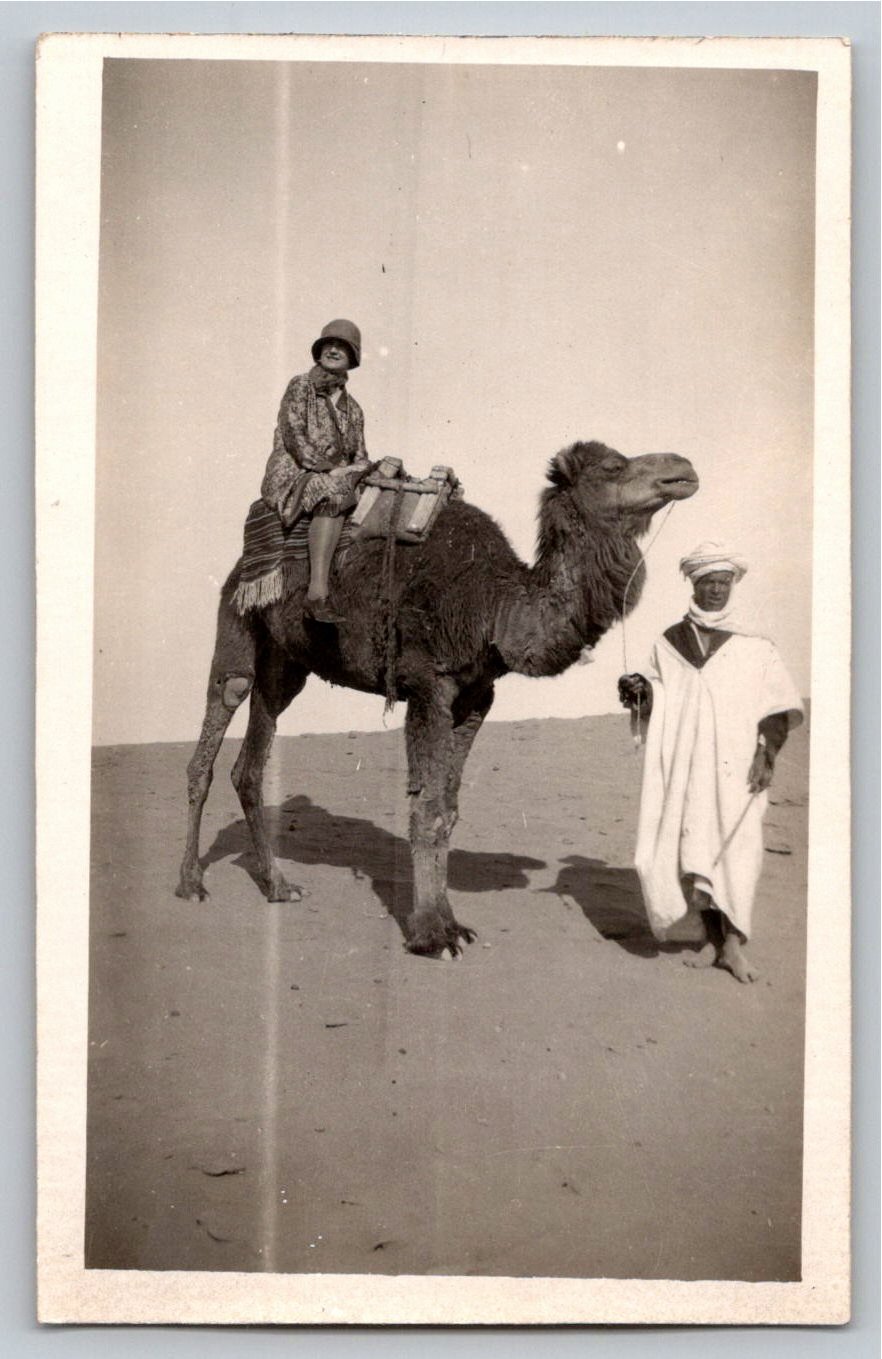
During the 1920s, international travel entered an adventurous renaissance as transatlantic ocean liners and rail corridors opened the Mediterranean and North Africa to adventurous sightseers. This striking original snapshot captures a woman dressed in period safari attire, seated upright upon a dromedary camel. Wearing a protective cloche or pith-style travel hat, a tailored patterned tunic, and leather touring footwear, the traveler personifies the distinct wardrobe favored by affluent interwar voyagers venturing into arid desert frontiers.
Beside the camel stands an indigenous guide dressed in a traditional loose-fitting white djellaba and wrapped turban. Holding the lead rein firmly, he gazes toward the camera with quiet assurance under the intense North African sun. The composition benefits from stark, overhead illumination, throwing sharp dark shadows directly onto the sweeping dunes beneath their feet, encapsulating the genuine atmosphere of a Saharan excursion.
The Golden Age of Near Eastern Travel
Following the conclusion of the First World War and fueled by sensational archaeological discoveries such as Howard Carter's 1922 unearthing of King Tutankhamun's tomb, global fascination with Egypt reached a fever pitch. Grand hotels along the Nile, from Cairo to Luxor, hosted thousands of foreign guests seeking direct encounters with ancient monuments and expansive desert landscapes. Local camel handlers and Bedouin guides were essential partners in these journeys, steering travelers across pathless dunes where motorized vehicles could not yet reliably navigate.
This image offers an authentic glimpse into the human dimensions of early commercial desert tourism. Rather than an artificial studio staging, the shot reflects a spontaneous moment paused along a caravan trail. The camel is fitted with traditional wooden saddle rigging and woven textiles, illustrating time-tested equestrian methods that sustained Saharan trade and exploration for centuries.
Material Quality, Physical Specs, and Preservation
Developed using classical gelatin-silver photographic chemistry, this candid print displays rich, sepia-leaning dark tones and remarkably clean, bright highlights that render fine details in the camel's textured coat and the drapery of the guide's robes. The original print measures approximately 4.2 inches by 2.6 inches, a classic handheld snapshot dimension popular among personal folding cameras of the Roaring Twenties.
The print is preserved in very good vintage condition, exhibiting modest age-appropriate surface toning and crisp, unclipped rectangular margins. The reverse of the photograph is entirely blank and clean, showing no traces of album paste, black mounting paper remnants, or severe handling creases. It stands as an exceptional artifact of interwar travel photography, ideally suited for archival curation, cultural display, or historical research.