1930s Farm Family in Overalls Vintage Pickup Truck Photo
📸 Click any thumbnail to inspect Front, Back & Angles (2 Photos)
🔗 Embed / Cite This Archival Image (Free with Attribution)Get HTML Code
© USA RESELL. Bloggers, historians, and researchers may embed this image for free by keeping the credit link below intact:
USA RESELL is a living historical archive. Because original artifacts are one-of-a-kind and source records change rapidly, use the button above to check live marketplace availability or locate surviving examples. As an eBay Partner, we may earn a commission on qualifying purchases.
Item Specifications
- City: Unspecified
- Country: United States
- Era: 1930s
- Subject: Farm Family with Vintage Truck
- Theme: Americana
- Year of Production: 1935
- Category: Vintage Photography
- Format / Type: Snapshots
Historical Context & Overview
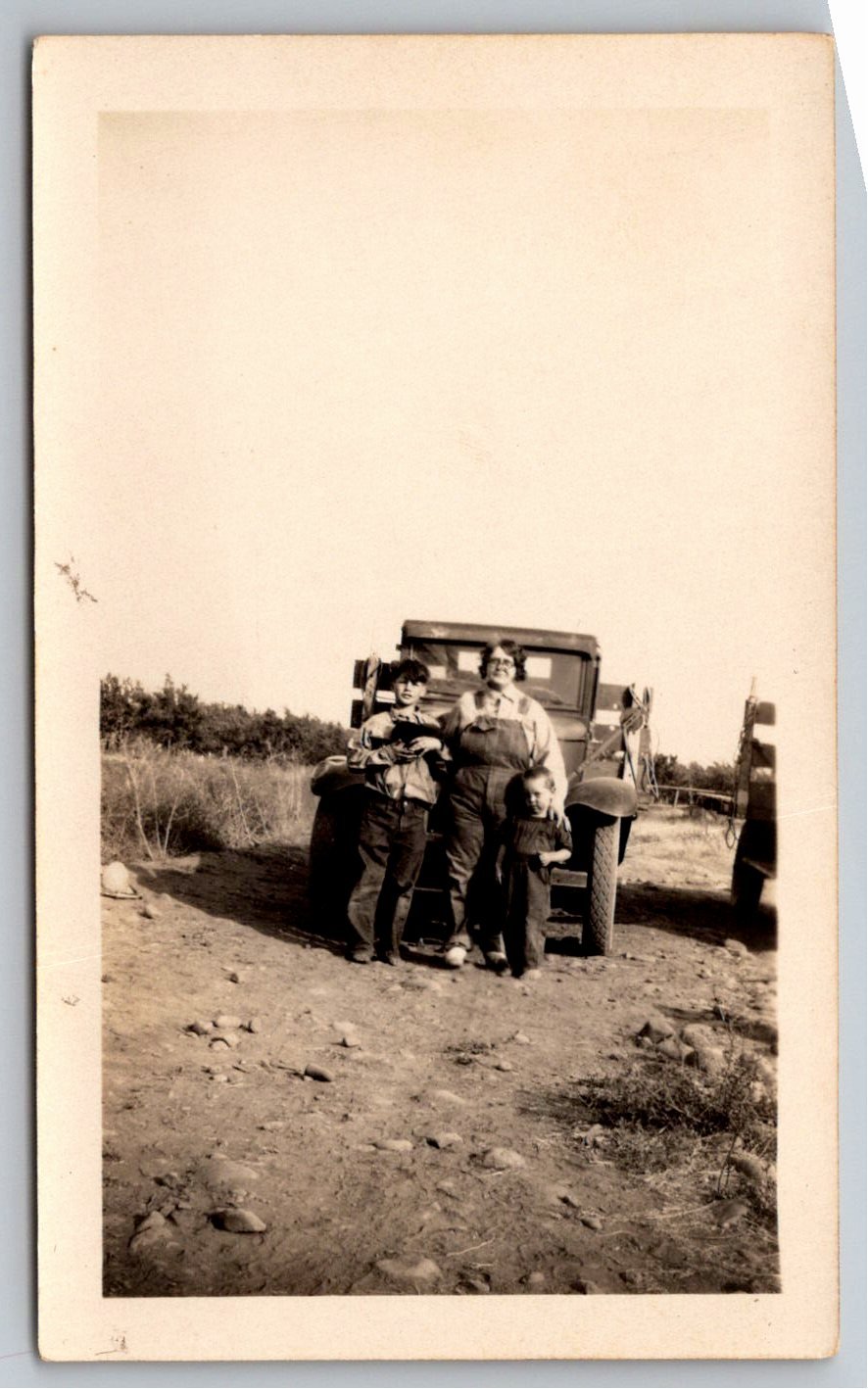
A Window into Depression-Era Rural Americana
This original 1930s gelatin silver snapshot offers an authentic glimpse into rural American life during the Great Depression. The image captures a mother standing alongside her children on an unpaved country road, posed proudly in front of their family utility truck. Posed casually in everyday attire, the mother and children wear traditional denim work bib overalls—the quintessential uniform of agricultural America throughout the early twentieth century. Beyond its visual charm, the photograph preserves a moment of quiet fortitude, reflecting the resilience and agrarian heritage of working families navigating one of the most challenging economic eras in United States history.
Everyday Fashion and Agrarian Workwear
In the 1930s, practical utilitarian garments were essential for rural households. Denim bib overalls, designed for durability and ease of movement, were universally worn by men, women, and children engaged in farm work. The garments pictured in this snapshot showcase typical heavy-cotton construction with front bib pockets and sturdy metal hardware. Seeing both mother and children outfitted in identical utilitarian workwear underscores the collaborative nature of homesteading during the era, where every family member contributed to daily chores, crop maintenance, and animal care.
Early American Utility Transportation
Positioned behind the family is a classic early-model pickup truck featuring timber stake sides fitted to the cargo bed. During the late 1920s and mid-1930s, utility trucks manufactured by companies like Ford, Chevrolet, and Dodge transformed rural commerce. These rugged vehicles allowed farming families to haul produce, grain, livestock, and tools over rutted dirt roads that connected isolated homesteads to nearby market towns. The high clearance, spoked wheels, and basic cab construction visible in this photograph highlight the functional engineering that kept American agriculture moving during a period of rapid modernization.
Vernacular Photography and Darkroom Characteristics
As amateur cameras became widely accessible during the 1930s through companies like Eastman Kodak, vernacular photographic snapshots began recording unfiltered glimpses of everyday life. Developed on classic fiber-based paper stock, this small-format gelatin silver print exhibits characteristic warm tonal gradients, rich contrast, and soft edge silvering typical of early darkroom processing. The unprinted reverse side bears natural paper aging and a minor handwritten reference mark, confirming its status as a genuine period artifact rather than a modern reproduction.
Collector Significance and Preservation
Original paper ephemera documenting early transportation, historic workwear, and rural heritage remains highly sought after by collectors of Americana and photography enthusiasts alike. Smaller candid snapshots like this piece serve as valuable primary visual documents, bridging the gap between national history and personal family memory. Preserved in its original unblemished state, this snapshot stands as a tangible tribute to rural American endurance during the 1930s.