1950s Men Outdoor Brick BBQ Camp Cabin Snapshot Photo
📸 Click any thumbnail to inspect Front, Back & Angles (2 Photos)
🔗 Embed / Cite This Archival Image (Free with Attribution)Get HTML Code
© USA RESELL. Bloggers, historians, and website owners may embed this image for free by copying the HTML code below (which includes the required credit link back to this page):
USA RESELL is a living historical archive. Because original artifacts are one-of-a-kind and source records change rapidly, use the button above to check live marketplace availability or locate surviving examples. As an eBay Partner, we may earn a commission on qualifying purchases.
Item Specifications
- City: Unspecified
- Country: United States
- Era: Mid-Century
- Subject: Men Barbecue Camping Cooking Cabin
- Theme: Americana Domestic and Family Life
- Time Period Manufactured: 1950-1959
- Category: Vintage Photography
- Format / Type: Snapshots
Historical Context & Overview
Mid-Century Outdoor Living and Rustic Barbecue Culture
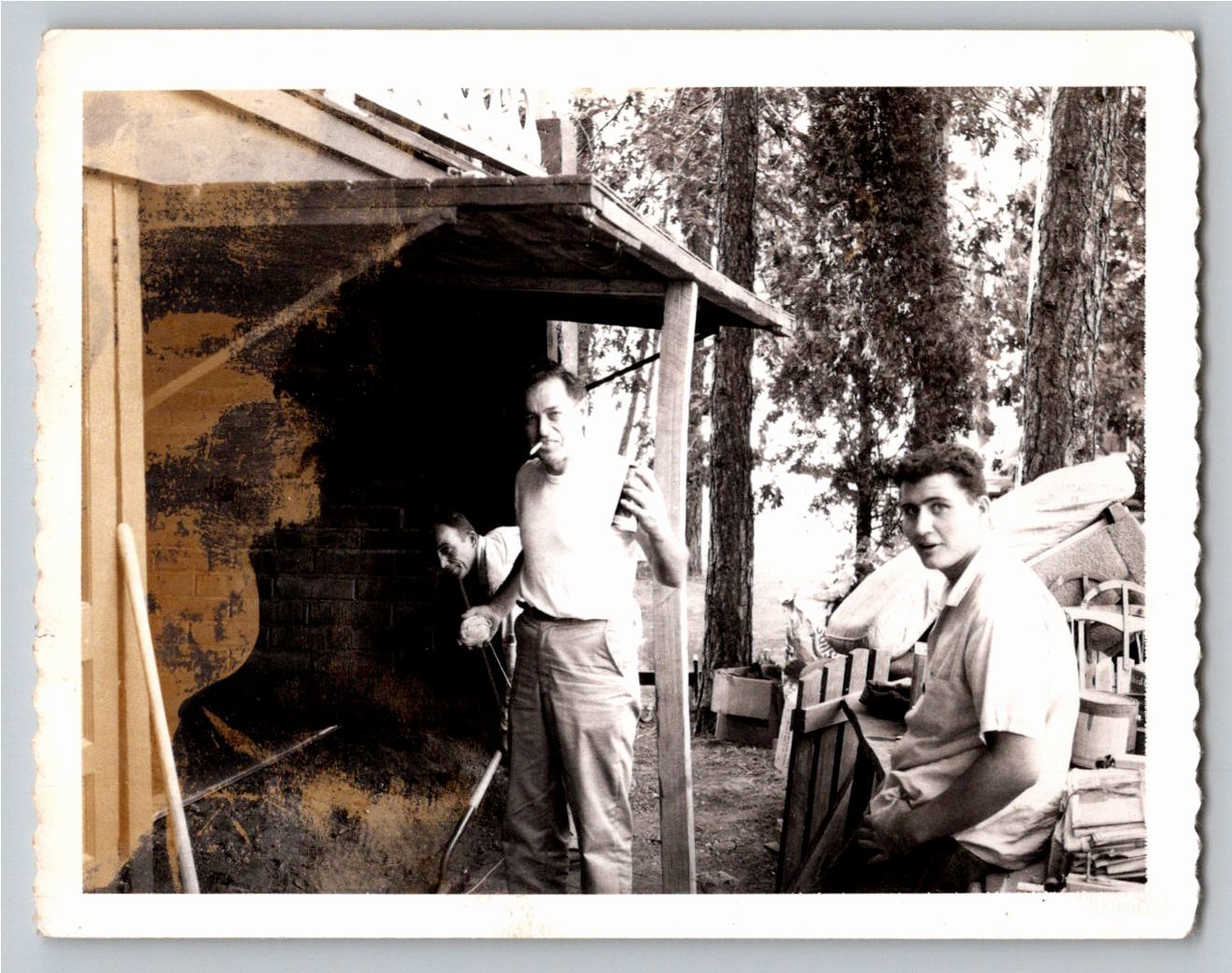
This evocative mid-century snapshot captures an authentic scene of American recreation during the postwar era. Set in a sun-dappled clearing surrounded by towering pine trees, three men have gathered around a heavy brick outdoor cooking hearth and lean-to shelter. The composition centers on a relaxed figure in a white t-shirt and work trousers, holding a cigarette in his mouth and a canned beverage in hand, epitomizing the casual confidence of 1950s working-class leisure. To his left, a companion leans toward the hearth, actively tending the fire with a shovel or poker beneath the wooden eaves.
On the right side of the frame, a younger man sits atop stacked lawn chairs and camping equipment, gazing toward the camera with a quiet, engaging smile. The background is replete with the rustic clutter of a seasonal camp or lakeside cabin retreat, including folded camp furniture, wooden fences, and tall coniferous timber. The composition reveals a rare, unstaged look into masculine domestic camaraderie, illustrating how outdoor grilling evolved from a culinary necessity into an iconic ritual of American weekend life.
Vernacular Photography and Postwar Domesticity
During the 1940s and 1950s, amateur snapshot photography experienced a tremendous boom across the United States. Increased disposable income, shorter workweeks, and the proliferation of accessible roll-film cameras allowed everyday families to document personal milestones, summer vacations, and backyard barbecues with ease. Rather than posing formally in a professional portrait studio, individuals embraced candid moments that showcased work, relaxation, and genuine relationships in their natural environments.
Outdoor stone and brick fireplaces were common fixtures at state parks, recreational vehicle camps, and private mountain retreats throughout the mid-twentieth century. Building a sheltered hearth allowed campers to prepare meals protected from wind and rain while gathering collectively in the evenings. The dynamic interplay between light and deep shadow beneath the wooden shelter in this print highlights the photographer's spontaneous approach to capturing real-life interaction without artificial flashbulbs.
Physical Attributes, Deckle Borders, and Collector Value
Measuring approximately 4.1 by 3.2 inches, this original vintage print displays classic scalloped deckle edges along its perimeter. This decorative die-cut border was a beloved aesthetic choice used extensively by photo finishing labs from the 1940s through the mid-1950s. The glossy photo paper retains rich tonal depth, with strong black and white contrast that delineates the rough masonry of the barbecue pit, the texture of the wooden shelter, and the foliage of the woodland backdrop.
The unposted reverse side displays mild age-appropriate toning along the edges, confirming its genuine vintage provenance. Faint processing lab stamps, including the numerals "47" and "4," appear near the top margin, documenting the industrial tracking methods of period commercial darkrooms. Preserved in very good condition with sharp focal clarity and minimal handling wear, this snapshot stands as a tangible and desirable artifact of mid-century vernacular Americana.