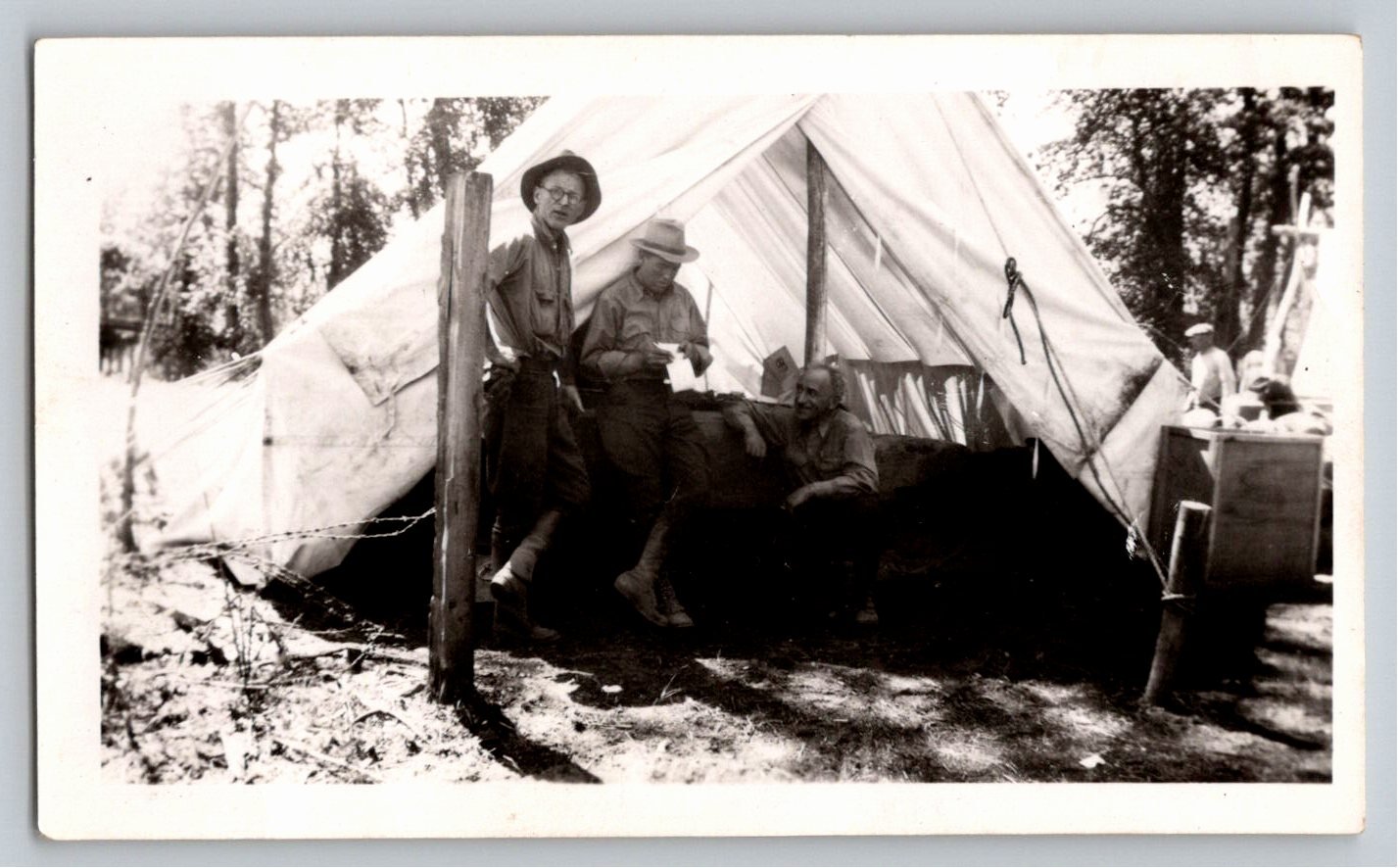
1920s Outdoor Canvas Wall Tent Camp Men Fedora Photo
📸 Click any thumbnail to inspect Front, Back & Angles (2 Photos)
🔗 Embed / Cite This Archival Image (Free with Attribution)Get HTML Code
© USA RESELL. Bloggers, historians, and website owners may embed this image for free by copying the HTML code below (which includes the required credit link back to this page):
USA RESELL is a living historical archive. Because original artifacts are one-of-a-kind and source records change rapidly, use the button above to check live marketplace availability or locate surviving examples. As an eBay Partner, we may earn a commission on qualifying purchases.
Item Specifications
- Type: Photograph
- Original/Licensed Reprint: Original
- Subject: Camping and Work Camp
- Theme: Americana
- Era: 1920-1939
- Time Period Manufactured: 1920-1929
- Category: Vintage Photography
- Format / Type: Snapshots
Historical Context & Overview
Visual & Historical Overview: The Interwar Outdoor Encampment
Dating to the mid-1920s, this original gelatin silver snapshot provides an evocative window into male camaraderie and practical field life during the American interwar period. The frame is dominated by a substantial canvas wall tent pitched amidst a dappled, sunlit woodland clearing. Standing at the forefront of the shelter, three men pause in distinct, unposed stances that convey authentic workaday life. On the far left, a young man wearing wire-rimmed spectacles and a broad-brimmed felt hat leans casually against a rustic timber fence post, looking directly toward the camera lens.
Beside him, a central figure in work khakis and a fedora carefully studies a paper document or field map held in his hands, completely engrossed in his task. Just inside the open triangular entryway of the canvas structure, a third companion sits at ease, smiling softly out from the shaded interior. In the deep background beyond the tent’s heavy guy-lines, wooden supply crates and an additional bystander wearing a vintage flat cap suggest a busy, organized encampment devoted to collaborative wilderness activity.
Field Expedition Life: Forestry, Surveying, and 1920s Camping
During the 1920s, remote canvas encampments like this were vital hubs for a wide range of outdoor professions across North America, including forestry management, civil engineering, geological mapping, and utility line construction. The durable heavy-duck canvas wall tent served as both living quarters and mobile field office, complete with sturdy wooden framing, rolled fly flaps for ventilation, and perimeter staking designed to weather harsh elements. The utilitarian attire—durable button-down shirts, rugged trousers tucked into boots, and classic brimmed hats for sun protection—epitomizes standard early 20th-century field apparel.
Simultaneously, the decade marked a major surge in recreational wilderness camping and automotive touring across the United States. Following the proliferation of affordable automobiles and improved roadway networks, Americans increasingly escaped metropolitan centers to establish temporary rural retreats. Whether documenting a professional field surveying crew or a group of seasoned outdoor sportsmen, this candid composition captures the timeless spirit of self-sufficiency and rustic frontier life that defined early 20th-century Americana.
Physical Attributes, Archival Condition, and Collector Value
This authentic vintage photograph measures approximately 4.5 by 2.7 inches, reflecting the standard panoramic handheld camera format prevalent among amateur photographers during the 1920s. Rendered on medium-weight photographic paper with a smooth, semi-gloss surface, the gelatin silver print displays balanced tonal range, from crisp highlight whites in the sunlit canvas to deep shadow details inside the tent shelter. Straight-cut margins surround the image, accentuating its period presentation.
The unwritten reverse is clean and free of photograph indicators, featuring only a faint purple alphanumeric inspection numeral stamp ("1 2") near the upper-left corner from the original photo finishing lab. Preserved in very good vintage condition, the print shows only subtle edge warming and light corner softening typical of authentic handling over nine decades. Free from tears, surface loss, or harsh folds, this artifact stands as a quintessential piece of vernacular photography for collectors of early outdoor history, occupational portraiture, and interwar Americana.