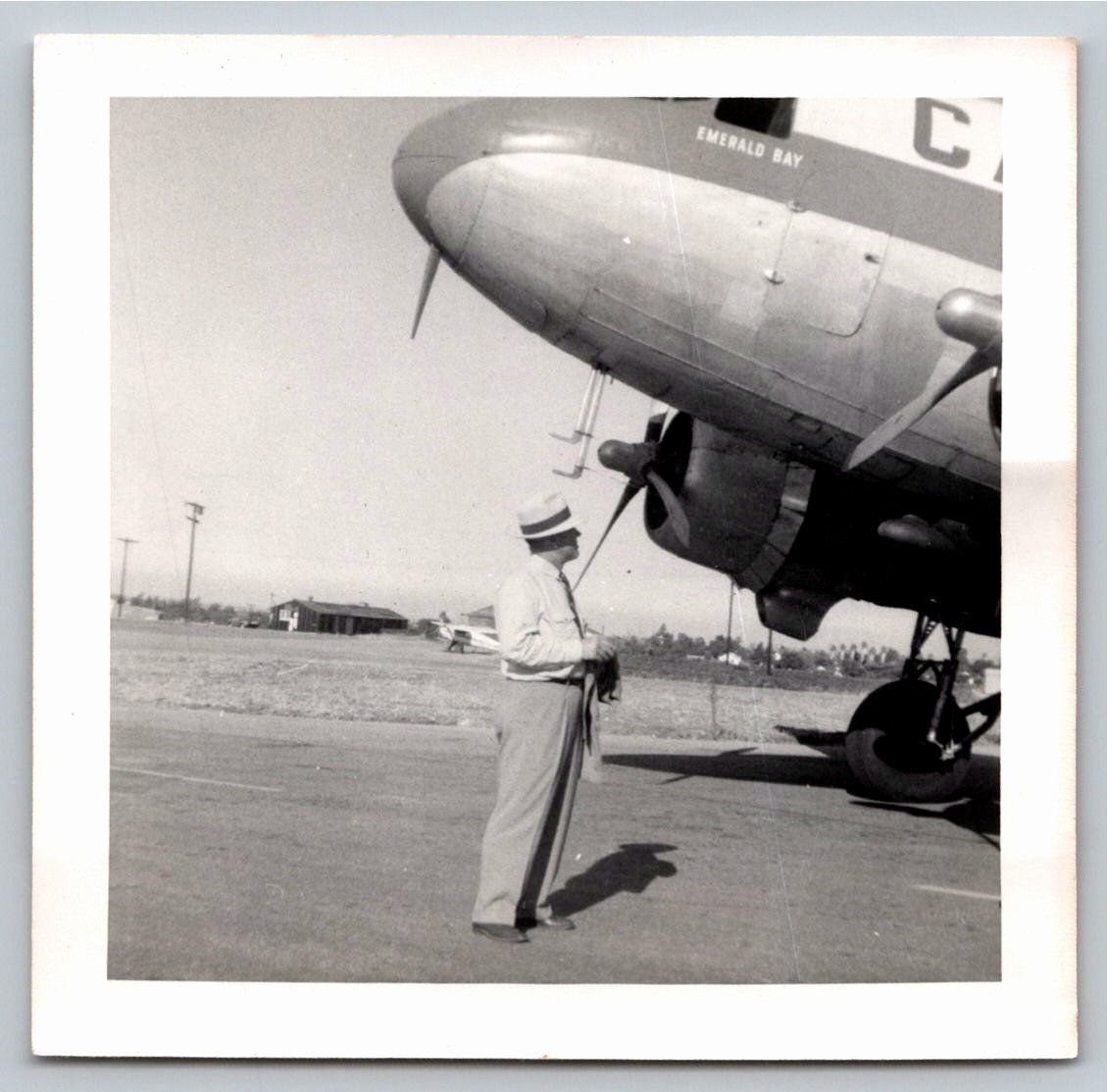
1940s Vintage Snapshot: Man in Fedora by Emerald Bay Airliner
📸 Click any thumbnail to inspect Front, Back & Angles (2 Photos)
🔗 Embed / Cite This Archival Image (Free with Attribution)Get HTML Code
© USA RESELL. Bloggers, historians, and researchers may embed this image for free by keeping the credit link below intact:
USA RESELL is a living historical archive. Because original artifacts are one-of-a-kind and source records change rapidly, use the button above to check live marketplace availability or locate surviving examples. As an eBay Partner, we may earn a commission on qualifying purchases.
Item Specifications
- City: Unspecified
- Country: United States
- Era: 1940s
- Subject: Airliner Aviation Propeller Airplane Man in Fedora
- Theme: Transportation
- Year of Production: 1948
- Category: Vintage Photography
- Format / Type: Snapshots
Historical Context & Overview
The Golden Age of Mid-Century Commercial Aviation
In the immediate post-World War II era, air travel underwent a dramatic transformation. What was once an exclusive luxury reserved for high society became the premier symbol of mid-century modern mobility. Commercial airliners powered by massive radial propeller engines connected cities across North America, offering passengers unprecedented speed and unprecedented glamour. Departing passengers did not walk through enclosed jet bridges; instead, they walked right out onto the open sunlit tarmac, surrounded by the hum of idling engines and the gleaming aluminum fuselages of passenger aircraft.
This authentic 1948 gelatin-silver snapshot beautifully encapsulates that nostalgic period of transportation history. Standing proudly on the apron beside a multi-engine propeller passenger airliner, a sharply tailored gentleman sports a classic mid-century fedora hat and light trousers. His presence underscores the casual elegance required of travelers during aviation's golden decade, when stepping onto an airfield was an occasion worth documenting on camera.
Anatomy of a Tarmac Snapshot: "Emerald Bay"
The star of the photograph alongside the gentleman is the magnificent airliner towering above him. Crisp exposure reveals intricate aircraft mechanics, including the heavy-duty landing gear assembly, metallic engine cowlings, and the bold propeller blades positioned just above the subject's head. On the nose of the plane, clear block lettering displays the name Emerald Bay, accompanied by prominent fuselage lettering stretching along the upper cabin deck.
During the late 1940s, major carriers like Pan American World Airways and United Air Lines frequently named individual aircraft within their fleets after famous geographic landmarks, bodies of water, or regional bays. This practice imparted a sense of individuality and adventure to every flagship flight. Captured in high contrast black-and-white, the reflective metallic body of the plane catches the direct sunlight, illuminating the expansive runway setting and distant airfield hangers in the background.
Format, Craftsmanship, and Archival Appeal
Printed on authentic medium-weight photo paper of the late 1940s, this print features a classic square format measuring approximately 3.5 by 3.4 inches. The glossy gelatin-silver finish preserves fine tonal gradations, from deep engine shadow tones to radiant white highlights along the aircraft's upper fuselage and the gentleman's fedora. The unprinted, completely plain reverse side confirms its status as an authentic personal snapshot produced by a amateur or family photographer using popular cameras of the era, such as the Kodak Brownie or Argus series.
For collectors of commercial aviation history, transport ephemera, and mid-century Americana, original candids offer a rare, unscripted perspective into everyday life during the 1940s. Preserved with light natural edge toning and gentle handling marks consistent with age, this original photographic print remains a compelling physical artifact of early passenger air travel.