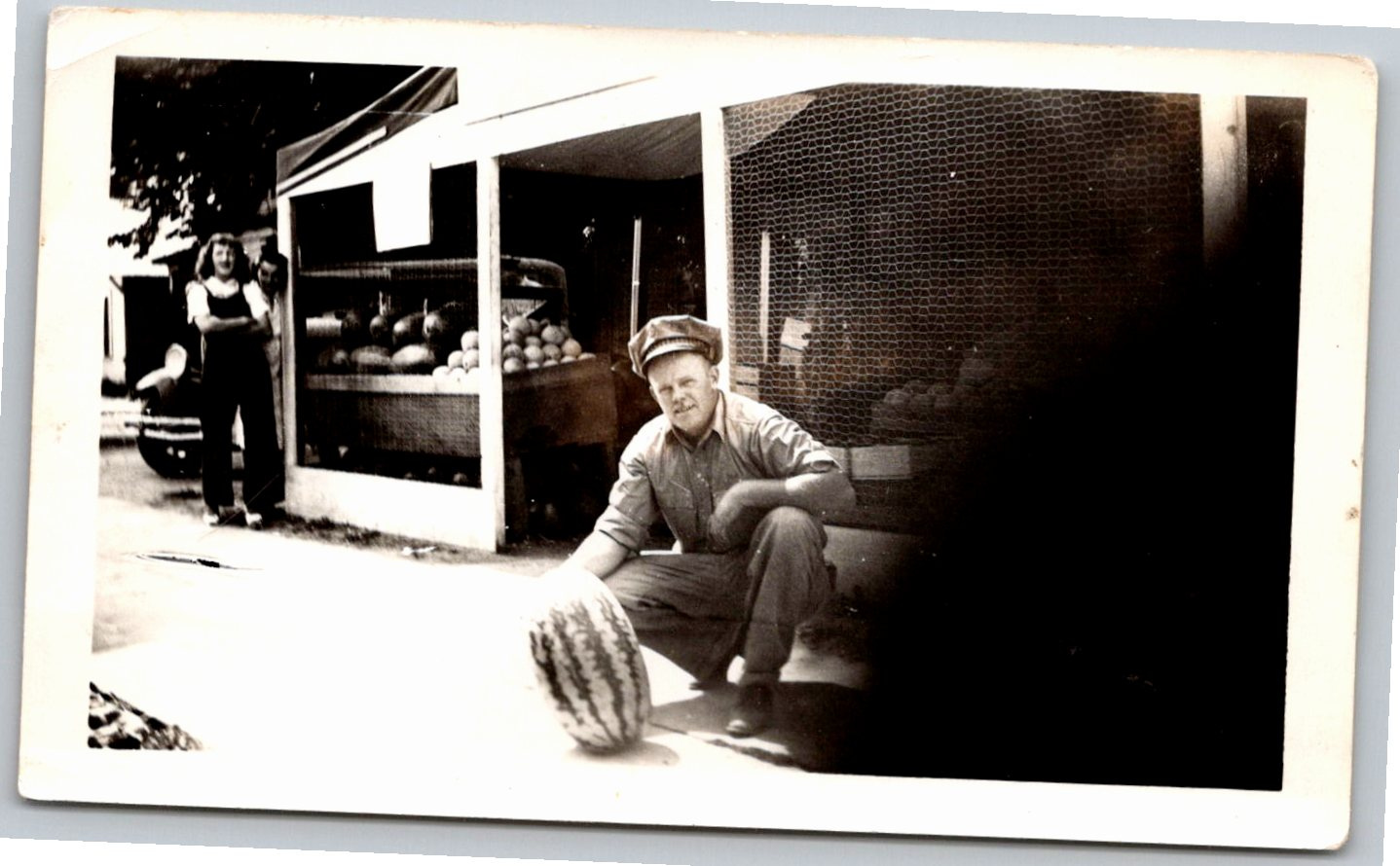
Vintage 1940s Photo Man with Watermelon Fruit Stand Snapshot
📸 Click any thumbnail to inspect Front, Back & Angles (2 Photos)
🔗 Embed / Cite This Archival Image (Free with Attribution)Get HTML Code
© USA RESELL. Bloggers, historians, and researchers may embed this image for free by keeping the credit link below intact:
As an eBay Partner, we may earn a commission if you make a purchase.
Item Specifications
- City: Unspecified
- Country: United States
- Era: 1940s
- Subject: Fruit Stand Watermelon Produce Market
- Original/Licensed Reprint: Original Vintage
- Image Color: Black and White
- Category: Vintage Photography
- Format / Type: Vintage Photographs
Looking for Modern Alternatives?
Explore top-rated, modern Vintage Photography and related historical accessories on Amazon.
Shop Vintage Photography on Amazon →As an Amazon Associate, we earn from qualifying purchases.
Historical Context & Overview
A Candid Snapshot of Mid-Century Rural Commerce
This authentic 1940s black-and-white vernacular photograph offers a captivating glimpse into mid-century American agricultural culture and small-town roadside life. Preserved on silver gelatin photographic paper, the snapshot catches an unscripted, candid moment outside an open-air produce market. The image provides an engaging historical window into 1940s workwear, local trade, and the everyday pride of small-scale farmers and vendors during a pivotal era in American history.
Detailed Scene and Period Atmosphere
At the center of the frame, a man wearing a classic peaked work cap and rolled-sleeve work shirt crouches on the pavement alongside a remarkably large, striped watermelon. His relaxed stance and direct smile reflect a quiet sense of pride in the day’s featured harvest. Positioned directly behind him is a screened roadside produce stand designed to keep insects away while displaying fresh farm goods to passing motorists. Tightly arranged shelves within the screened structure showcase stacked melons, citrus, and seasonal crops.
Adding depth to the narrative, a woman dressed in classic mid-century denim overalls stands in the background on the left side of the frame, leaning against or standing near an early automobile. Her bright smile and easy posture contribute to the friendly, informal atmosphere of the scene. Every element—from the rustic wooden construction of the farm stand to the authentic period attire—evokes the charm of rural roadside commerce that defined American highways throughout the 1930s and 1940s.
The Cultural Significance of Vernacular Roadside Photography
Vernacular photography—everyday snapshots taken by amateur photographers—remains one of the most honest visual records of 20th-century life. During the 1940s, as automobile travel expanded across regional road networks, roadside fruit stands and farm markets became fixture stopovers for travelers. These informal trade posts served not only as vital economic hubs for local growers but also as social gathering spots along rural routes.
Photographs like this capture authentic cultural history without staging or studio polish. They preserve genuine details of everyday American labor, regional produce distribution, and casual fashion that commercial advertising photography often overlooked.
Physical Characteristics and Collector Appeal
This original vintage snapshot is printed on classic photographic paper stock measuring approximately 4.5 by 2.7 inches. The front displays rich silver gelatin developing tones with clear contrast and crisp focus across the main subjects and architectural details of the produce enclosure. The reverse side is entirely blank, featuring a clean surface with no postcard dividing lines or stamp boxes, confirming its identity as a personal snapshot print rather than a mass-produced commercial card.
Physically, the photograph retains good vintage condition, exhibiting faint edge wear and light corner softening consistent with authentic handling and age. For collectors of vernacular photo art, mid-century Americana, agricultural history, or period workwear imagery, this piece serves as a delightful and genuine historical artifact.