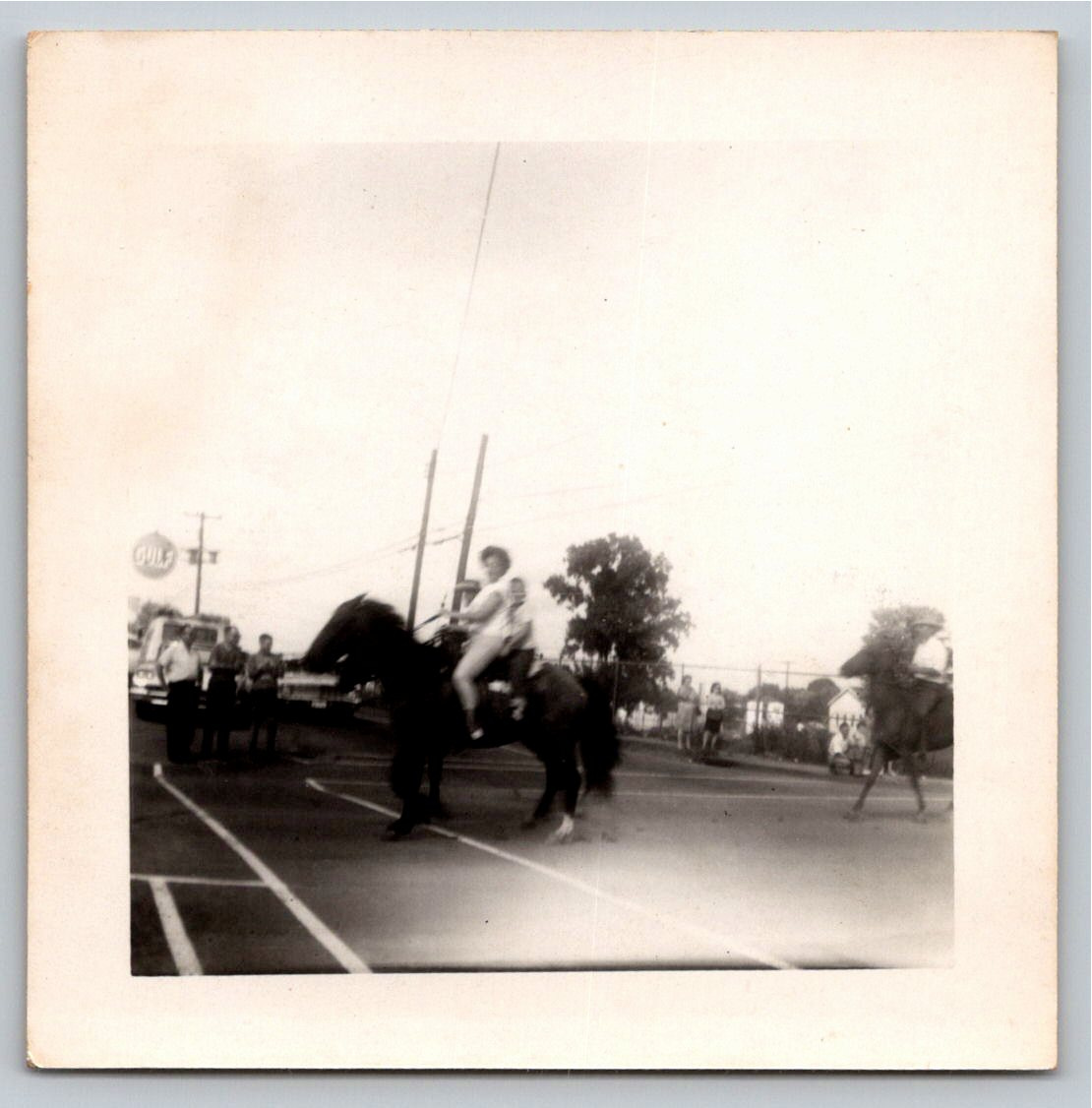
Vintage 1950s Black & White Photo Horse Rider Gulf Gas Sign
📸 Click any thumbnail to inspect Front, Back & Angles (2 Photos)
🔗 Embed / Cite This Archival Image (Free with Attribution)Get HTML Code
© USA RESELL. Bloggers, historians, and researchers may embed this image for free by keeping the credit link below intact:
USA RESELL is a living historical archive. Because original artifacts are one-of-a-kind and source records change rapidly, use the button above to check live marketplace availability or locate surviving examples. As an eBay Partner, we may earn a commission on qualifying purchases.
Item Specifications
- Country: United States
- Era: Vintage (1950-1960s)
- Subject: Equestrian and Gas Station
- Original/Licensed Reprint: Original Vintage
- Image Color: Black and White
- Production Technique: Gelatin-Silver Print
- Category: Vintage Photography
- Format / Type: Snapshots
Historical Context & Overview
Mid-Century Vernacular Photography and Roadside Americana
Vernacular snapshot photography from the post-war era offers an unscripted, genuine window into daily American life. During the 1950s and 1960s, hand-held cameras became ubiquitous fixtures in households across the country, capturing everything from family gatherings and community parades to impromptu street scenes. These square-format gelatin-silver prints serve as candid visual records of small-town culture, documenting the subtle intersections of tradition, everyday modern infrastructure, and local community gatherings.
This original black-and-white print captures a striking juxtaposition: an equestrian moment unfolding directly in front of mid-century commercial roadside architecture. The scene depicts a horseback rider navigating a paved thoroughfare, accompanied by bystanders and fellow riders, while an iconic circular Gulf gas station sign stands clearly in the background. It is a compelling glimpse into a era when rural traditions and modern automotive progress comfortably shared the same landscape.
Intersection of Equestrian Culture and Commercial Petroliana
The visual centerpiece of this vintage image is the dynamic contrast between the rider on horseback and the distinct signage of mid-century commerce. In many mid-twentieth-century American towns, community parades, local horse shows, and casual riding trails regularly crossed paths with bustling commercial corridors. The presence of the spectator group lined up alongside a vintage automobile adds layers of narrative intrigue, anchoring the moment firmly in the post-WWII golden age of American motoring.
For collectors of petroliana—items related to gas stations, petroleum companies, and vintage roadside culture—the background detail of the circular Gulf emblem is particularly desirable. Gulf Oil was one of the premier giants of mid-century highway culture, and its distinctive orange and blue disc logo (rendered here in rich monochrome contrast) was a comforting beacon for travelers navigating America’s expanding roadway network.
Technical Format and Physical Preservation
Measuring 3.4 by 3.5 inches, this photograph illustrates the classic square format popularized by consumer cameras of the mid-20th century, such as Kodak's Brownie and Instamatic series. Printed on heavy photographic cardstock, the image retains impressive contrast and clear tonal graduation between the deep shadows of the horse's coat and the bright daylight framing the background buildings and signage.
The reverse side of the print remains plain white, free of postcard backing lines, publisher stamps, or postmarks. This unwritten reverse side confirms its provenance as a unique, personal snapshot rather than a mass-produced souvenir postcard. Featuring natural light toning along the edges consistent with vintage silver-gelatin prints, this piece remains an exceptional historical artifact for enthusiasts of 1950s equestrian history, classic gas station signage, and authentic American vernacular art.