Vintage 1950s Snapshot Photo: Boys in Suits with Farm Dog
📸 Click any thumbnail to inspect Front, Back & Angles (2 Photos)
🔗 Embed / Cite This Archival Image (Free with Attribution)Get HTML Code
© USA RESELL. Bloggers, historians, and researchers may embed this image for free by keeping the credit link below intact:
USA RESELL is a living historical archive. Because original artifacts are one-of-a-kind and source records change rapidly, use the button above to check live marketplace availability or locate surviving examples. As an eBay Partner, we may earn a commission on qualifying purchases.
Item Specifications
- Country: United States
- Era: 1950s
- Subject: Boys Suits Dog Farm
- Original/Licensed Reprint: Original Vintage
- Image Color: Black and White
- Production Technique: Gelatin-Silver Print
- Category: Vintage Photography
- Format / Type: Snapshots
Historical Context & Overview
A Mid-Century Slice of Rural Americana
In the post-World War II era, personal photography underwent a massive revolution. The 1950s marked a golden age of everyday amateur snapshot photography, fueled by accessible camera equipment, square roll film formats, and affordable processing. Families across North America began documenting their day-to-day lives with an authenticity that formal studio photography could rarely replicate. This original black and white snapshot exemplifies that classic era of vernacular image-making, offering an unvarnished glimpse into rural American life during the mid-twentieth century.
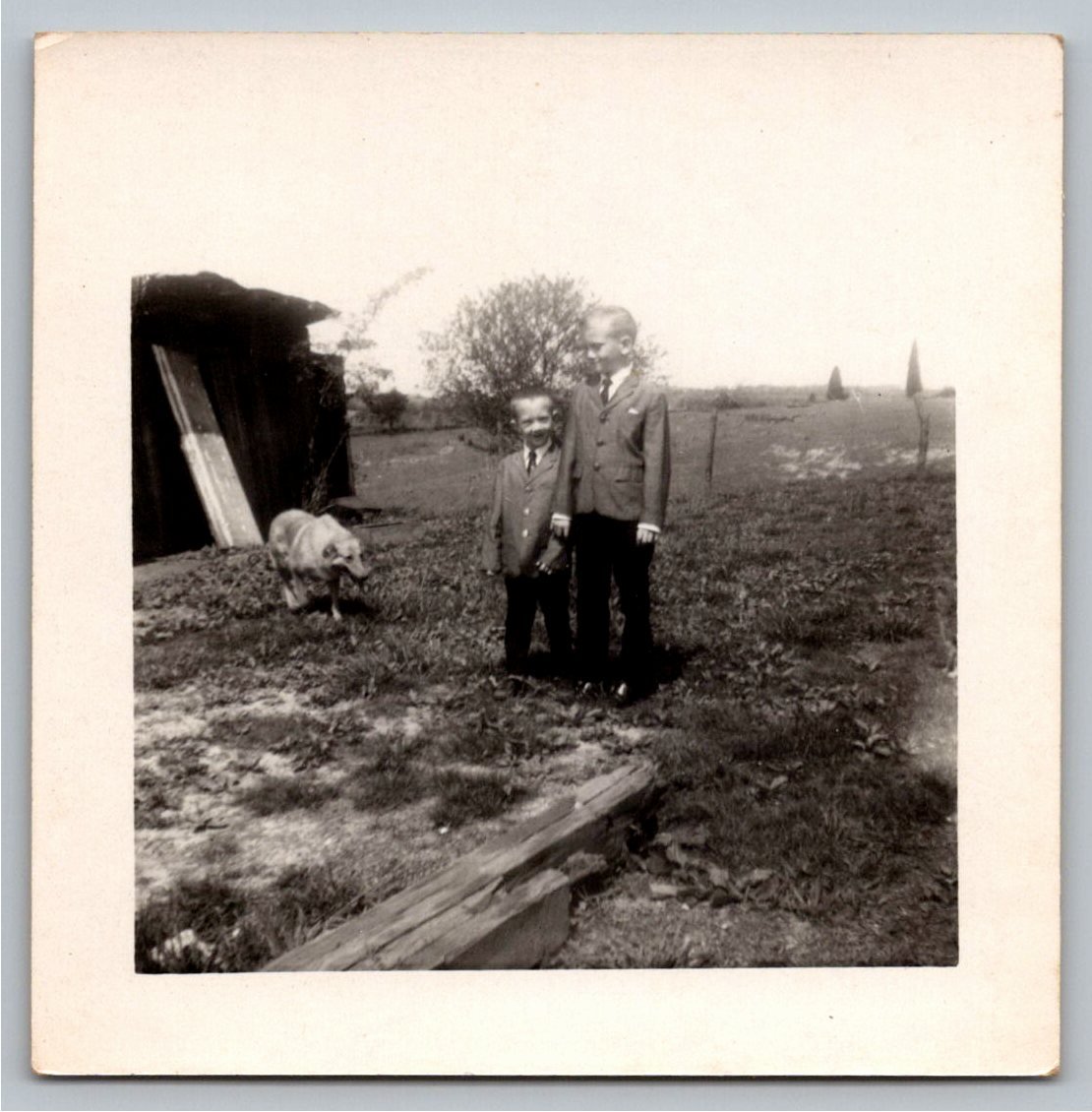
The composition captures two young boys standing proudly side-by-side in a wide open yard. Framing the background are elements typical of agrarian life: an weathered outbuilding or wooden shed, timber scattered across the foreground soil, and expansive fields stretching toward the horizon. The candid nature of the snapshot captures both the stillness of the countryside and the cheerful gravity of childhood moments recorded on film.
Children’s Sunday Best in Mid-Century Fashion
One of the most remarkable aspects of this vintage photograph is the striking contrast between the rustic environment and the children's attire. Both young boys are dressed meticulously in tailored suits, complete with crisp collared shirts and ties. During the 1950s, dressing young children in full suits for family gatherings, Sunday services, or formal milestones was a standard tradition, even in agricultural communities.
The dark tailored jackets, light dress shirts, and neatly styled hair highlight the social customs of the decade. Seeing high-grade formalwear set against raw soil, timber beams, and weathered wooden structures creates a compelling narrative about mid-century family pride, traditional values, and everyday suburban and rural customs.
The Unscripted Canine Companion
Adding a layer of charming spontaneity to the image is the light-colored family dog ambling into the left side of the frame. While the boys stand dutifully facing the camera lens, the dog trots past the rustic shed, perfectly illustrating the unscripted magic that defines vintage vernacular snapshot photography. Unlike staged studio portraits, amateur photographs from this period frequently captured unexpected secondary elements—pets, passing vehicles, or working equipment—that add depth and authenticity to the historical record.
Collector Appeal and Physical Characteristics
Printed on traditional gelatin-silver paper with a classic square print dimension and fine tonal contrast, this physical photograph captures the subtle warmth and depth characteristic of mid-century silver print processing. The subtle white border frames the subject matter beautifully, while the clean back panel underscores its status as an original snapshot rather than a commercial reproduction.
For collectors of vernacular photography, fashion historians, and enthusiasts of mid-century social history, original snapshot prints like this offer an intimate, tangible connection to the past. Whether displayed in a curated gallery wall or added to an archive of mid-century Americana, this print stands as a timeless piece of photographic social heritage.