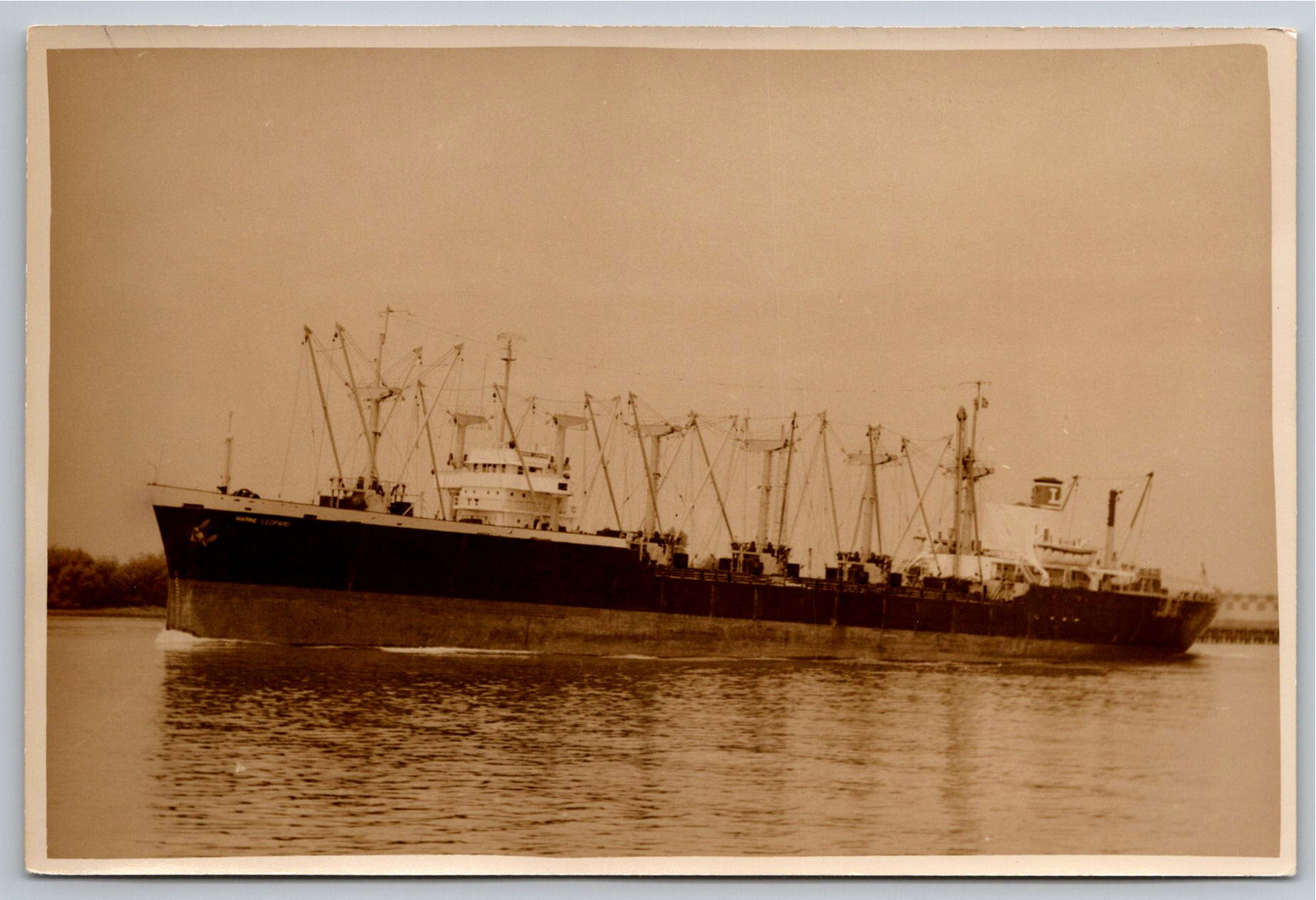
1950s SS Marine Leopard Cargo Ship Photo by R Scozzafava
📸 Click any thumbnail to inspect Front, Back & Angles (2 Photos)
🔗 Embed / Cite This Archival Image (Free with Attribution)Get HTML Code
© USA RESELL. Bloggers, historians, and researchers may embed this image for free by keeping the credit link below intact:
As an eBay Partner, we may earn a commission if you make a purchase.
Item Specifications
- City: Brooklyn
- State: New York
- Country: United States
- Era: 1950s
- Subject: Cargo Ship SS Marine Leopard
- Original/Licensed Reprint: Original Vintage
- Category: Vintage Photography
- Format / Type: Vintage Photographs
Looking for Modern Alternatives?
Explore top-rated, modern Vintage Photography and related historical accessories on Amazon.
Shop Vintage Photography on Amazon →As an Amazon Associate, we earn from qualifying purchases.
Historical Context & Overview
Mid-Century American Maritime Heritage and the C4 Cargo Vessel
In the aftermath of the Second World War, the United States merchant marine fleet underwent a momentous transition from wartime transport to commercial oceanic trade. Among the core workhorses of this era were the C4-type cargo ships, designed by the United States Maritime Commission. Engineered for high cargo capacity, durability, and open-ocean reliability, these large freighters were integral to expanding global trade routes throughout the 1950s. Vessels like the SS Marine Leopard represented the backbone of American commercial shipping, carrying bulk goods across international waters and serving prominently under major commercial operators such as the Luckenbach Steamship Company.
An Architectural Profile of the SS Marine Leopard
This striking original black-and-white print offers a classic side-profile view of the SS Marine Leopard cutting smoothly through calm coastal waters. The photograph highlights the intricate industrial design characteristic of mid-century merchant freighters. Prominent cargo derrick masts and arrayed boom rigging rise high above the main deck, illustrating the complex mechanical gear necessary for loading and unloading heavy freight in port. The vessel’s long, dark hull contrasts cleanly with its bright white superstructure and bridge, reflecting the utilitarian elegance that defines golden-age American merchant ship architecture.
Brooklyn Maritime Photography and Archival Provenance
Adding significant provenance and historical charm to this piece is the period maker mark on the reverse. The back features a crisp brown ink hand-stamp attributing the shot to local maritime photographer R. Scozzafava of Brooklyn, New York, accompanied by a light pencil notation identifying the ship by name. Captured on heavy glossy paper stock, the original gelatin-silver photograph has developed a subtle warm vintage patina over decades of aging. Unlike mass-produced souvenir postcards, this original photographic print stands as a true snapshot from the waterfront, offering an authentic primary source record of 1950s naval history.
Preserving Maritime Ephemera for Collectors
Original ship photographs from the mid-20th century hold an enduring appeal for naval historians, maritime ephemera collectors, and ocean liner enthusiasts. Items produced by localized port photographers around bustling maritime hubs like New York Harbor capture working vessels in their operational prime. With clean borders, gentle age-appropriate corner handling, and rich historical detail, this photograph is a compelling piece of mid-century nautical ephemera suitable for framing or archival display.