1936 Brooklyn Queens Transit B&QT 1000 PCC Streetcar Photo
📸 Click any thumbnail to inspect Front, Back & Angles (2 Photos)
🔗 Embed / Cite This Archival Image (Free with Attribution)Get HTML Code
© USA RESELL. Bloggers, historians, and website owners may embed this image for free by copying the HTML code below (which includes the required credit link back to this page):
USA RESELL is a living historical archive. Because original artifacts are one-of-a-kind and source records change rapidly, use the button above to check live marketplace availability or locate surviving examples. As an eBay Partner, we may earn a commission on qualifying purchases.
Item Specifications
- City: New York City
- State: New York
- Country: United States
- Era: 1930s-1940s
- Subject: Streetcars and Trolleys
- Theme: Transportation
- Category: Vintage Photography
- Format / Type: Vintage Photographs
Historical Context & Overview
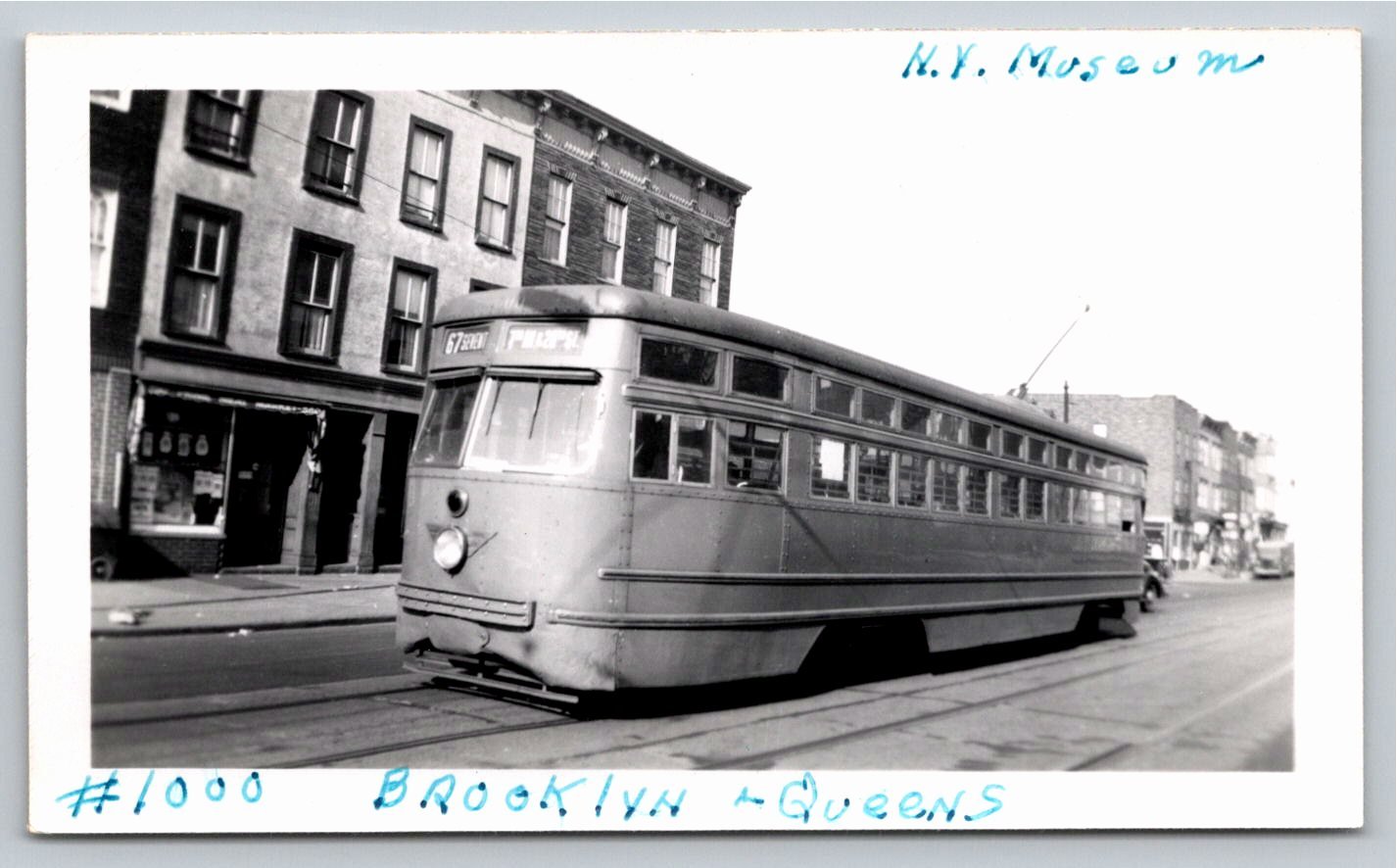
This original 1936 glossy silver gelatin photograph captures a pivotal moment in American urban transport history: Brooklyn & Queens Transit (B&QT) PCC Streetcar #1000 navigating street-level tracks along the 7th Avenue line in New York City. Manufactured by Clark Equipment, unit #1000 was a groundbreaking prototype that ushered in the modern streamlined era for New York's municipal transit system.
Engineering Innovation: The PCC Streetcar
In the mid-1930s, the Electric Railway Presidents' Conference Committee (PCC) sought to revitalize urban streetcar service to compete with the rising popularity of private automobiles and diesel buses. The resulting PCC design integrated lightweight aluminum bodywork, quiet rubber-cushioned wheels, and accelerated electrical systems. As a key subsidiary of the Brooklyn–Manhattan Transit Corporation (BMT), the B&QT became an early pioneer by introducing these state-of-the-art cars across its borough network starting in 1936.
Visual Composition & Archival Details
The image offers a vivid glance at mid-century Brooklyn life, depicting multi-story brick residential storefronts framing the street while the trolley's overhead pole connects directly with the electric catenary line. Measuring 4.5 by 2.7 inches, the silver gelatin print displays strong contrast and subtle mid-tone depth typical of period photographic paper stock.
Handwritten annotations in blue ink along the front margins read "#1000 BROOKLYN - QUEENS" and "N.Y. Museum". The reverse of the photograph features a clean white back stamped in light silver-grey ink reading "BKLN - QUEENS TRAN #1000". Showing light edge wear and minor corner handling marks consistent with authentic vintage paper artifacts, this original photograph remains a standout piece of New York City transit memorabilia.
Outer Borough Mobility & Transit Transition
Unit #1000 represented more than just a technological prototype; it served as a vital cornerstone during a transformative era for New York City's outer boroughs. Throughout the 1930s and 1940s, Brooklyn and Queens experienced rapid residential growth, demanding rapid, high-capacity transit solutions to connect bustling residential districts with urban business hubs. The advanced truck suspension and lightweight aluminum body construction engineered by Clark Equipment enabled these streamlined cars to deliver quiet, efficient passenger service along busy municipal corridors. Before mid-century system conversions ultimately phased out trolley tracks in favor of motor buses, PCC streetcars like #1000 defined the daily commuting experience across the borough network.
Archival Value & Transit Collectibility
For paper ephemera collectors and urban transport historians, authentic 1930s photographs documenting inaugural fleet units hold immense research and historical value. The combination of period gelatin-silver photographic craftsmanship, detailed background architecture along the 7th Avenue line, and original historical markings elevates this piece into a prized municipal record. Because unit #1000 remains one of the most significant foundational streetcars in New York transit history, surviving original prints featuring contemporary ink stamps and museum annotations offer clear physical provenance for institutional archives and dedicated transportation enthusiasts.