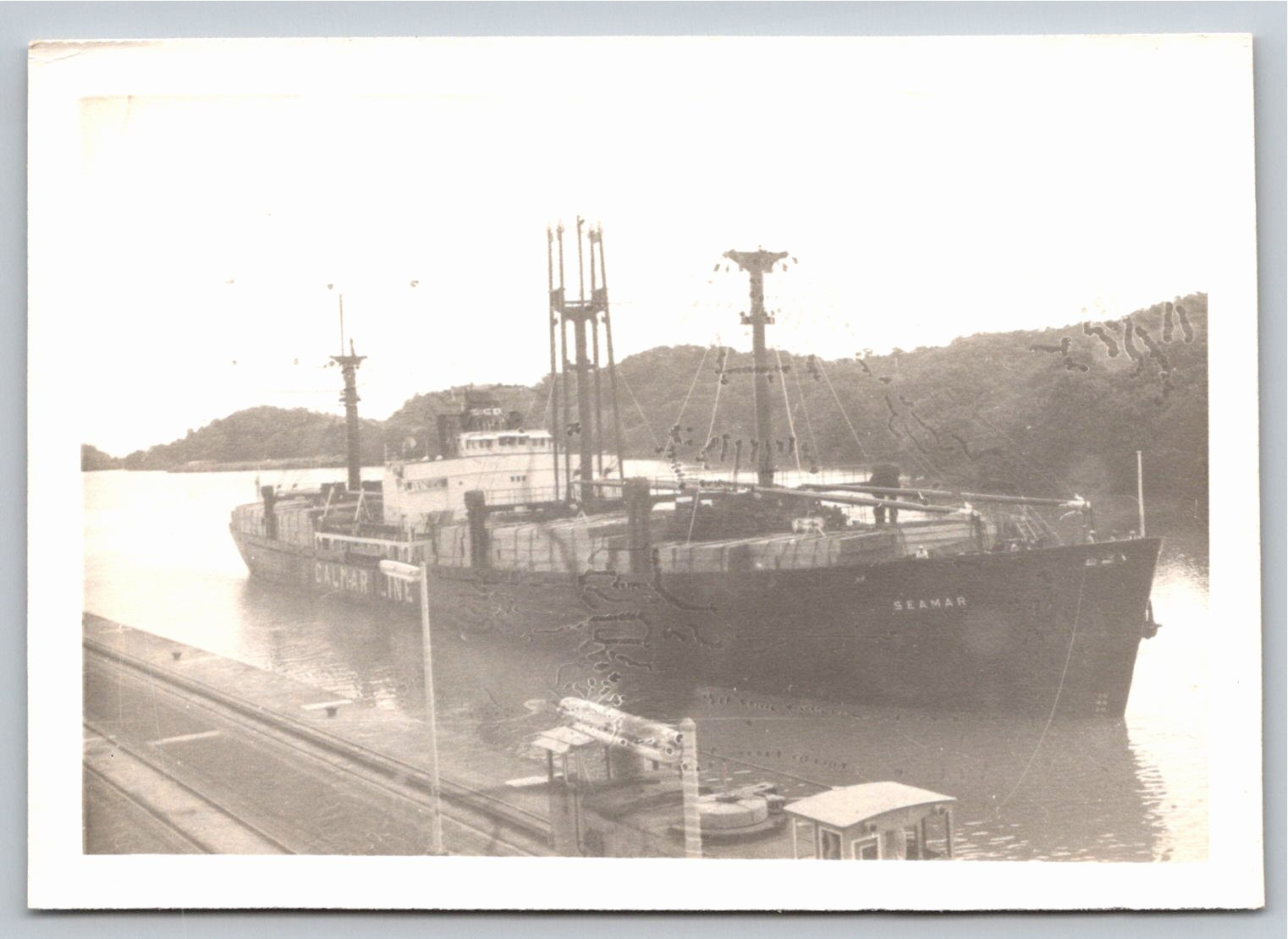
1960s SS Seamar Calmar Line Cargo Ship Panama Canal Photo
📸 Click any thumbnail to inspect Front, Back & Angles (2 Photos)
🔗 Embed / Cite This Archival Image (Free with Attribution)Get HTML Code
© USA RESELL. Bloggers, historians, and researchers may embed this image for free by keeping the credit link below intact:
As an eBay Partner, we may earn a commission if you make a purchase.
Item Specifications
- City: Balboa
- State: Canal Zone
- Country: United States
- Era: 1960s
- Subject: SS Seamar Calmar Line Cargo Ship Panama Canal
- Original/Licensed Reprint: Original Vintage
- Category: Vintage Photography
- Format / Type: Vintage Photographs
Looking for Modern Alternatives?
Explore top-rated, modern Vintage Photography and related historical accessories on Amazon.
Shop Vintage Photography on Amazon →As an Amazon Associate, we earn from qualifying purchases.
Historical Context & Overview
Mid-Century Maritime Commerce and the Calmar Line
During the mid-20th century, American maritime trade relied heavily on specialized intercoastal cargo fleets that linked Atlantic industrial centers with growing West Coast markets. Among the most vital operators in this trade was the Calmar Steamship Corporation, a subsidiary of steel giant Bethlehem Steel. Calmar vessels maintained regular schedules carrying heavy steel products through the Panama Canal to Pacific ports, returning laden with timber and raw materials. This original black-and-white gelatin-silver photograph captures an iconic moment in that industrial pipeline, documenting the general cargo ship SS Seamar as it navigates through the narrow waters of the Panama Canal during the 1960s.
The Storied Past of the SS Seamar
Like many mid-century merchant vessels, the SS Seamar possessed a rich naval heritage rooted in World War II. Originally laid down as a C4-S-A1 troop transport, the vessel served the United States Navy as the USS General T. H. Bliss (AP-131). Named in honor of Tasker H. Bliss, the Army Chief of Staff during World War I, the ship deployed across both the Atlantic and Pacific theaters, earning battle stars for her war service.
Following her naval decommissioning, the ship was eventually acquired by the Calmar Steamship Company in 1964 as part of a fleet modernization program. Extensively re-engineered for commercial breakbulk and industrial cargo operations, she was rechristened the SS Seamar. The photograph clearly displays the bold lettering along her bow reading "SEAMAR" alongside the prominent "CALMAR LINE" branding painted in stark white block letters across her dark steel hull, a hallmark of Bethlehem Steel’s maritime presence.
Transiting the Panama Canal: An Engineering Marvel
The Panama Canal served as the essential artery for Calmar Line operations. Transiting between Balboa and Cristobal, ships like the Seamar negotiated the complex lock systems and cut channels framed by dense tropical topography. In this photograph, the vessel is caught mid-transit along the canal's concrete infrastructure, surrounded by the lush hillsides of the Canal Zone. The image highlights the massive deck machinery, heavy-lift derricks, and loaded cargo holds necessary for handling heavy industrial freights across oceans.
Archival Photography and Collector Significance
Printed on classic single-weight photographic paper with a glossy gelatin-silver emulsion, this photograph reflects authentic period darkroom production techniques of the 1960s. The reverse remains unprinted and blank, confirming its origin as a genuine vintage photograph rather than a modern reprint or postcard edition. Exhibiting faint inherent silvering around tonal edges and light surface handling consistent with vintage photographic prints, this historical document offers nautical historians and maritime collectors a tangible connection to the golden era of American merchant shipping.