1950s Panama Canal Locks Photo Cargo Ship Aristidis Print
📸 Click any thumbnail to inspect Front, Back & Angles (2 Photos)
🔗 Embed / Cite This Archival Image (Free with Attribution)Get HTML Code
© USA RESELL. Bloggers, historians, and researchers may embed this image for free by keeping the credit link below intact:
As an eBay Partner, we may earn a commission if you make a purchase.
Item Specifications
- City: Panama Canal
- State: Canal Zone
- Country: United States
- Era: 1950s-1960s
- Subject: Panama Canal Maritime Ship
- Original/Licensed Reprint: Original Vintage
- Category: Vintage Photography
- Format / Type: Snapshots
Looking for Modern Alternatives?
Explore top-rated, modern Vintage Photography and related historical accessories on Amazon.
Shop Vintage Photography on Amazon →As an Amazon Associate, we earn from qualifying purchases.
Historical Context & Overview
During the middle of the twentieth century, global ocean trade relied heavily on transoceanic arteries that bridged vast distances and streamlined international commerce. Among these monumental engineering achievements, none commanded greater strategic importance than the Panama Canal. Connecting the Atlantic and Pacific Oceans, this intricate system of waterways and gravity-fed locks served as the indispensable path for merchant fleets navigating between major trade hubs. Mid-century snapshot photography from this era provides an intimate look into the daily rhythms of world shipping, capturing specific vessels as they navigated the narrow, engineered passages of the Canal Zone.
Mid-Century Maritime Infrastructure and Navigational Precision
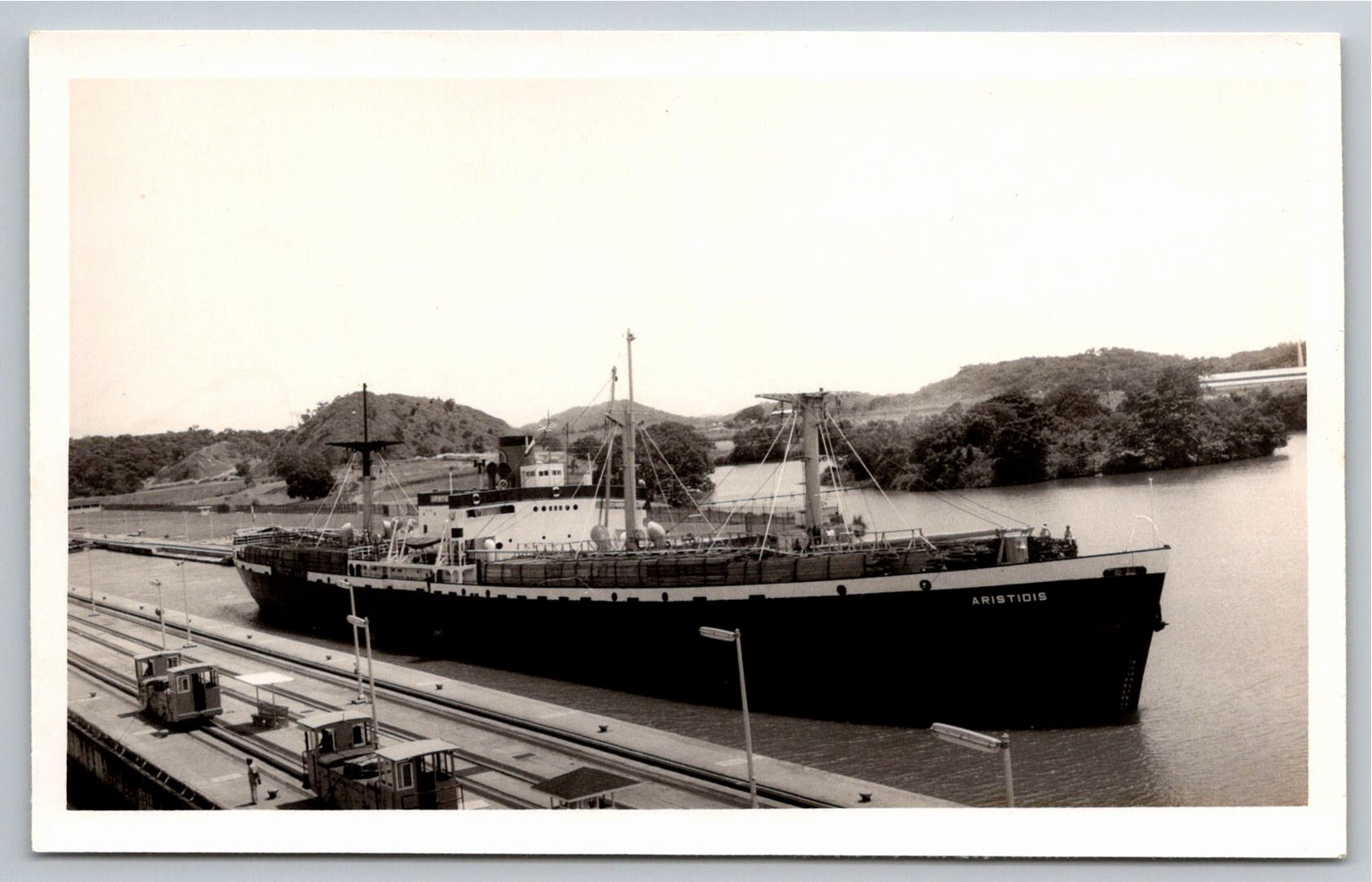
This original black-and-white photograph offers an exceptional record of mid-twentieth-century maritime activity, focusing on the Greek-named cargo freighter Aristidis as it moves through one of the lock systems along the canal route. The composition provides an expansive view of the vessel’s heavy dark hull, detailed deck rigging, cargo booms, and superstructure. Positioned high above the waterline, the camera catches the ship in transit, framed against the dense, rolling tropical flora that defines the Panama Canal Zone landscape.
Particularly compelling to maritime historians is the clear inclusion of the iconic electric towing locomotives—affectionately dubbed "mules"—stationed along the track systems adjacent to the lock walls. Introduced during the original construction of the canal to prevent heavy ocean-going freighters from colliding with the concrete lock walls, these specialized locomotives controlled the lateral position and forward progress of ships through each chamber. Seeing the Aristidis flanked by these specialized machines highlights the complex operational coordination required for every successful canal transit.
Archival Qualities and Curator’s Assessment
Rendered on classic photographic paper stock, this gelatin-silver print measures approximately 5.3 by 3.3 inches, a standard snapshot format popular among travelers, seamen, and visitors during the 1950s and 1960s. The image displays impressive focal clarity and rich tonal range, spanning deep charcoal blacks in the ship's hull to bright highlights across the deck structures and surrounding concrete lock infrastructure. The reverse side remains unprinted and blank, confirming its original status as a photographic snapshot rather than a mass-produced souvenir postcard.
Collector Value and Historical Preservation
For collectors of maritime photography, naval memorabilia, and Panamanian history, original candid snapshots featuring named merchant ships possess distinct archival value. Unlike official promotional materials, snapshot photography documents working vessels in active service under realistic operational conditions. Preserving physical photographic prints from the silver-gelatin era ensures that the tangible visual heritage of mid-century global logistics remains accessible for future generations of historians and enthusiasts.