1948 United Electric Railways Emergency Car Photo Providence RI
📸 Click any thumbnail to inspect Front, Back & Angles (2 Photos)
🔗 Embed / Cite This Archival Image (Free with Attribution)Get HTML Code
© USA RESELL. Bloggers, historians, and website owners may embed this image for free by copying the HTML code below (which includes the required credit link back to this page):
USA RESELL is a living historical archive. Because original artifacts are one-of-a-kind and source records change rapidly, use the button above to check live marketplace availability or locate surviving examples. As an eBay Partner, we may earn a commission on qualifying purchases.
Item Specifications
- City: Providence
- State: Rhode Island
- Country: United States
- Era: 1940s
- Subject: Streetcars and Trolleys
- Theme: Transportation
- Category: Vintage Photography
- Format / Type: Vintage Photographs
Historical Context & Overview
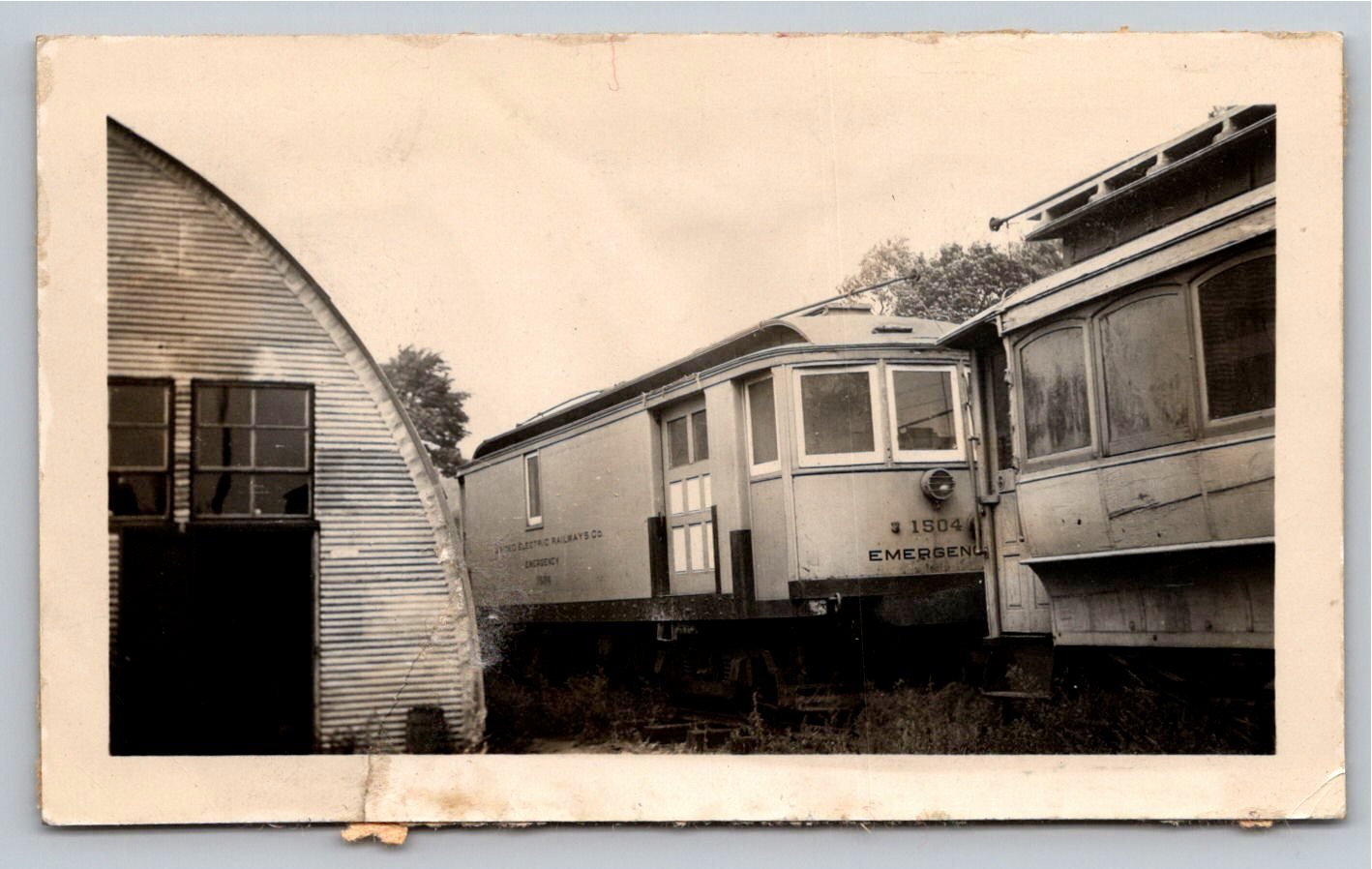
1948 United Electric Railways Emergency Service Car #1504
This original black-and-white snapshot photograph documents a piece of mid-century regional transit history: emergency service car #1504 of the United Electric Railways Company (UER), captured on location in Providence, Rhode Island. The image offers a clear view of the specialized utility rail vehicle stationed adjacent to a classic wooden streetcar body and a corrugated steel shed structure, capturing the industrial reality of mid-century urban transit operations.
Historical Context & Equipment Background
United Electric Railways maintained a complex network of streetcars, interurban lines, and trolleybuses across Rhode Island throughout the first half of the 20th century. To keep this vital infrastructure running smoothly, specialized non-revenue rolling stock was deployed to clear line blockages, repair overhead wiring, and respond to derailments. Car #1504 was originally constructed in 1904 as a heavy-duty electric wrecker and maintenance unit tailored to meet these demanding operational needs.
Following decades of continuous service maintaining transit lines throughout the Providence metropolitan area, Car #1504 was officially retired in 1948. Recognizing its significance in New England rail transit history, the car was acquired and preserved by the Branford Electric Railway Association (known today as the Shore Line Trolley Museum), ensuring its survival into the modern era.
Artifact Condition & Details
Measuring 4.4 by 2.7 inches, this original vintage photograph features a clean matte finish. The reverse side bears period handwritten ink annotations reading "#1504 Emergency Car United Elec. Rys. Providence R.I. now Branford E.R.A." The print exhibits minor signs of age consistent with historical photo album storage, including faint corner wear and paper mounting residue on the reverse, while maintaining sharp contrast and detail across the central subject matter.
Railfan Photography & Mid-Century Transit Transitions
Produced via the classic gelatin-silver printing technique on matte paper stock, this original 1948 snapshot captures a pivotal moment of transition in American urban transportation history. During the post-World War II era, dedicated regional railfans and local transit enthusiasts actively documented disappearing electric rail infrastructure across New England as municipal authorities rapidly replaced streetcar networks with modern motor buses. Non-revenue utility vehicles like wrecker #1504 were seldom the primary subject for casual snapshot photographers of the period, making close-up industrial views of specialized line-maintenance and emergency equipment far rarer than standard passenger car imagery.
Provenance & Archival Significance for Ephemera Collectors
The vintage ink annotations on the print's reverse add significant historical provenance, directly recording the vehicle's 1948 transfer from United Electric Railways service to the newly established Branford Electric Railway Association. Because Car #1504 stands as one of the pioneering pieces of preserved electric railway hardware in North America, primary visual documentation from its final operational year in Providence is especially prized by transit historians. For paper ephemera enthusiasts and regional transit collectors alike, this print serves as an authentic physical artifact, capturing both the heavy-duty mechanical scale of mid-century street railways and the early origins of modern rail preservation.