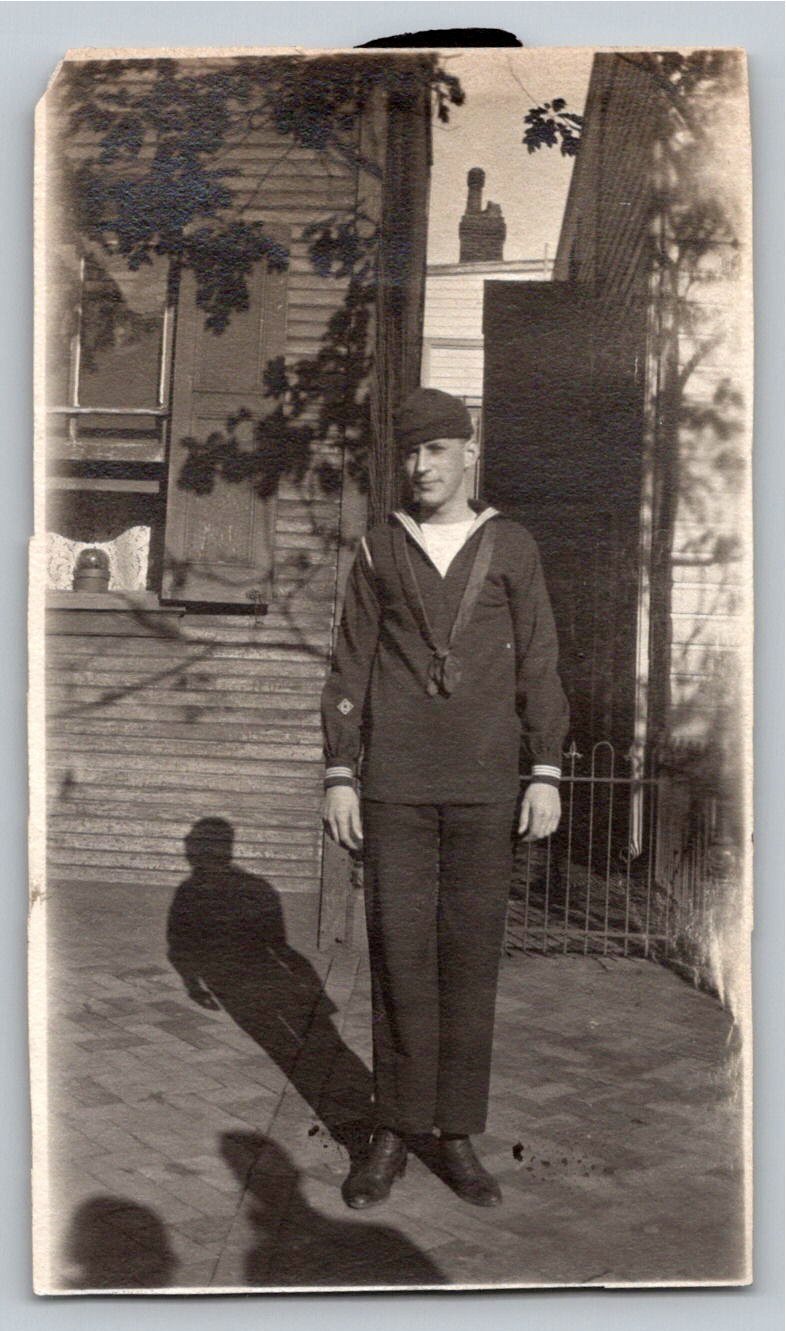
1918 WWI Era US Navy Sailor Crackerjack Uniform Photo
📸 Click any thumbnail to inspect Front, Back & Angles (2 Photos)
🔗 Embed / Cite This Archival Image (Free with Attribution)Get HTML Code
© USA RESELL. Bloggers, historians, and website owners may embed this image for free by copying the HTML code below (which includes the required credit link back to this page):
USA RESELL is a living historical archive. Because original artifacts are one-of-a-kind and source records change rapidly, use the button above to check live marketplace availability or locate surviving examples. As an eBay Partner, we may earn a commission on qualifying purchases.
Item Specifications
- City: Unspecified
- Country: United States
- Era: Interwar (1918-1939)
- Subject: Military US Navy Sailor
- Theme: Militaria Americana
- Year of Production: 1918
- Category: Vintage Photography
- Format / Type: Snapshots
Historical Context & Overview
Visual & Historical Overview of the Naval Portrait
Standing with quiet poise in the bright natural sunlight, an enlisted American sailor is captured in this striking vernacular snapshot from the era of the First World War. The full-length composition depicts the serviceman stationed on a paved brick or stone walkway directly in front of a traditional clapboard residence. Behind him, tall wooden window shutters, an arched decorative gate, and neighborhood rooftops establish an intimate domestic backdrop, suggesting a cherished moment captured during shore leave or a return home from duty.
The serviceman is attired in the iconic United States Navy dress blue "crackerjack" uniform, an enduring emblem of twentieth-century American naval heritage. He wears the traditional dark wool flat cap, known colloquially among sailors as the pancake hat, paired with a bib-collared pullover jumper, black neckerchief knot, and straight-falling bell-bottom trousers. A sleeve branch specialty mark is neatly displayed on his right arm, denoting his naval rating and technical proficiency, while polished dress shoes complete his formal appearance under the afternoon sun.
Deeper History of Interwar Naval Life and Uniform Styling
The transition between World War I and the early interwar era marked significant evolution for the United States Navy as thousands of young recruits adapted to rapid technological changes across maritime fleets. Despite these modernizations, traditional dress uniforms remained steadfast symbols of pride, discipline, and maritime tradition. Snapshots such as this one served as tangible proof of service and adulthood for families awaiting their loved ones' safe return from sea.
Vernacular outdoor photography during the late 1910s and early 1920s offered an informal counterpoint to rigid indoor studio portraits. Without the artificial backdrops or posed stands of professional photographers, everyday snapshot cameras captured sailors in familiar surroundings. Here, the sharp silhouette shadow cast upon the pavement and the relaxed yet upright stance convey an authentic, unfiltered human connection to early twentieth-century American military life.
Physical Attributes, Paper Chemistry, and Collector Value
This original artifact is rendered as a black-and-white gelatin silver print on matte photographic paper stock, measuring approximately 2.3 by 4.1 inches. The print displays strong tonal balance, featuring rich, velvety dark tones across the wool jumper and warm, creamy highlights where sunlight illuminates the subject's face and collar. The natural light highlights subtle textile folds and stitching, demonstrating the fine resolution capable in period roll-film chemistry.
The reverse side of the snapshot is completely unprinted and free of photograph markings, confirming its status as a standalone personal photograph. It retains remnants of black construction paper and mounting residue along the upper and lower edges, indicating that it was preserved for decades within a private family scrapbook album. Light edge softening and minor antique corner wear are present, consistent with age, making this an evocative and historically authentic addition to any militaria or early photography collection.