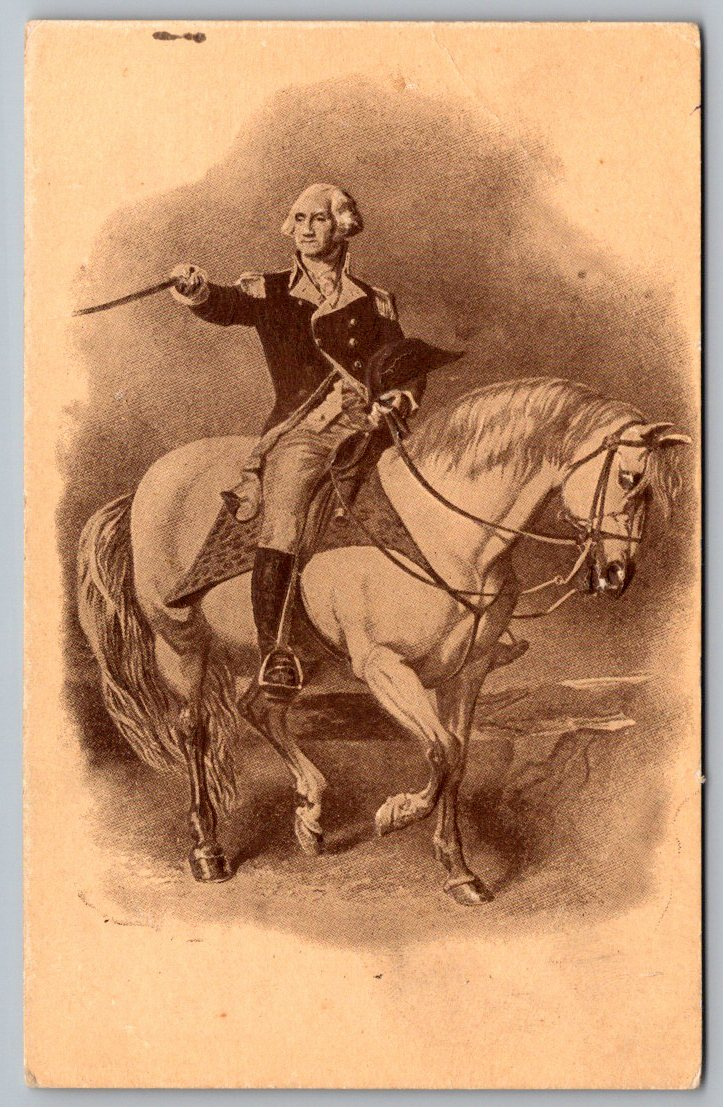
1900s George Washington Patriotic Embossed Undivided Postcard
📸 Click any thumbnail to inspect Front, Back & Angles (2 Photos)
As an eBay Partner, we may earn a commission if you make a purchase.
Item Specifications
- Type: Embossed Patriotic Postcard
- Era: 1901-1907 Undivided Back
- Subject: George Washington
- Country: United States
- Originality: Original Vintage
- Theme: American History & Revolutionary War
- Category: Postcards & Ephemera
- Format / Type: Vintage Postcards
Looking for Modern Alternatives?
Explore top-rated, modern Postcards & Ephemera and related historical accessories on Amazon.
Shop Postcards & Ephemera on Amazon →As an Amazon Associate, we earn from qualifying purchases.
Historical Context & Overview
At the turn of the twentieth century, the Golden Age of Postcards swept across the United States, driven by advances in printing technology, reduced postal rates, and an insatiable appetite for collectible visual ephemera. Among the most cherished sub-genres of this era were patriotic postcards commemorating foundational figures of American democracy. This exquisite undivided back postcard from the early 1900s depicts General George Washington atop his rearing charger, sword outstretched in a timeless gesture of revolutionary leadership.
Iconography of the Revolutionary Commander
The imagery rendered on this card draws upon classic nineteenth-century military portraiture, presenting Washington in full Continental Army uniform. Mounted upon a noble white horse with a leopard-skin saddle blanket, he holds his hat in one hand and directs his troops forward with an unsheathed sword. Images such as this reinforced national pride during a period when the United States was asserting its role as a rising global power following the Spanish-American War.
Portrayals of Washington on horseback became enduring symbols of military resolve and patriotic devotion. By reproducing these heroic equestrian portraits on affordable cardstock, publishers allowed everyday Americans to collect and share tangible tokens of national heritage.
The Art of Early 20th-Century Embossing
What elevates this postcard beyond standard monochrome lithographs is its sophisticated embossed texture. During the early 1900s, specialized European and American printing houses utilized heavy metal dies to press relief details into the paper stock. On the reverse side, the raised contours of Washington, his horse, and the flowing lines of the composition are clearly visible, creating a three-dimensional effect that catches the light when viewed in hand.
This tactile embellishment required precise alignment between the printed inks and the mechanical embossing press. Cards featuring deep, crisp relief work were considered premium keepsakes, frequently preserved in family albums rather than sent through the mail, which accounts for the remarkable state of preservation seen in unposted examples today.
Clues from the Undivided Back Era
The reverse side of the postcard offers clear horological context for paper ephemera collectors. Marked explicitly with the prompt "THIS SIDE FOR THE ADDRESS," the card dates precisely to the Undivided Back era (1901–1907). Prior to March 1, 1907, United States Postal Service regulations mandated that the back of a postcard be reserved exclusively for the recipient’s address, forcing senders to write personal notes on the border of the front image if at all.
The stamp box further reflects period postal history, noting domestic postage rates of one cent for the United States and Canada, and two cents for foreign delivery. For historians and specialized vintage ephemera curators, these distinct postal markings—combined with fine embossing and historical subject matter—make this early patriotic postcard a classic artifact of American visual culture.