Antique 1900s Embossed Red Roses German Lace Border Postcard
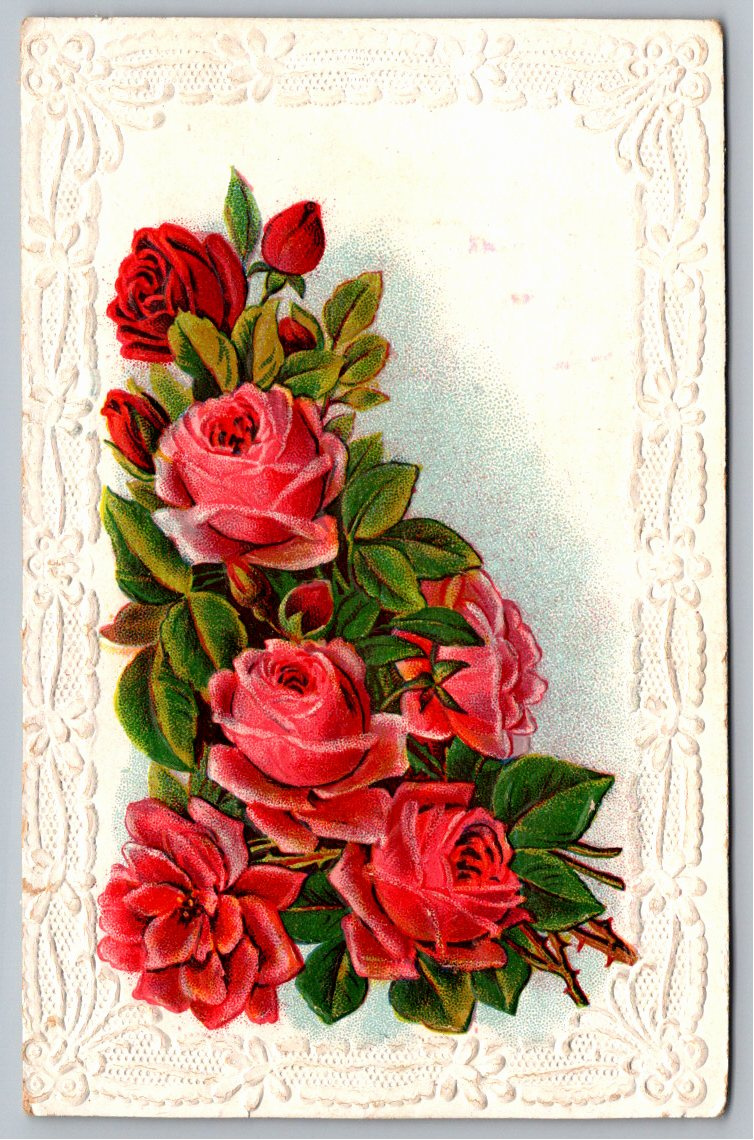
📸 Click any thumbnail to inspect Front, Back & Angles (2 Photos)
As an eBay Partner, we may earn a commission if you make a purchase.
Item Specifications
- Era: 1900s Golden Age
- Country of Origin: Germany
- Publisher: E.C.C. (Serie 110)
- Subject: Red Roses Floral Arrangement
- Technique: Embossed Chromolithography
- Condition: Unposted Original
- Category: Postcards & Ephemera
- Format / Type: Vintage Postcards
Looking for Modern Alternatives?
Explore top-rated, modern Postcards & Ephemera and related historical accessories on Amazon.
Shop Postcards & Ephemera on Amazon →As an Amazon Associate, we earn from qualifying purchases.
Historical Context & Overview
During the Golden Age of Postcards—a period spanning roughly from 1898 to 1915—the post office became the primary engine of personal connection across Europe and North America. Millions of artfully designed cards traveled across continents daily, serving as tokens of affection, holiday greetings, or simple everyday correspondence. Among the most prized creations of this era were floral postcards produced in Germany, renowned globally for unmatched printing quality and intricate paper engineering. This unposted 1900s postcard featuring a vibrant cascade of deep red roses and a sculpted lace border stands as a quintessential exemplar of Edwardian tactile art.
The Mastery of Turn-of-the-Century German Printing
In the early 20th century, German printers held a virtual monopoly on high-end chromolithography and paper relief embossing. Workshops in Leipzig, Dresden, and Berlin perfected techniques that combined heavily layered oil inks with precise heavy-die pressing. To create a piece like this card, lithographic stones or aluminum plates were prepared for each individual color pass, building up the vivid reds, lush moss greens, and subtle background shading layer by layer.
Once printed, the cardstock was run through heavy metal embossing dies under extreme hydraulic pressure. This mechanical process pushed the paper fibers outward from the back, granting the rose petals and leafy stems a realistic three-dimensional contour. Surrounding the floral arrangement is a raised, paper lace motif that emulates delicate crocheted linen or pillow lace—a popular decorative flourish of the Edwardian aesthetic that transformed flat ephemera into a sensory, tactile experience.
Floral Language and Edwardian Sentimentality
To the recipient of a postcard in the 1900s, floral imagery conveyed rich symbolic meaning through the popularized Victorian "language of flowers" (floriography). Red roses held an unmistakable message of deep love, romantic devotion, and admiration, while open rosebuds signaled budding affection or youth. Cards featuring opulent floral bouquets were often sent as birthday wishes, anniversary notes, or tokens of romantic affection.
The reverse side of this card reflects the divided-back format introduced in international postal conventions around 1907, which allowed senders to write personal messages on the left side while reserving the right side exclusively for the address and stamp. Printed with "Post Card – Postkarte – Carte postale" alongside the publisher mark "E.C.C. Serie 110," the reverse provides clear provenance tracing back to major German export printers who crafted fine paper goods for the international market.
Preservation and Collector Appeal
Finding original Edwardian postcards in unposted condition with crisp relief detaining is increasingly rare. Because these raised surfaces were susceptible to flattening, rubbing, and edge wear during transit through postal machinery, unused examples preserve the full depth of the original pressing. For paper ephemera collectors, botanic enthusiasts, and historians of early graphic arts, this postcard remains a striking remnant of an era when daily correspondence was treated as a fine art form.