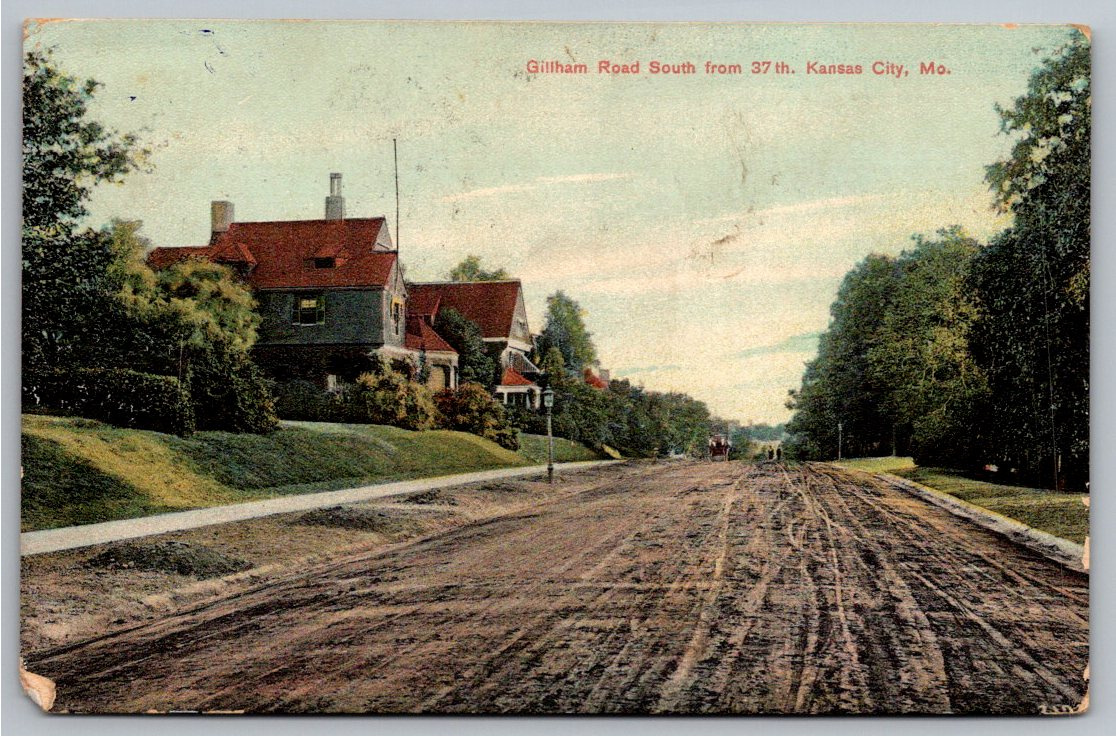
Antique 1900s Kansas City Postcard: Gillham Road South at 37th St
📸 Click any thumbnail to inspect Front, Back & Angles (2 Photos)
As an eBay Partner, we may earn a commission if you make a purchase.
Item Specifications
- Era: 1900s Golden Age
- Publisher: The South-West News Company
- Printer: Litho-Chrome (Made in Germany)
- Location: Kansas City, Missouri
- Subject: Gillham Road Residential Houses
- Postmark Date: November 9
- Category: Postcards & Ephemera
- Format / Type: Vintage Postcards
Looking for Modern Alternatives?
Explore top-rated, modern Postcards & Ephemera and related historical accessories on Amazon.
Shop Postcards & Ephemera on Amazon →As an Amazon Associate, we earn from qualifying purchases.
Historical Context & Overview
This exquisite early 1900s color lithograph postcard offers a rare window into the rapid transformation of Kansas City, Missouri, during the height of the City Beautiful movement. Capturing a quiet, tree-lined stretch looking south along Gillham Road from 37th Street, the view showcases majestic turn-of-the-century residences nestled along elevated, manicured embankments. The scene juxtaposes sophisticated architectural design with the raw realities of early municipal infrastructure, featuring a wide, rutted dirt thoroughfare marked by wagon tracks prior to modern asphalt paving.
The Legacy of George Kessler’s Boulevard System
At the turn of the twentieth century, Kansas City underwent one of the most ambitious urban planning endeavors in American history. Under the direction of landscape architect George E. Kessler and the Board of Park Commissioners, the city crafted an interconnected network of parks, parkways, and boulevards intended to elevate civic aesthetics and direct residential growth outward from the dense urban core. Gillham Road—named in honor of civil engineer and park board pioneer Robert Gillham—was designed as a vital north-south artery running through midtown.
Kessler’s design philosophy emphasized natural contours, expansive grassy verges, and gentle street grading. As seen in this historic view near 37th Street, residential structures were set back atop terraced lawns, granting homeowners elevated vistas over the parkway while creating a grand, scenic corridor for travelers. The unpaved, deeply rutted roadway highlights a pivotal moment when horse-drawn carriages and delivery wagons still dominated local transport before automobile travel prompted widespread paving across the city's boulevard network.
Midtown Architecture and Turn-of-the-Century Neighborhoods
The stately homes depicted along the left side of the street showcase the architectural styles favored by Kansas City's prosperous middle and upper classes during the decade. Featuring steep gabled rooflines, dormers, substantial stone foundations, and expansive covered porches, these residences reflect elements of Shingle Style, Queen Anne, and early Craftsman design. The proximity to newly established parkways made Midtown and adjacent neighborhoods like Hyde Park among the most desirable real estate locations in the expanding metropolis.
German Litho-Chrome Printing and Postal History
Published locally by The South-West News Company of Kansas City and manufactured in Germany, this postcard represents the peak era of postcard production. Prior to World War I, German lithographers set the global gold standard for photomechanical color reproduction, employing specialized chromolithographic techniques like "Litho-Chrome" to achieve soft, painterly hues and precise structural clarity.
The reverse side features a traditional divided back format with a bold green "POST CARD" header, hand-written cursive correspondence, and a postmark from Station C in Kansas City. Affixed with a green one-cent Benjamin Franklin postage stamp, this piece remains a captivating historical document of Missouri's architectural heritage and early twentieth-century publishing craftsmanship.