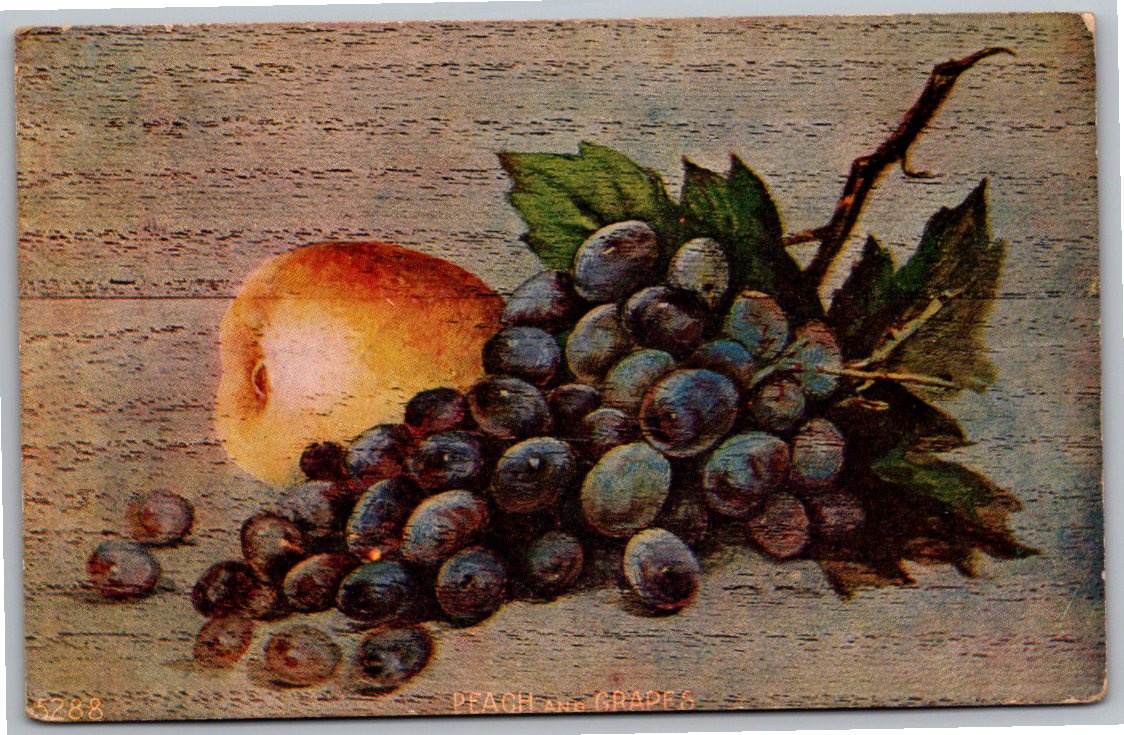
1909 Peach & Grapes Still Life Wood Grain Antique Postcard
📸 Click any thumbnail to inspect Front, Back & Angles (2 Photos)
As an eBay Partner, we may earn a commission if you make a purchase.
Item Specifications
- Era: Divided Back (1907–1915)
- Year: 1909
- Subject: Peach & Grapes Still Life
- Theme: Fruit & Floral Art
- Postmark Location: Cameron, Missouri
- Postmark Date: March 27, 1909
- Category: Postcards & Ephemera
- Format / Type: Vintage Postcards
Looking for Modern Alternatives?
Explore top-rated, modern Postcards & Ephemera and related historical accessories on Amazon.
Shop Postcards & Ephemera on Amazon →As an Amazon Associate, we earn from qualifying purchases.
Historical Context & Overview
During the Golden Age of Postcards (roughly 1907 to 1915), the postcard was much more than a vehicle for brief correspondence—it was a popular art medium that brought color printing into millions of American homes. This original 1909 postcard showcases a quintessential example of turn-of-the-century fruit still-life artwork, capturing a plump, blushing peach paired with a heavy cluster of deep violet grapes resting against a textured wood grain backdrop.
The Aesthetic Appeal of Wood Grain & Still Life Art
In the early 1900s, publishers sought innovative ways to make printed postcards stand out in display racks across stationery shops and general stores. One popular artistic trend was imitating rustic textures, such as weathered timber or natural wood grain. By placing vibrant botanical subjects—like ripe peaches, concord grapes, and trailing leaves—directly onto a simulated wooden plank, artists created a warm, cozy aesthetic reminiscent of classical kitchen oil paintings.
The chromolithographic printing technique used during this period allowed for rich color saturation and delicate shading. The subtle blush on the peach skin, the powdery bloom on the grapes, and the intricate veining on the foliage all contribute to a tactile visual quality that remains appealing to antique art enthusiasts today.
A Glimpse into 1909 Rural American Life
Beyond its artistic imagery, this physical artifact carries a charming historical narrative preserved on its reverse side. Mailed during the Divided Back Era—when the United States Postal Service first permitted senders to write messages on the left side of the card back while reserving the right side for the address—this piece offers an authentic window into small-town Missouri at the end of the Edwardian era.
Postmarked in Cameron, Missouri on March 27, 1909, the card arrived in nearby Gallatin, Missouri two days later on March 29. It bears a classic green one-cent Benjamin Franklin postage stamp alongside a clear circular cancellation mark. The hand-penciled message reveals a poignant snapshot of childhood: a young boy named Wilson Harvey writes to his aunt, proudly sharing that he will be turning seven years old on Monday, March 29th, while gently nudging her that "Grandma wonders why you don't write."
Collector Significance & Preservation
For paper ephemera collectors, fruit still-life postcards on novelty textured backgrounds represent a beloved sub-genre of botanical imagery. When combined with clear postmarks, intact coinage stamps, and sweet family correspondence from a specific historical moment, such cards become prized display pieces. Preserving this item in an acid-free archival sleeve protects both the vivid color printing on the front and the readable ink and pencil script on the reverse, safeguarding a piece of early 20th-century American material culture.