Vintage 1906 Petticoat Lane Postcard | Kansas City Street View
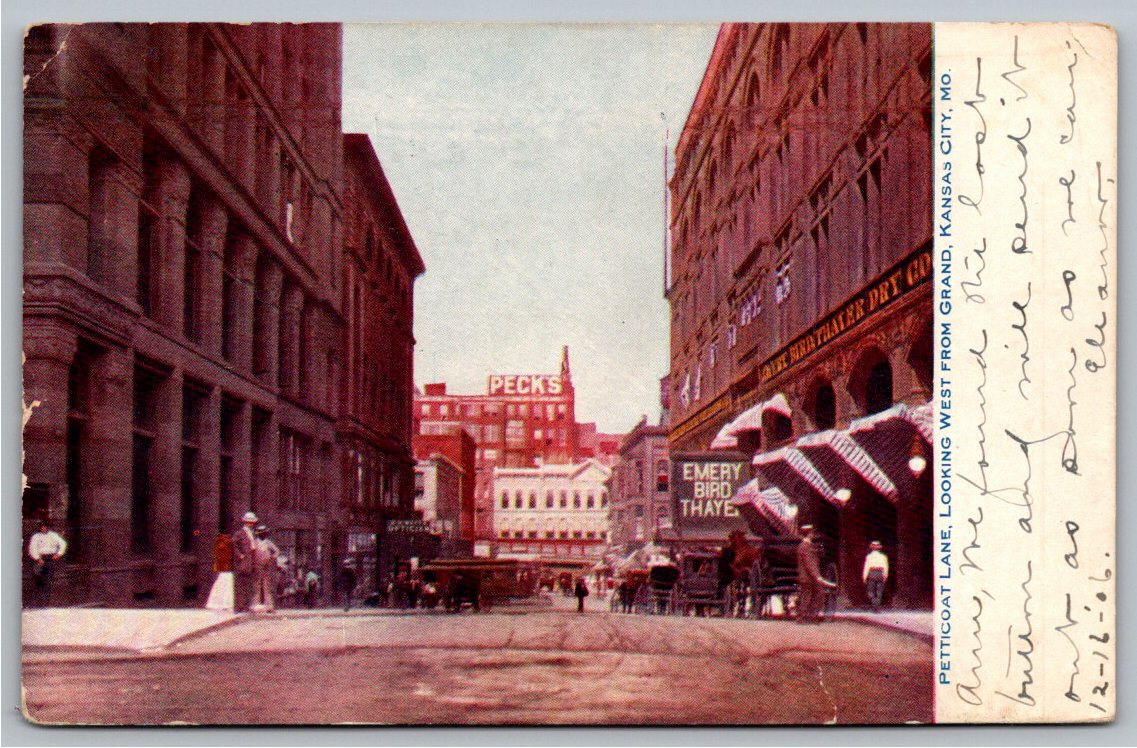
📸 Click any thumbnail to inspect Front, Back & Angles (2 Photos)
As an eBay Partner, we may earn a commission if you make a purchase.
Item Specifications
- Era: Undivided Back (1901-1907)
- Year: 1906
- Publisher: Webb-Freyschlog Merc. Co.
- Location: Kansas City, Missouri
- Subject: Petticoat Lane / 11th Street
- Prominent Landmarks: Emery Bird Thayer & Pecks
- Category: Postcards & Ephemera
- Format / Type: Vintage Postcards
Looking for Modern Alternatives?
Explore top-rated, modern Postcards & Ephemera and related historical accessories on Amazon.
Shop Postcards & Ephemera on Amazon →As an Amazon Associate, we earn from qualifying purchases.
Historical Context & Overview
A Window into Turn-of-the-Century Kansas City Retail
In the early 20th century, 11th Street in downtown Kansas City, Missouri, earned the affectionately coined moniker "Petticoat Lane." Stretching westward from Grand Avenue, this vibrant thoroughfare served as the beating heart of the city's fashion, department store, and retail district. This original 1906 colorized postcard offers a captivating view looking west down Petticoat Lane during the height of the Edwardian era, capturing a bustling scene framed by grand commercial architecture and turn-of-the-century urban life.
The Golden Age of Downtown Department Stores
Petticoat Lane derived its colorful nickname from the gusty winds that swept through the downtown building canyons, frequently swirling the long petticoats and skirts of stylish women browsing the avenue's premier boutiques. Dominating the right side of the view is the magnificent Romanesque Revival facade of the Emery, Bird, Thayer Dry Goods Company. Designed by the renowned architectural firm Van Brunt & Howe, the massive store occupied an entire block and was celebrated for its grand multi-story atrium, high-end millinery departments, and luxurious tea rooms.
Further down the corridor, the roof sign for Peck's—the Geo. B. Peck Dry Goods Company—rises prominently against the horizon. Alongside Emery, Bird, Thayer and nearby shopping institutions, Peck's helped cement 11th Street as the unquestioned fashion capital of the Midwest during the boom years following the turn of the century.
Early Transportation and City Atmosphere
The street scene vividly illustrates a pivotal era in American transit history. Horse-drawn carriages, delivery wagons, and early motor vehicles share the wide street with electric streetcars carrying shoppers directly to store entrances. Striped canvas awnings project outward over the wide sidewalks to shelter pedestrians from the midwestern climate, while well-dressed shoppers clad in floor-length gowns and bowler hats dot the crosswalks.
Postal History of the Undivided Back Era
This postcard was produced during the classic "Undivided Back" era of United States postal history (1901–1907). Under the United States Post Office regulations of the time, the back of a postcard was strictly reserved for the recipient's mailing address. Consequently, senders were required to write their personal correspondence directly on the white margins surrounding the front image. The sender, Eleanor, handwrote her note along the right margin, dating it December 16, 1906.
The reverse side features a crisp 1-cent green Benjamin Franklin stamp (Scott #300) cancelled by a machine postmark from Kansas City on December 14, 1906, along with receiving marks from Merriam and Shawnee, Kansas. Published locally by the Webb-Freyschlog Mercantile Company, this postmarked artifact is both an authentic piece of postal history and an enduring portrait of Kansas City's rich commercial heritage.