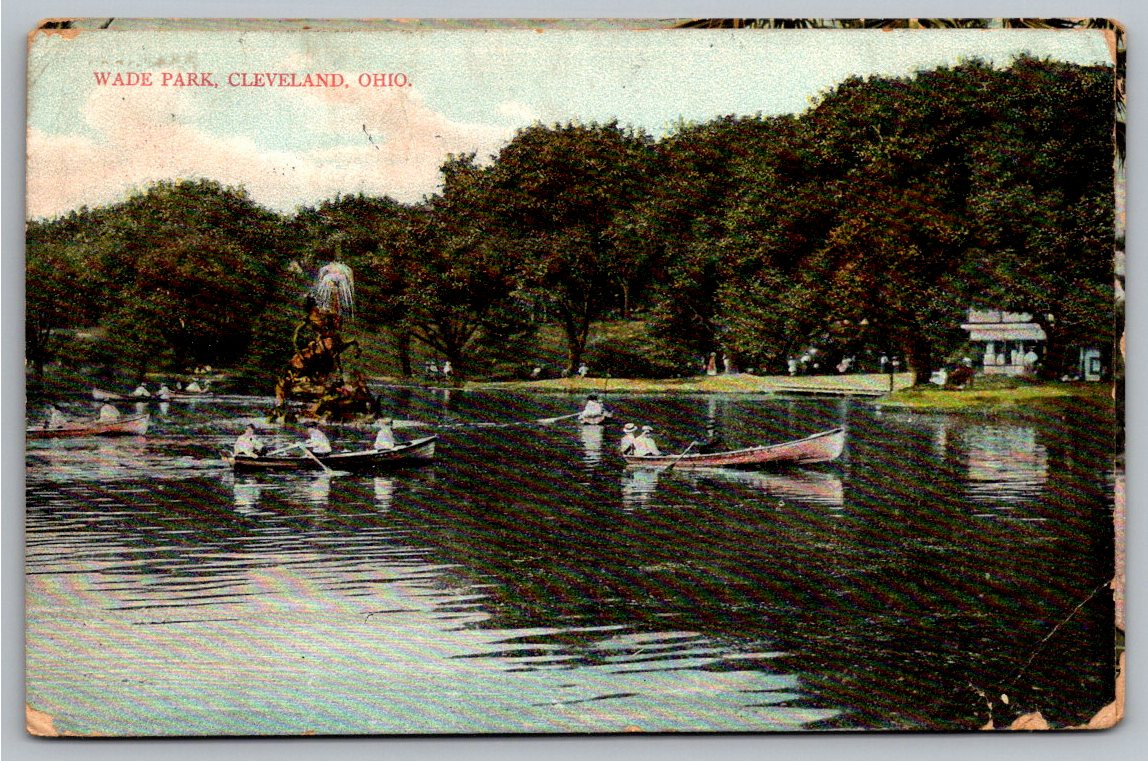
Antique 1907 Wade Park Cleveland Ohio Postcard Fountain & Lagoon
📸 Click any thumbnail to inspect Front, Back & Angles (2 Photos)
As an eBay Partner, we may earn a commission if you make a purchase.
Item Specifications
- Era: Divided Back (1907-1915)
- Year: 1907
- Publisher: Newman Post Card Co.
- Printer Location: Germany
- Location: Cleveland, Ohio
- Subject: Wade Park Lagoon & Fountain
- Category: Postcards & Ephemera
- Format / Type: Vintage Postcards
Looking for Modern Alternatives?
Explore top-rated, modern Postcards & Ephemera and related historical accessories on Amazon.
Shop Postcards & Ephemera on Amazon →As an Amazon Associate, we earn from qualifying purchases.
Historical Context & Overview
Turn-of-the-Century Leisure at Cleveland’s Wade Park
During the early twentieth century, American urban landscapes underwent a dramatic transformation driven by the public parks movement. Municipal leaders sought to create serene, natural escapes within burgeoning industrial cities. In Cleveland, Ohio, few green spaces embodied this ideal more gracefully than Wade Park. Donated to the city in 1882 by industrialist Jeptha Wade, the park became a crown jewel of the University Circle area, featuring winding footpaths, dense tree canopies, and a picturesque central lagoon.
This original 1907 color postcard captures a quintessential scene of Edwardian leisure: parkgoers quietly navigating rowboats across the calm waters of the Wade Park lagoon, centered around an ornate, towering fountain. Long before the construction of the iconic Cleveland Museum of Art—which today overlooks the restructured Fine Arts Garden on this very ground—this site served as an idyllic sanctuary for city residents seeking respite from Cleveland's rapidly growing manufacturing districts.
German Lithography and the Golden Age of Postcards
The year 1907 marked a pivotal moment in American postal history. It signaled the beginning of the "Divided Back" era, when the United States Post Office officially allowed senders to write personal messages on the back side of a postcard alongside the recipient's address. Prior to this shift, the back was reserved exclusively for the destination address, forcing senders to scrawl small notes across the front artwork itself.
This card was published by the Newman Post Card Company of Los Angeles and printed in Germany. At the time, German lithographers were world-renowned for their advanced chromolithographic techniques, producing soft, rich color gradients and fine architectural details that domestic presses could not yet replicate. The subtle tinting of the summer foliage, water reflections, and sky on this postcard reflects the high standards of German postcard production during the Golden Age of Postcards (1898–1915).
An Authenticated Piece of 1907 Postal Ephemera
Beyond its visual appeal, the reverse side of this artifact offers a tangible connection to early twentieth-century life. Postmarked in Los Angeles, California, on November 8, 1907, the card retains its original green 1-cent Benjamin Franklin stamp. A handwritten message in fountain pen ink conveys warm family greetings sent across the nation to St. Louis, Missouri. Such cross-country mailings highlight how early postcards functioned as the primary visual social network of their day.
For collectors of Ohio history, turn-of-the-century park design, or early American postal ephemera, this 1907 Wade Park card stands as a beautifully preserved piece of Cleveland's civic heritage.