Antique 1910 Bird Creek Falls Postcard: Early Tulsa Oklahoma
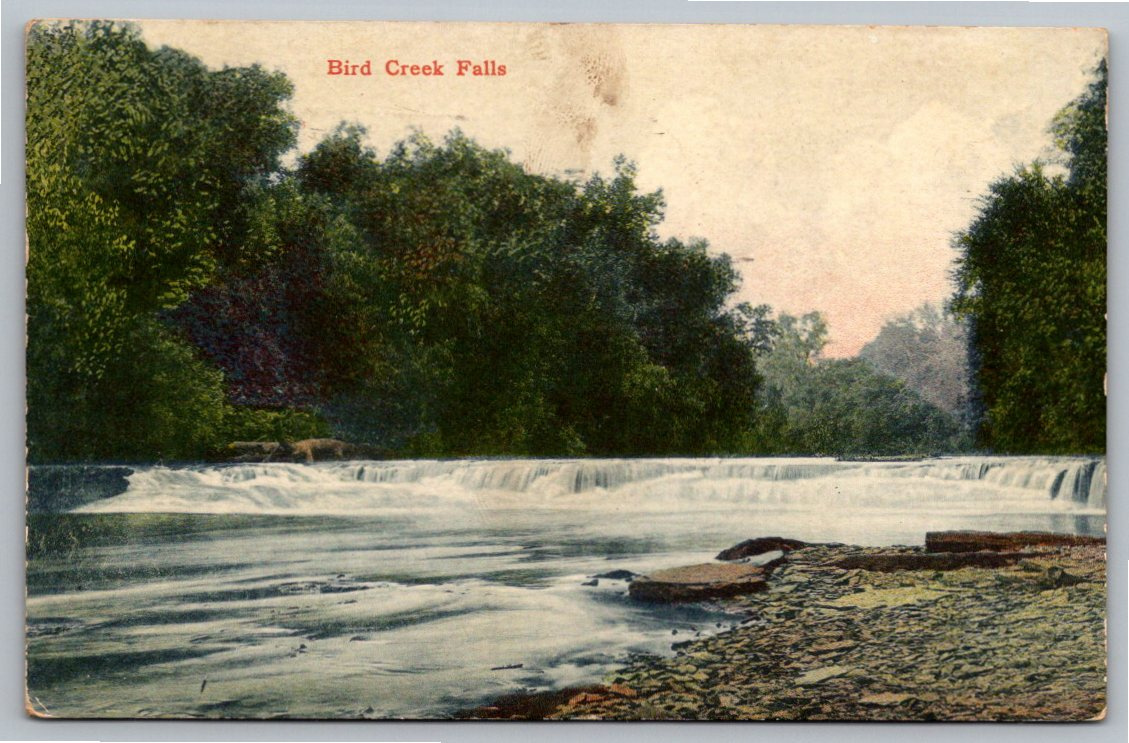
📸 Click any thumbnail to inspect Front, Back & Angles (2 Photos)
As an eBay Partner, we may earn a commission if you make a purchase.
Item Specifications
- Era: Divided Back (1907-1915)
- Postmark Year: 1910
- Location: Tulsa, Oklahoma
- Subject: Bird Creek Falls Waterfall
- Printer: Printed in Germany
- Originality: Original Vintage
- Category: Postcards & Ephemera
- Format / Type: Vintage Postcards
Looking for Modern Alternatives?
Explore top-rated, modern Postcards & Ephemera and related historical accessories on Amazon.
Shop Postcards & Ephemera on Amazon →As an Amazon Associate, we earn from qualifying purchases.
Historical Context & Overview
A Glimpse into Early Oklahoma Landscape Photography
In the early years following Oklahoma’s statehood in 1907, the region surrounding Tulsa was rapidly transforming from former Indian Territory into a bustling oil capital. Yet, alongside this intense industrial boom, the native waterways and wooded bluffs of northeast Oklahoma remained cherished retreats for residents and travelers seeking scenic beauty. This antique postcard from 1910 highlights Bird Creek Falls, a cascading natural waterfall situated along Bird Creek, which winds through Tulsa and Osage counties. The serene view captures the wide, rushing waters framed by dense oak and hickory trees, offering a peaceful glimpse into the natural topography of early 20th-century Oklahoma.
The Golden Age of Postcards and German Printing Heritage
This postcard stands as a classic artifact from the "Golden Age of Postcards" (1907–1915), a period when sending and collecting illustrated view cards became an international phenomenon. As noted by the hallmark in the lower left corner, this card was "Printed in Germany." Before World War I, German lithographers were universally regarded as the premier master printers of postcard artwork. Utilizing multi-color halftone lithography and delicate hand-tinting over black-and-white photographs, German print shops produced unmatched rich tones and subtle depth, making routine views of American landscapes look remarkably artistic.
Epistolary History: A Postal Snapshot from June 1910
The reverse side of the postcard provides a captivating window into everyday Edwardian-era communication. Postmarked at the St. Louis, Missouri Annex Station on June 24, 1910, the card carries a classic green one-cent Benjamin Franklin stamp. Written in neat cursive script, the message details a brief travel update regarding a safe arrival, addressed to recipients in Gallatin, Missouri. The card's divided-back design—authorized by the United States Postal Service in 1907—allowed citizens to freely write long personal notes on the left half while leaving the right half exclusively for the recipient's address. Prior to this regulatory change, messages were restricted to small white margins printed directly around the image on the front.
Significance for Regional Historians and Collectors
For deltiologists, Oklahoma history enthusiasts, and collectors of early Southern and Midwestern landscapes, early post-statehood real-photo and colorized postcards of Tulsa landmarks are exceptionally collectible. They serve as valuable visual evidence of the region's geography before extensive dam construction, urbanization, and civil engineering reshaped local waterways. This 1910 Bird Creek Falls postcard remains an authentic piece of American folk history, preserving both the physical natural heritage of Oklahoma and the social rhythm of early 20th-century life.