1910 Embossed Thanksgiving Greeting Postcard: Turkey & Harvest
📸 Click any thumbnail to inspect Front, Back & Angles (2 Photos)
As an eBay Partner, we may earn a commission if you make a purchase.
Item Specifications
- Era: 1910s Divided Back
- Year: 1910
- Postmark Location: St. Louis, Missouri
- Theme: Thanksgiving & Harvest
- Printing Technique: Embossed Chromolithography
- Series: Thanksgiving Series No. 3
- Category: Postcards & Ephemera
- Format / Type: Vintage Postcards
Looking for Modern Alternatives?
Explore top-rated, modern Postcards & Ephemera and related historical accessories on Amazon.
Shop Postcards & Ephemera on Amazon →As an Amazon Associate, we earn from qualifying purchases.
Historical Context & Overview
A Golden Age Tribute to Autumn Abundance
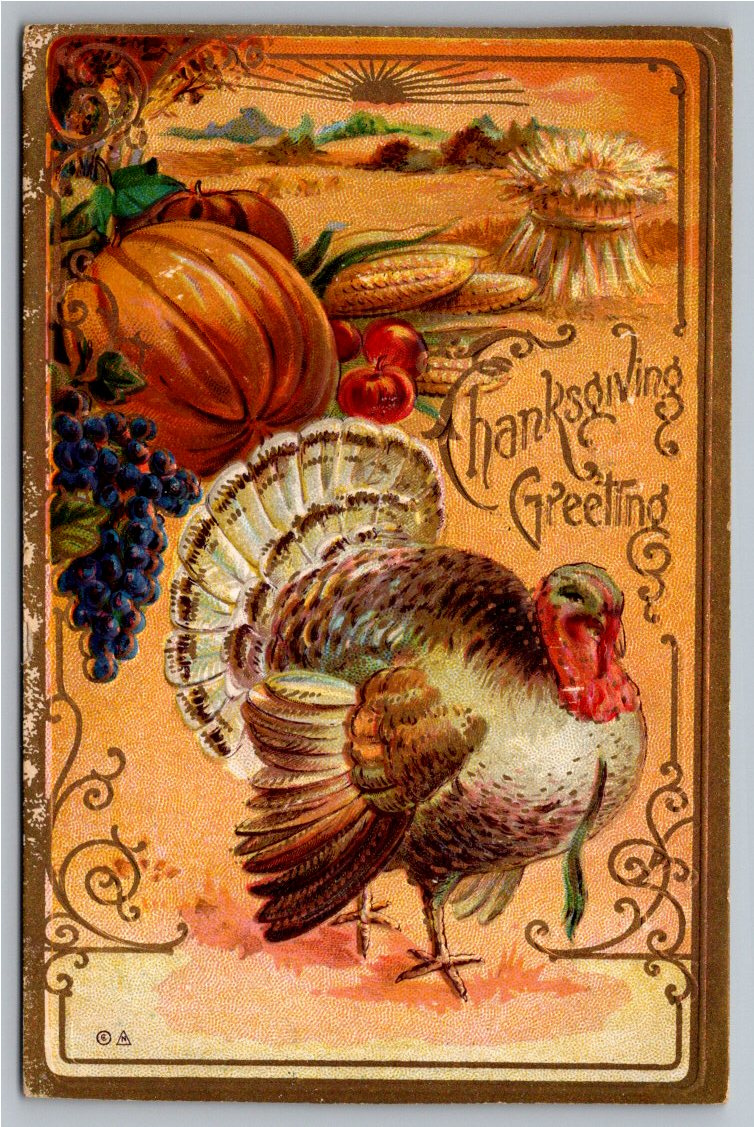
During the Golden Age of Postcards (1898–1915), sending illustrated holiday greetings became a cherished American ritual. Thanksgiving postcards held a unique place in this postal phenomenon, blending traditional symbols of domestic gratitude with lush, agrarian imagery. This fine 1910 greeting captures the quintessential Edwardian aesthetic, featuring a beautifully stylized, embossed wild turkey standing proudly alongside a classic harvest bounty.
The artwork relies heavily on traditional autumnal iconography. At the center of the composition, the strutting wild turkey is rendered with intricate feather detail and vibrant coloring. Surrounding the focal figure is a cornucopia of seasonal yields: a deep orange field pumpkin, ripe bunches of Concord grapes, ripe apples, and bundled ears of corn set against a background of stacked wheat sheaves and a rising, stylized sunburst. Frame-like gilded filigree along the border reflects the lingering influence of the Art Nouveau movement on turn-of-the-century print design.
Chromolithography and High-Relief Embossing
In the early 1900s, high-end holiday postcards were produced using sophisticated multi-color chromolithography, a labor-intensive process that applied individual ink layers from separate stone plates. To further elevate the sensory experience, specialized heavy cardstock was fed through steel embossing dies, raising the prominent elements of the design—such as the turkey’s tail feathers, the curve of the pumpkin, and the delicate grape clusters—into striking physical relief.
The reverse side of the card features a standard divided back format, which was legally introduced in the United States in March 1907. This structural change allowed senders to write personal messages on the left side while reserving the right exclusively for the recipient's address and postage.
Postal Provenance: St. Louis, November 1910
Beyond its artistic merits, this postcard offers an authentic glimpse into early 20th-century social history. Sent via the United States Post Office in St. Louis, Missouri, on November 23, 1910—precisely the day before Thanksgiving that year—it features a clear machine postmark over a green one-cent Benjamin Franklin stamp. Addressed to Mr. and Mrs. McConnell at 3633 McRee Avenue, a historic neighborhood corridor in St. Louis, the card serves as a preserved artifact of local postal communication during the Edwardian era.
Significance for Holiday Ephemera Collectors
For deltiologists and holiday ephemera enthusiasts, early embossed Thanksgiving postcards represent some of the most sought-after thematic cards from the Divided Back Era. With its sharp die-cut relief, rich color retention, and documented 1910 postal history, this original artifact remains a prime example of vintage American print craftsmanship and seasonal sentiment.