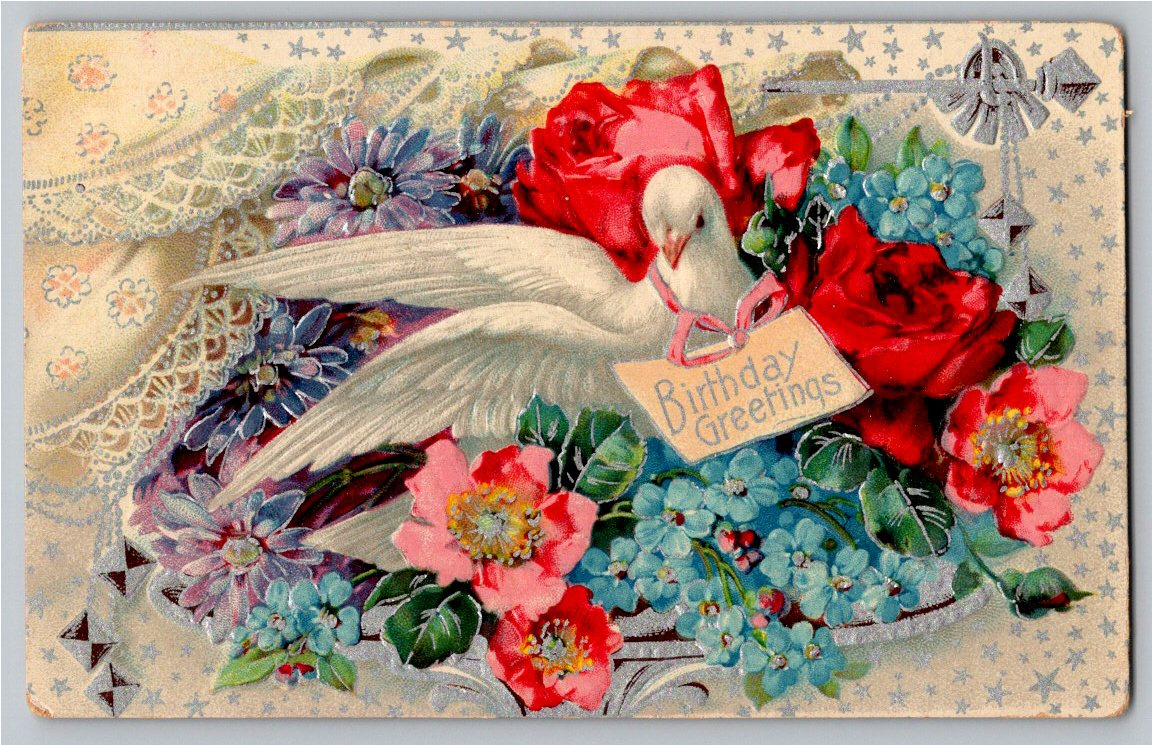
Antique 1910s German Embossed Birthday Postcard: Dove & Roses
📸 Click any thumbnail to inspect Front, Back & Angles (2 Photos)
As an eBay Partner, we may earn a commission if you make a purchase.
Item Specifications
- Era: 1910s Golden Age
- Origin: Germany
- Theme: Birthday Greetings
- Motif: White Dove & Red Roses
- Features: Heavily Embossed
- Publisher Series: Serie 1620 C
- Category: Postcards & Ephemera
- Format / Type: Vintage Postcards
Looking for Modern Alternatives?
Explore top-rated, modern Postcards & Ephemera and related historical accessories on Amazon.
Shop Postcards & Ephemera on Amazon →As an Amazon Associate, we earn from qualifying purchases.
Historical Context & Overview
An Elegant Relic of the Golden Age of Postcards
During the early twentieth century, postcard exchange reached an extraordinary cultural height across Europe and North America. Known to historians and collectors as the "Golden Age of Postcards" (roughly spanning 1898 to 1915), this period generated some of the most artistically refined paper ephemera in publishing history. Among the most sought-after specimens from this era are embossed holiday and birthday greetings produced in German print shops, which held a global monopoly on high-end color printing prior to World War I.
German Chromolithography and Relief Embossing
This exquisite 1910s birthday postcard bears the publisher notation "Serie 1620 C" and was manufactured in Germany, reflecting the pinnacle of period printmaking. German lithographers perfected multi-pass chromolithography, applying individual layers of oil-based ink to achieve deep, saturated tones. Following the color application, heavy steel dies were used to stamp the heavy cardstock, producing dramatic three-dimensional embossing that creates an almost sculptural relief.
The visual composition is embellished with shimmering silver metallic foil accents along the border and background stars, set against a delicate lace-pattern curtain background. This multi-layered tactile design reflected the opulent tastes of the Edwardian aesthetic, turning a simple postable greeting into a keepsake worth preserving in family albums.
Edwardian Floral and Avian Symbolism
Visual communications in the late Victorian and Edwardian eras relied heavily on established allegorical language. Every element chosen for a greeting card carried explicit meaning:
- The White Dove: Long associated with peace, purity, and devotion, the central white dove swoops through the arrangement holding a suspended gift tag inscribed with "Birthday Greetings."
- Red Roses: Dominating the right side of the floral spray, deep crimson roses symbolize romantic affection, warm admiration, and enduring devotion.
- Forget-Me-Nots & Pink Blossoms: Tucked beneath the dove, tiny blue forget-me-nots convey lasting remembrance and true friendship, while soft pink blossoms add a sense of joy and youthful vigor.
A Intimate Snapshot of Social History
The back of the postcard features the classic divided-back layout introduced globally after 1907, which allowed senders to write messages on the left side while reserving the right exclusively for the recipient's address and postage. Written in clear, rhythmic early-century pencil cursive, the message reads: "Wishing you many bright and happy birthdays from Mabel G," addressed affectionately to "Miss Verdie Giles."
Though unmailed and without a postmark, this antique card remains a beautiful surviving artifact of interpersonal sentiment from over a century ago—a masterwork of German lithographic craft and Edwardian floral symbolism.