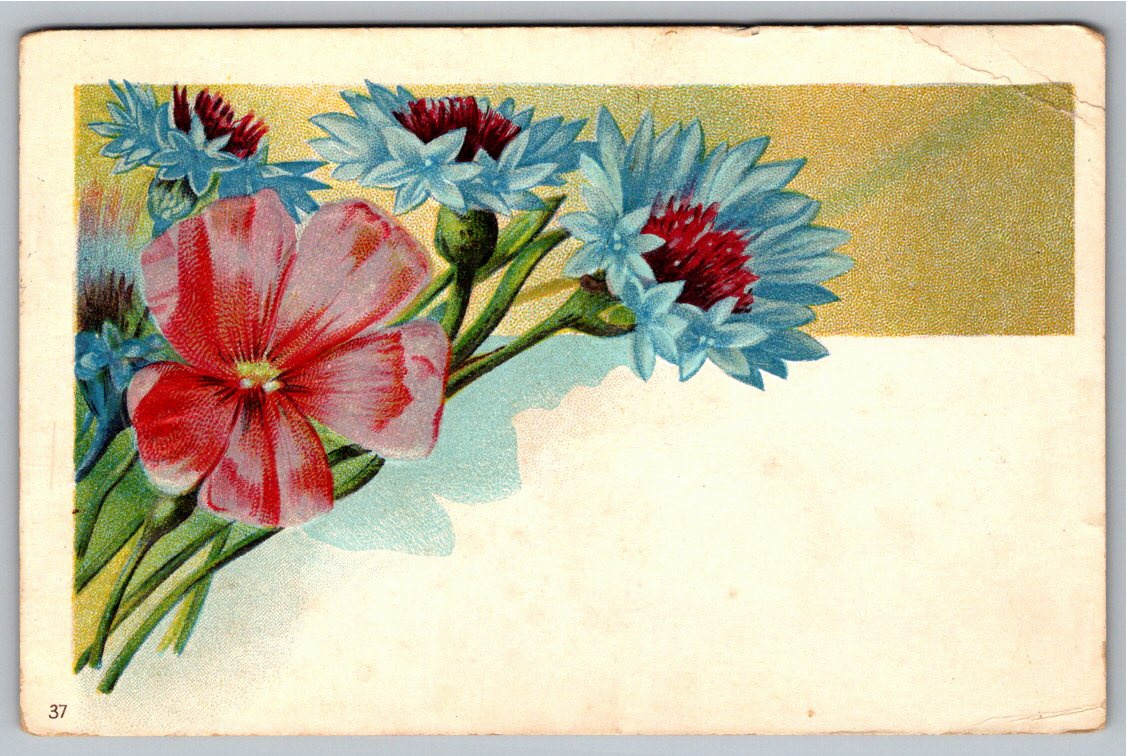
1912 Embossed Floral Vintage Postcard Cornflowers & Pink Flax
📸 Click any thumbnail to inspect Front, Back & Angles (2 Photos)
As an eBay Partner, we may earn a commission if you make a purchase.
Item Specifications
- Era: Divided Back (1907-1915)
- Year: 1912
- Postmark Location: Caldwell, Kansas
- Postage Stamp: 1c Green Benjamin Franklin
- Subject: Blue Cornflowers & Pink Flax
- Printing Technique: Embossed Chromolithography
- Category: Postcards & Ephemera
- Format / Type: Vintage Postcards
Looking for Modern Alternatives?
Explore top-rated, modern Postcards & Ephemera and related historical accessories on Amazon.
Shop Postcards & Ephemera on Amazon →As an Amazon Associate, we earn from qualifying purchases.
Historical Context & Overview
During the "Golden Age of Postcards"—roughly spanning from 1907 to 1915—the post served as the primary social network of the Western world. Among the most cherished designs produced during this prolific era were botanical studies, which allowed senders to convey subtle sentiments through Edwardian floriography, the language of flowers. This exquisite embossed postcard from 1912 stands as a vibrant testament to the period's mastery of rich color printing, raised texture, and floral illustration.
Botanical Artistry and Embossed Chromolithography
Featuring an artfully arranged spray of vivid blue cornflowers alongside a striking deep pink flax blossom, the postcard highlights the refined aesthetic sensibilities of turn-of-the-century illustrators. Cornflowers, historically associated with devotion, hope, and refined delicacy, complement the graceful warmth of the pink flax petals. Set against an offset panel of warm metallic gold ink, the botanical arrangement pops off the cream-colored cardstock with rich visual dimension.
The hallmark of fine postcard craft from this era lies in its multi-stage production technique. Using precision steel dies, publishers embossed heavy paperboard following chromolithographic printing to produce physical relief. Tracing a finger across the card reveals the distinct tactile contours of each individual petal, stem, and leaf—a decorative touch designed to delight recipients when retrieving their daily mail over a century ago.
A Postal Snapshot from early 1912
Beyond its botanical charm, this piece carries a tangible slice of Midwestern American history on its reverse side. Canceled on the evening of January 31, 1912, in Caldwell, Kansas, the postcard traveled across state lines toward Gallatin, Missouri. The top right corner retains a green one-cent Benjamin Franklin postage stamp, which represented the standard domestic rate for postcard mail during the height of the postal craze.
The divided-back format—officially authorized by the United States Postal Service in 1907—allowed correspondents to write personal notes on the left side while leaving the right dedicated to the address. A brief pencil inscription reading "From Baby" offers a sweet, understated look into family affection preserved across time.
Preserving Early 20th-Century Ephemera
For collectors of historical paper ephemera, botanists, and vintage print enthusiasts, postcards from 1912 represent a compelling intersection of industrial innovation, graphic arts, and personal history. Stored in acid-free archival sleeves away from humidity and direct sunlight, embossed chromolithographs retain their vibrant ink pigments and crisp structural relief, ensuring these small treasures remain preserved for future generations.