1920s Flapper Lake Swimmers Vintage Swimsuit Snapshot
📸 Click any thumbnail to inspect Front, Back & Angles (2 Photos)
🔗 Embed / Cite This Archival Image (Free with Attribution)Get HTML Code
© USA RESELL. Bloggers, historians, and website owners may embed this image for free by copying the HTML code below (which includes the required credit link back to this page):
USA RESELL is a living historical archive. Because original artifacts are one-of-a-kind and source records change rapidly, use the button above to check live marketplace availability or locate surviving examples. As an eBay Partner, we may earn a commission on qualifying purchases.
Item Specifications
- Type: Photograph
- Original/Licensed Reprint: Original Vintage
- Image Color: Black and White
- Production Technique: Gelatin-Silver Print
- Material: Paper
- Finish: Glossy
- Category: Vintage Photography
- Format / Type: Snapshots
Historical Context & Overview
Visual & Historical Overview of 1920s Lake Leisure
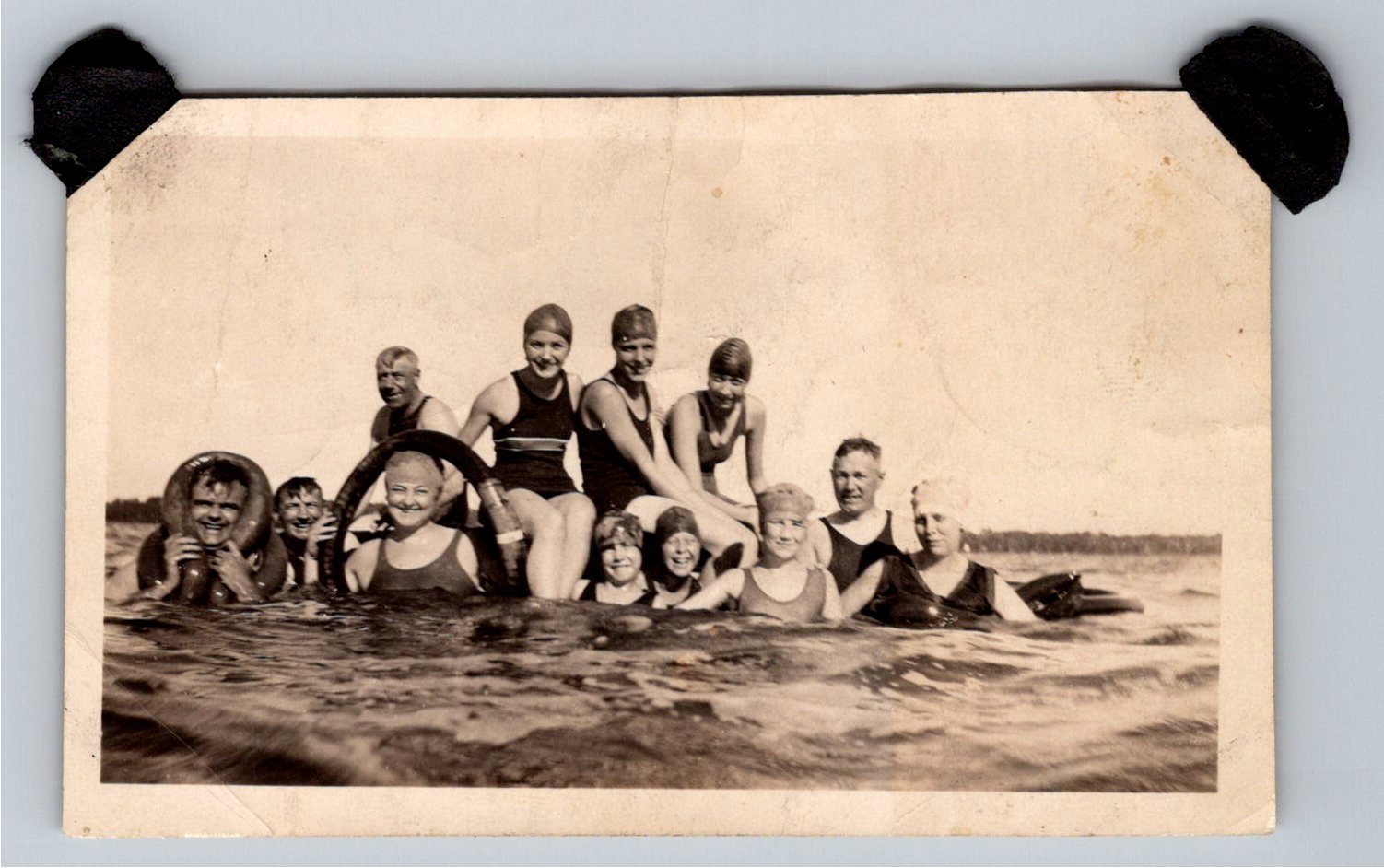
This authentic 1920s black-and-white photograph offers an intimate glimpse into classic interwar recreational culture in the United States. Captured mid-swim in a calm freshwater lake, the composition brings together eleven individuals spanning multiple generations—men, women, and children—all smiling warmly toward the camera. The subjects are immersed directly in the water, huddled around rubber inner tubes that serve as makeshift flotation devices. The natural low-angle perspective situates the viewer right at the water line, emphasizing the dynamic ripples and sunlit expanse that defined summer vacationing during the Roaring Twenties.
The image serves as an exceptional visual record of early 20th-century swimwear fashion. The women in the group exhibit the liberated athletic aesthetic championed by the 1920s "flapper" generation, wearing streamlined, dark knitted tank swimsuits and snug rubber or fabric bathing caps designed to protect bobbed haircuts. Gone were the heavy, restrictive Victorian bathing dresses of earlier decades, replaced by practical woolen knit suits that allowed genuine freedom of movement. Several men and younger bathers sport matching sleeveless suits, perfectly illustrating the communal and sporty beach culture popular across mid-1920s American lake resorts.
Early Amateur Photography and the Culture of Swimming
During the 1920s, the mass adoption of portable roll-film cameras, such as the Kodak Brownie and folding Autographic models, empowered everyday families to document spontaneous moments of domestic life. Rather than visiting formal portrait studios, vacationers carried these accessible devices directly to shorelines, docks, and boats. This particular snapshot reflects the candid charm of vernacular photography: the composition is casual yet balanced, capturing unposed laughter, playful antics through an inflated tire tube, and the bright summer sky without artificial staging.
The scene also highlights the burgeoning popularity of freshwater lake retreats throughout the American Midwest and Northeast. The rapid expansion of personal automobile ownership via affordable Model T and Model A Fords allowed working- and middle-class families to escape sweltering industrial cities for weekends at lakeside cottages. Improvised equipment, such as repurposed automotive inner tubes, was an essential fixture of these outings, illustrating the inventive, grassroots nature of early recreational water sports before the commercialization of modern pool toys.
Physical Print Characteristics, Provenance, and Condition
Physically, the photograph is an authentic gelatin silver print produced on period photographic paper stock, measuring approximately 4.7 inches by 2.8 inches. It displays the characteristic silver-rich tonal scale of the mid-1920s, with deep charcoal blacks, soft mid-tones, and natural cream highlights. The reverse of the photograph is entirely unprinted blank photographic paper, free from photograph layout dividers, containing only a single, faint vintage pencil marking. This confirms its provenance as an authentic private family album snapshot rather than a commercial souvenir or photograph.
The artifact remains in very good vintage condition, exhibiting honest signs of historical handling consistent with its nearly century-old age. Light surface toning, subtle corner wear, and minor edge softening are present, alongside remnants of vintage black album mounting corners at the upper margins that speak to its original preservation in a cherished family scrapbook. The central image area retains remarkable clarity and contrast, making it a compelling piece of visual history for collectors of vernacular photography, vintage fashion, and interwar Americana.