1920s Flapper Women Art Deco Chevron Tile Snapshot Photo
📸 Click any thumbnail to inspect Front, Back & Angles (2 Photos)
🔗 Embed / Cite This Archival Image (Free with Attribution)Get HTML Code
© USA RESELL. Bloggers, historians, and website owners may embed this image for free by copying the HTML code below (which includes the required credit link back to this page):
USA RESELL is a living historical archive. Because original artifacts are one-of-a-kind and source records change rapidly, use the button above to check live marketplace availability or locate surviving examples. As an eBay Partner, we may earn a commission on qualifying purchases.
Item Specifications
- City: Unspecified
- Country: United States
- Era: 1920-1929
- Subject: Women
- Theme: Americana
- Year of Production: 1925
- Category: Vintage Photography
- Format / Type: Snapshots
Historical Context & Overview
Visual Charm of the Jazz Age: Flappers in the Sun
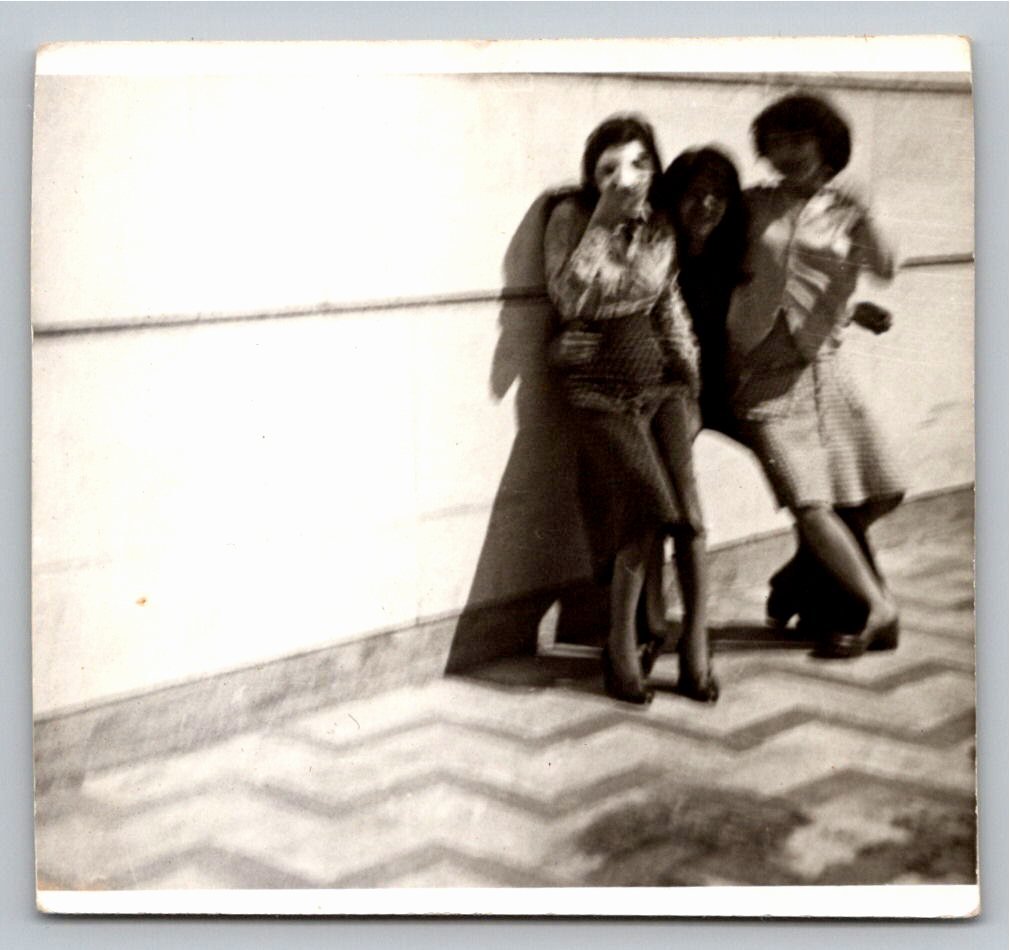
Drenched in radiant midday light, this captivating 1920s vernacular snapshot portrays three spirited young women clustered intimately against an exterior stucco wall. The intense sun creates high-contrast, sculptural shadows that stretch dramatically along the architectural facade, emphasizing the candid energy of the composition. Mid-movement and overcome with laughter, one woman playfully covers her face, while her companions lean into one another with relaxed affection. Their unscripted expressions offer a refreshing, genuine window into female camaraderie during the Roaring Twenties, far removed from the stiff, formal portraiture common to earlier eras.
Every detail of their wardrobe speaks directly to the rebellious and liberated aesthetic of the Jazz Age. The subjects showcase signature flapper styles, including bobbed hairstyles, fashionable knee-length dresses with dropped waistlines, dark hosiery, and classic low-heeled Mary Jane shoes. Adding to the visual intrigue is the geometric pavement beneath their feet, configured in a striking chevron or herringbone zigzag pattern. This interplay between the linear paving stones and the stark shadows anchors the image squarely within the burgeoning Art Deco sensibility that defined urban design and daily life in mid-1920s America.
The Rise of Vernacular Street Photography in the 1920s
During the interwar period, technological advancements in roll-film cameras, spearheaded by Eastman Kodak's accessible Brownie and Vest Pocket models, revolutionized how ordinary people documented their worlds. Photography shifted out of professional portrait studios and directly onto public streets, garden paths, and boardwalks. Amateurs could effortlessly carry lightweight cameras on outings, capturing spontaneous encounters, lighthearted moments, and personal fashions in real time. This particular image stands as an exquisite representative of that democratic photographic movement, preserving a fleeting burst of laughter between close friends.
The visual dynamics of the shot also reflect the casual modernism embraced by everyday photographers of the time. Rather than seeking diffused, flat studio illumination, the shooter embraced high-noon sunlight, transforming hard shadows and architectural textures into vital design elements. The combination of candid human emotion and bold geometric patterning demonstrates how ordinary snapshots unwittingly mirrored the avant-garde sensibilities of modernist art, making early twentieth-century vernacular prints an endlessly fascinating genre for cultural historians.
Print Medium, Condition, and Archival Significance
Printed on original silver gelatin photographic paper, this authentic period photograph measures approximately 3.1 by 2.9 inches, a classic square-format snapshot size typical of personal albums of the decade. The chemistry retains remarkable clarity, showcasing rich, deep charcoal shadows balanced against crisp, clean highlights along the sunlit wall. The reverse is entirely blank, free of photograph layout markings, stamps, or commercial studio imprints, confirming that it originated as an authentic, privately taken keepsake preserved across generations.
Considering its nearly century-old age, the photograph survives in very good vintage condition. The paper displays gentle corner softening, minimal perimeter handling wear, and light, natural age-toning across the reverse that attests to its genuine antiquity. For collectors of vernacular photography, vintage women's fashion, and Art Deco architectural aesthetics, this original 1920s artifact serves as an evocative, tactile connection to the stylish exuberance and infectious joy of an iconic decade.