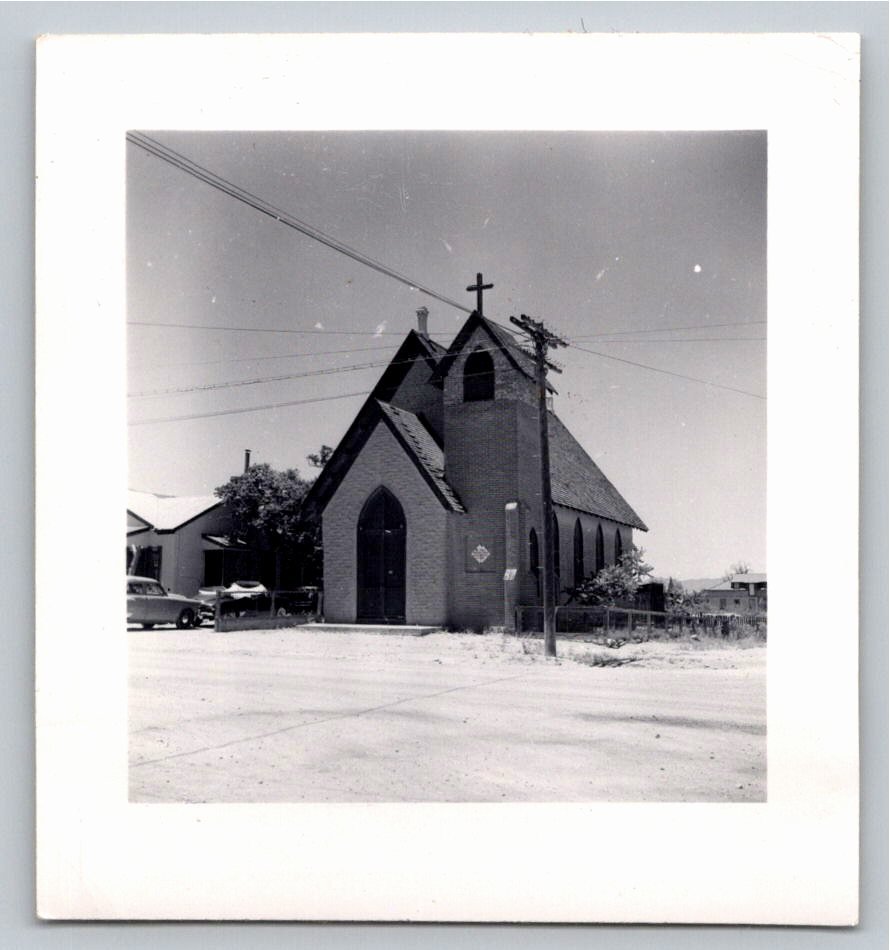
1950s Small Town Gothic Revival Brick Church Photograph
📸 Click any thumbnail to inspect Front, Back & Angles (2 Photos)
🔗 Embed / Cite This Archival Image (Free with Attribution)Get HTML Code
© USA RESELL. Bloggers, historians, and website owners may embed this image for free by copying the HTML code below (which includes the required credit link back to this page):
USA RESELL is a living historical archive. Because original artifacts are one-of-a-kind and source records change rapidly, use the button above to check live marketplace availability or locate surviving examples. As an eBay Partner, we may earn a commission on qualifying purchases.
Item Specifications
- City: Unspecified
- Country: United States
- Era: 1950s
- Subject: Church Architecture Street Scene Vintage Automobile
- Theme: Architecture Americana Religion
- Year of Production: 1955
- Category: Vintage Photography
- Format / Type: Snapshots
Historical Context & Overview
Mid-Century Vernacular Architecture and Streetscape
Captured during the mid-1950s, this original black-and-white snapshot presents an authentic view of mid-century community life centered around local faith and fellowship. The focal point is a charming Gothic Revival brick church defined by its steeply pitched gables, prominent pointed arch entryway, and integrated corner bell tower crowned by a Latin cross. Positioned alongside a wide, unpaved roadway, the structure conveys the quiet dignity typical of parish architecture in growing postwar American townships.
To the left of the chapel, nestled beside an adjacent residential property, a classic mid-1950s sedan rests in the driveway. Its rounded fenders and chrome accents instantly situate the frame in the height of the mid-twentieth century. Overhead, a network of utility poles and crisscrossing electrical lines cuts across the expansive, cloudless sky, capturing the infrastructure expansion that characterized rural and suburban developments across the United States during this transformative era.
Gothic Revival Influences in Small-Town America
During the nineteenth and early twentieth centuries, Gothic Revival architecture became a standard stylistic choice for ecclesiastical buildings across North America. Adapted from monumental medieval European cathedrals, the vernacular interpretation seen here retained essential symbolic elements—such as pointed lancet fenestration and vertical masonry emphasis—while scaling the design down to accommodate intimate neighborhood congregations. The robust brickwork provided permanence, warmth, and enduring protection against the elements.
Photographs like this one served not only as casual keepsakes for local residents or traveling visitors but also as unintentional records of evolving civic layouts. Community life in the 1950s frequently revolved around such parish centers, which hosted everything from Sunday morning services and weddings to local civic meetings. The presence of the automobile emphasizes the growing mobility of congregants, signaling the dawn of modern suburban commuting while remaining anchored in regional tradition.
Physical Attributes, Format, and Archival Preservation
This original vintage print measures approximately 2.7 by 2.9 inches, rendered in a classic square format characteristic of period snapshot cameras. Printed on authentic vintage paper stock with a smooth glossy finish, the composition demonstrates strong contrast and sharp resolution. Delicate architectural textures, from individual brick courses to roof shingles and window moldings, remain clearly discernible across the surface.
The reverse side of the photograph features a clean, unprinted backing with a faint, vintage purple processing stamp number, confirming its period commercial laboratory developing. Free from heavy creasing, structural tears, or distracting stains, the print exhibits only gentle handling wear appropriate for its seventy-year vintage. It stands as an exceptional primary visual artifact for collectors of architectural history, vintage transportation, and mid-century Americana photography.